Dublin City Guide – The Perfect 3-Day Itinerary
Destination: Dublin, Ireland
Recommended Stay: 2–3 days
Travel Style: City Trip
Guide Format: PDF / Print
Languages: EN / DE / FR / ES
Dublin, the lively capital of Ireland, is a city rich in history, culture, and friendly atmosphere. Located on Ireland’s east coast along the River Liffey, Dublin blends historic landmarks, literary heritage, cozy pubs, and vibrant neighborhoods into a memorable travel experience. The city is famous for its welcoming locals, traditional music, and centuries-old traditions that continue to shape everyday life.
Visitors to Dublin can explore medieval cathedrals, elegant Georgian squares, and world-class museums while enjoying lively pubs and restaurants that showcase Irish cuisine and hospitality. Dublin is also closely associated with famous writers such as James Joyce, Oscar Wilde, and Samuel Beckett, whose works helped shape modern literature.
This Dublin city guide offers a carefully planned 3-day itinerary designed to help travelers experience the highlights of the Irish capital while also discovering its neighborhoods, culture, and traditions.
Buttons:
- Buy the Ebook Guide
- Download Sample
What’s Inside This Guide
This travel guide helps visitors explore Dublin efficiently, connecting historic landmarks with authentic local experiences.
Highlights include:
- A complete 3-day Dublin itinerary
- Walking routes through historic neighborhoods
- Insider tips for pubs, cafés, and Irish cuisine
- Cultural highlights and literary landmarks
- Scenic parks and river walks
- Practical travel advice for first-time visitors
Dublin is a compact city, making it ideal for walking tours and short city trips. Many of the most important attractions are located within the city center along the River Liffey.
Suggested 3-Day Itinerary
Day 1 – Historic Highlights
Begin your first day in Dublin at Trinity College, Ireland’s oldest university and one of the city’s most famous landmarks. Founded in 1592, the university features beautiful historic buildings and peaceful courtyards.
The highlight of Trinity College is the Book of Kells, an illuminated manuscript created by Celtic monks around the 9th century. The manuscript is displayed in the Old Library, which also houses the stunning Long Room, one of the most impressive libraries in the world.
After visiting Trinity College, walk toward O’Connell Street, Dublin’s main boulevard. Here you will see the Spire of Dublin, a modern monument that rises high above the city.
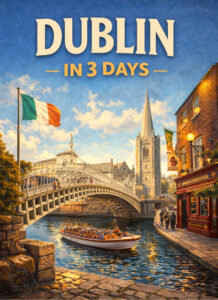
Continue your walk across the Ha’penny Bridge, one of Dublin’s most charming pedestrian bridges crossing the River Liffey.
In the afternoon explore the historic Temple Bar district, a lively area known for its cobblestone streets, colorful buildings, traditional pubs, and live music. Temple Bar is one of the most popular places in Dublin to experience Irish culture and nightlife.
Nearby attractions include:
- Dublin Castle, a historic complex that once served as the seat of British rule in Ireland
- Christ Church Cathedral, one of Dublin’s oldest and most impressive churches
End your first day with dinner in Temple Bar or one of the nearby traditional pubs where you can enjoy Irish music and cuisine.
Day 2 – Culture & Museums
Your second day focuses on Dublin’s cultural and historical attractions.
Start your morning at St. Patrick’s Cathedral, the largest cathedral in Ireland. Built in the 12th century, the cathedral is dedicated to Ireland’s patron saint and is closely associated with Irish history.
Nearby you can visit St. Patrick’s Park, a pleasant green space ideal for a short walk.
Next head to the famous Guinness Storehouse, one of Dublin’s most visited attractions. Located in a historic brewery building, the museum tells the story of Ireland’s most famous beer and the history of brewing in Dublin.
Visitors can explore several interactive floors before finishing the tour at the Gravity Bar, which offers panoramic views across the city.
In the afternoon explore the National Museum of Ireland, which houses fascinating collections related to Irish history, archaeology, and culture.
Another excellent cultural attraction is the Irish Museum of Modern Art, located in the historic Royal Hospital Kilmainham.
Later stroll through the elegant Georgian district, where beautiful 18th-century houses line wide streets and squares.
Day 3 – Neighborhoods & Local Life
Your final day focuses on experiencing everyday life and exploring some of Dublin’s charming neighborhoods.
Start your morning in Phoenix Park, one of the largest urban parks in Europe. The park is home to wide green spaces, walking paths, and several attractions including the Dublin Zoo and the official residence of the President of Ireland.
You may even spot wild deer that roam freely throughout the park.
Next visit the Kilmainham Gaol, a historic prison that played an important role in Ireland’s struggle for independence. Guided tours provide insight into Irish history and the lives of the revolutionaries who were imprisoned here.
In the afternoon explore the stylish Grafton Street area, a lively pedestrian shopping street known for street performers, cafés, and boutiques.
Nearby you will find St. Stephen’s Green, a beautiful public park in the heart of Dublin. The park’s gardens, ponds, and walking paths make it a relaxing place to spend time.
Later explore the vibrant Camden Street area, which has become one of Dublin’s most exciting districts for restaurants, cafés, and nightlife.
End your visit with dinner at a traditional Irish pub where you can enjoy dishes such as Irish stew, fish and chips, or boxty.
Explore the City Map
Dublin’s historic center is compact and ideal for exploring on foot.
Suggested routes include:
Day 1 Route
Trinity College → O’Connell Street → Ha’penny Bridge → Temple Bar → Dublin Castle → Christ Church Cathedral
Day 2 Route
St. Patrick’s Cathedral → Guinness Storehouse → National Museum → Georgian District
Day 3 Route
Phoenix Park → Kilmainham Gaol → Grafton Street → St. Stephen’s Green → Camden Street
Using a city map or navigation app can help you explore additional streets, pubs, and cultural landmarks.
Why Visit Dublin
Dublin is one of Europe’s most welcoming capitals and offers visitors a unique combination of culture, history, and lively atmosphere.
Reasons to visit Dublin include:
- Historic cathedrals and landmarks
- Rich literary heritage
- Traditional Irish pubs and music
- Beautiful parks and Georgian architecture
- Friendly and welcoming locals
The city’s vibrant culture and relaxed atmosphere make it an ideal destination for a memorable city trip.
Who This Guide Is For
This guide is ideal for:
- First-time visitors to Dublin
- Travelers planning a 2–3 day city trip
- Culture lovers interested in Irish history
- Visitors who enjoy exploring historic neighborhoods
- Travelers looking for a clear and structured itinerary
Get the Complete Dublin Guide
Download the full guide to access:
- detailed walking itineraries
- attraction descriptions
- restaurant recommendations
- travel tips and practical advice
Buttons:
- Buy PDF Guide
- Buy Print Guide
- Preview Sample Pages
More City Guides
You may also enjoy:
- Paris City Guide
- Barcelona City Guide
- Vienna City Guide
- Prague City Guide
Frequently Asked Questions
How many days do you need in Dublin?
Two to three days is usually enough to see the main attractions and explore the historic center.
What is the best time to visit Dublin?
Spring and early autumn offer pleasant weather and fewer crowds.
Is Dublin walkable for tourists?
Yes. Most attractions in the city center are within walking distance.