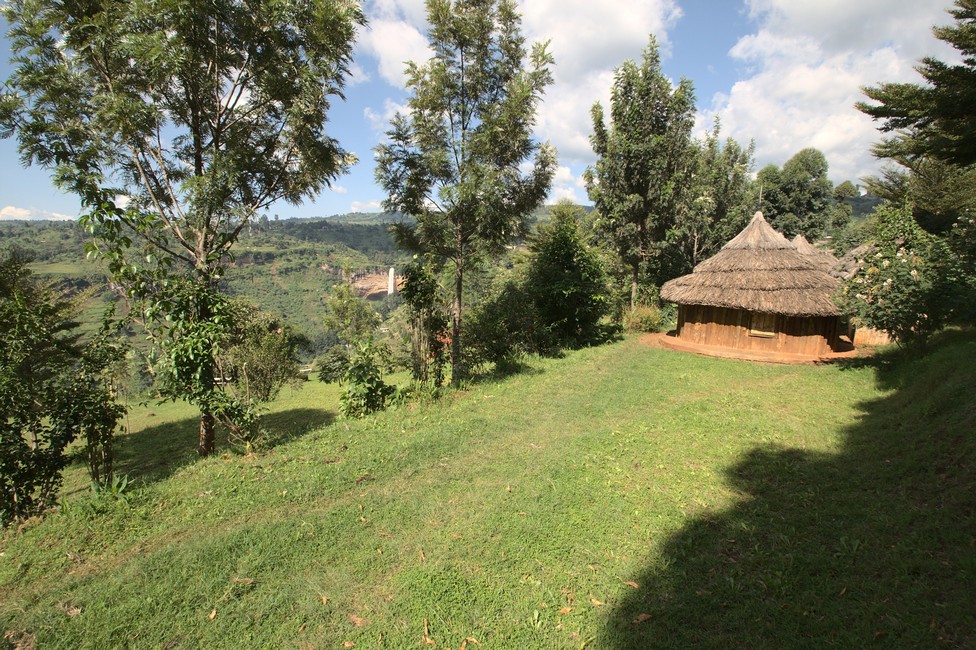
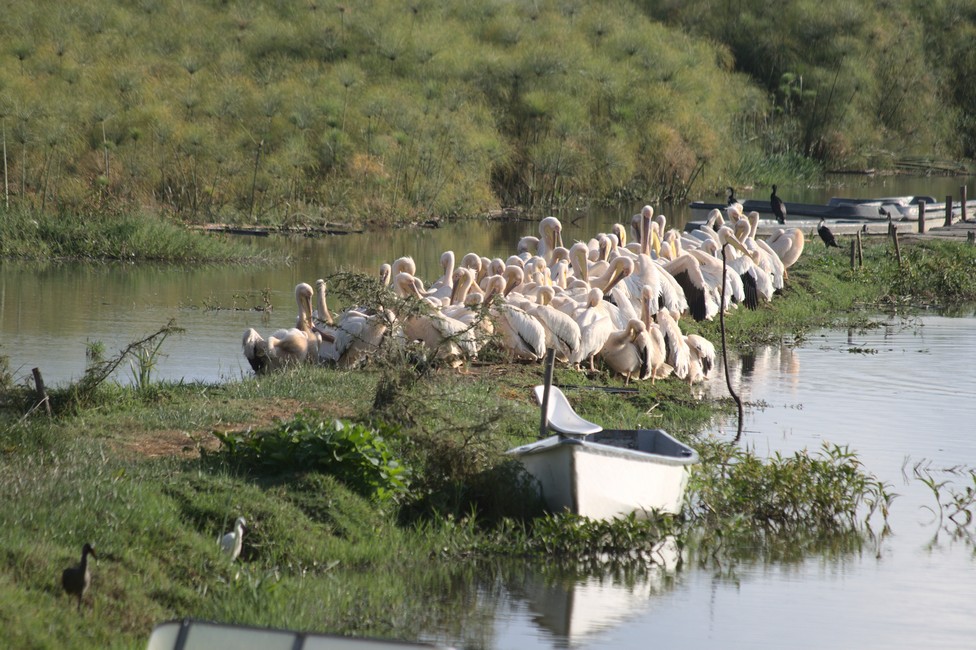
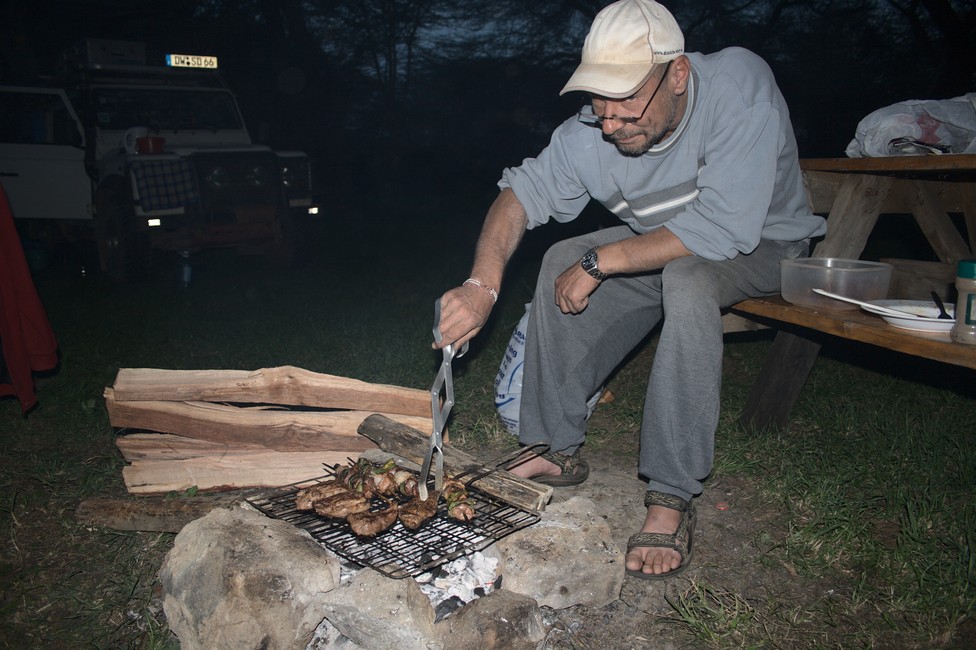
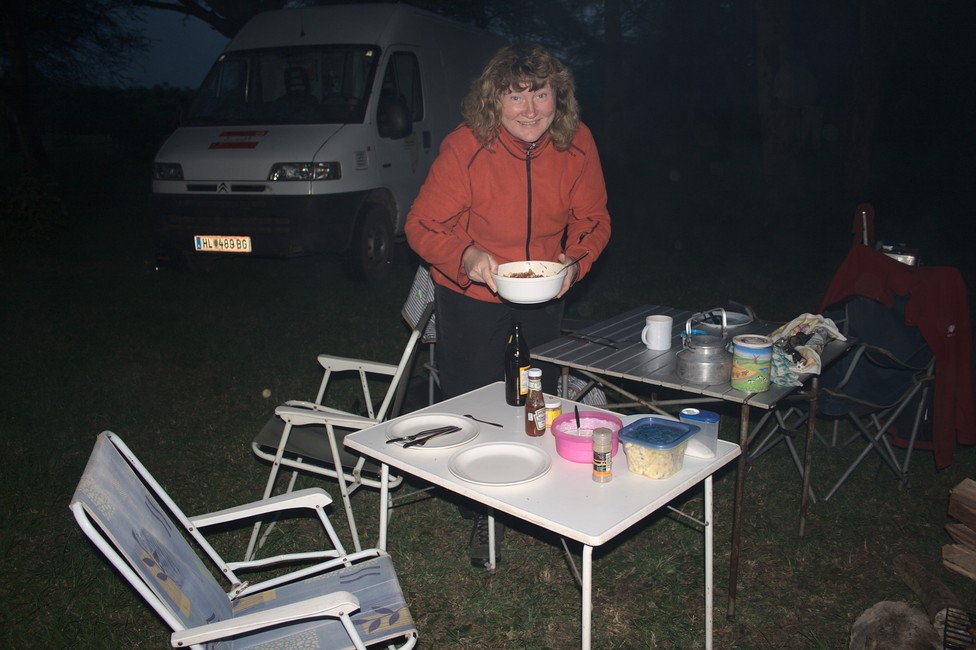
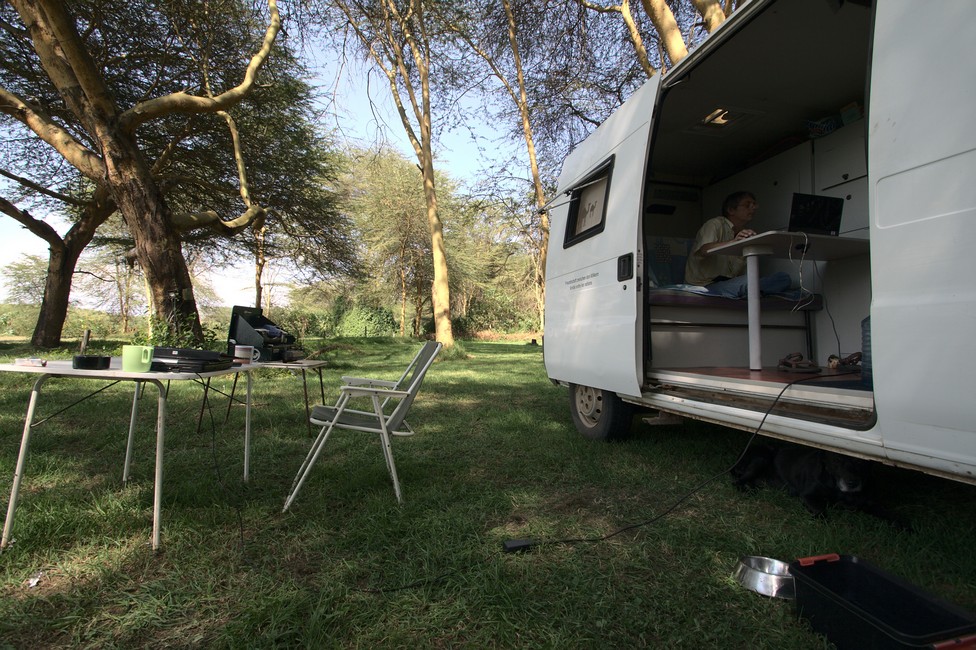
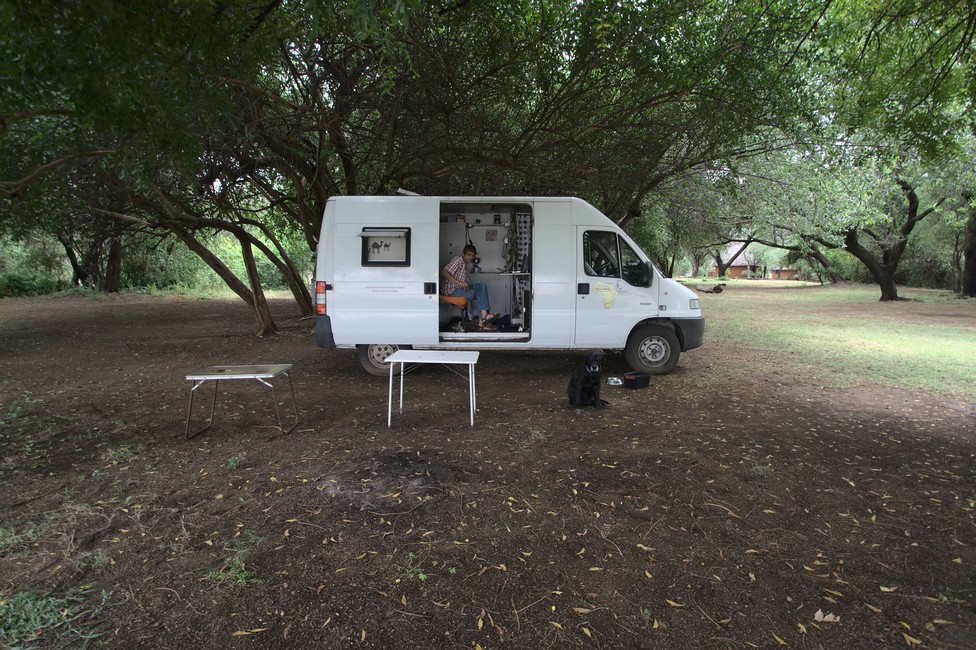
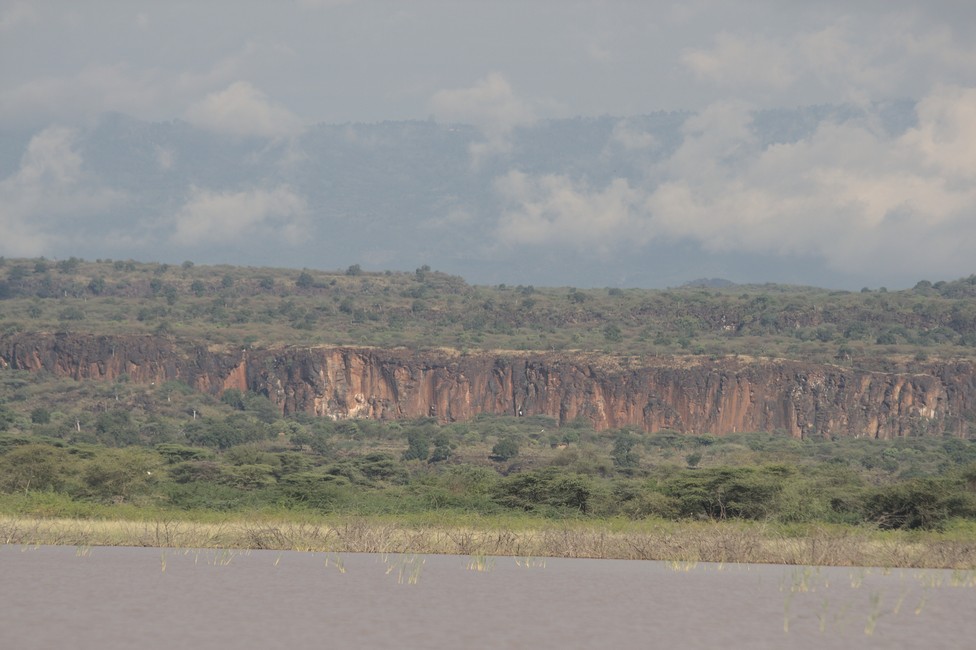
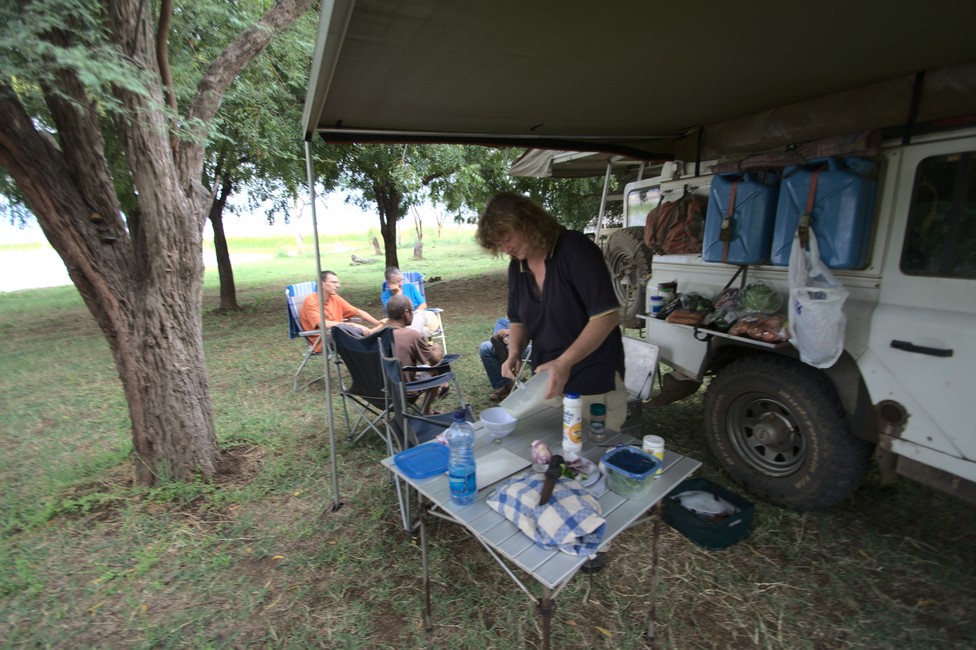
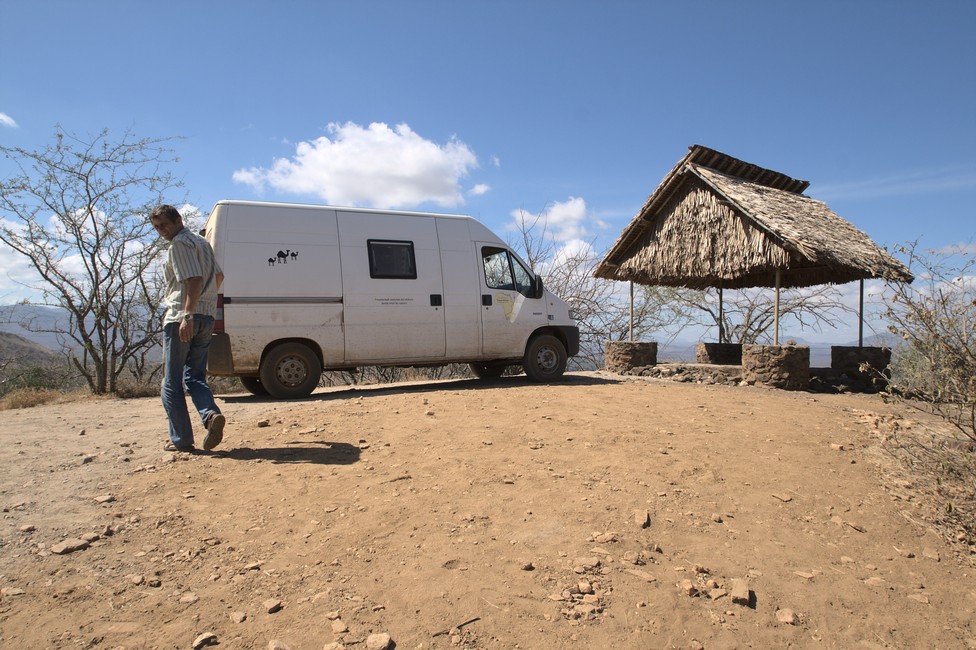
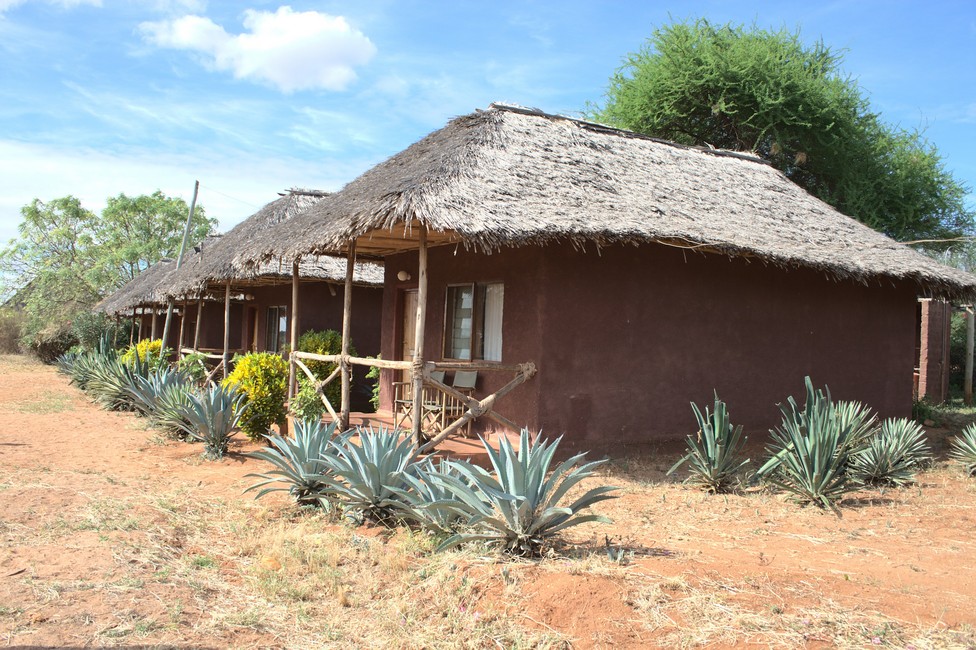
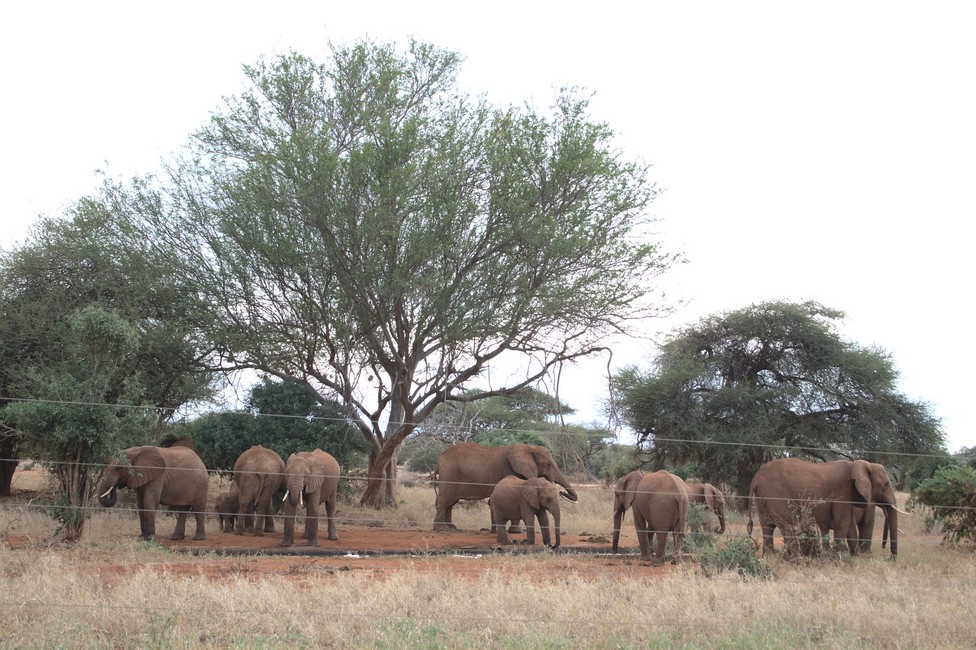
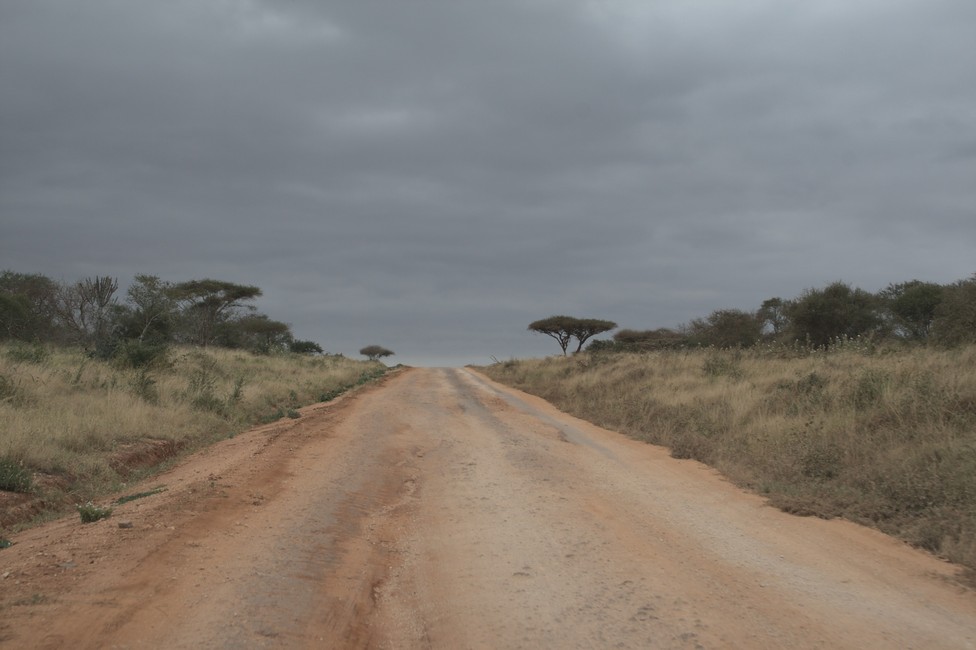
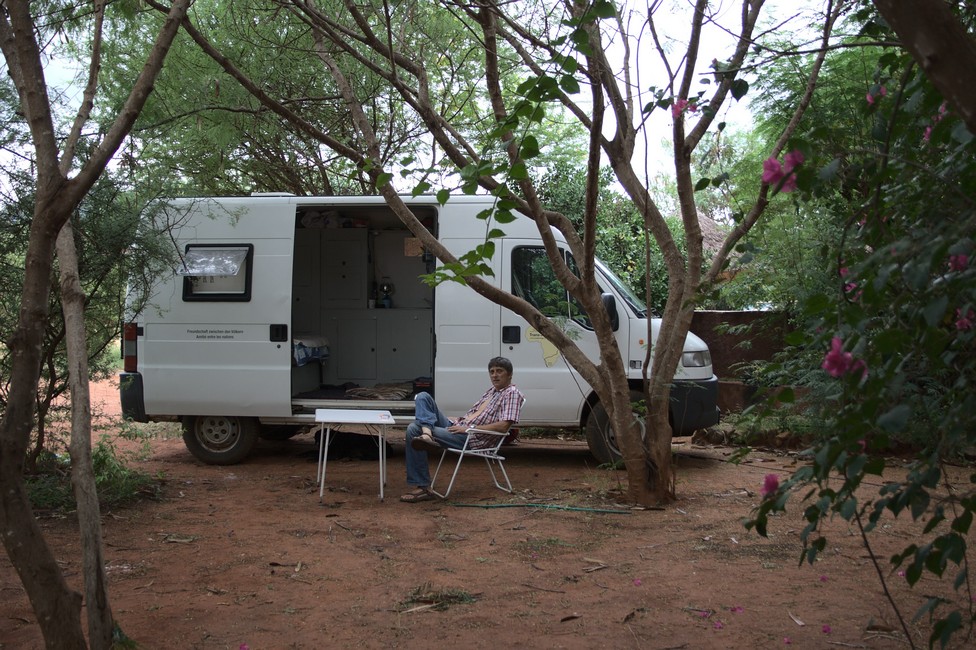
In Eldoret we want to Naiberi Fish River Camp, which is led by an Indian named Raj. The site is beautiful, well maintained with a barbecue and we feel well, Tara also enjoys the atmosphere here.
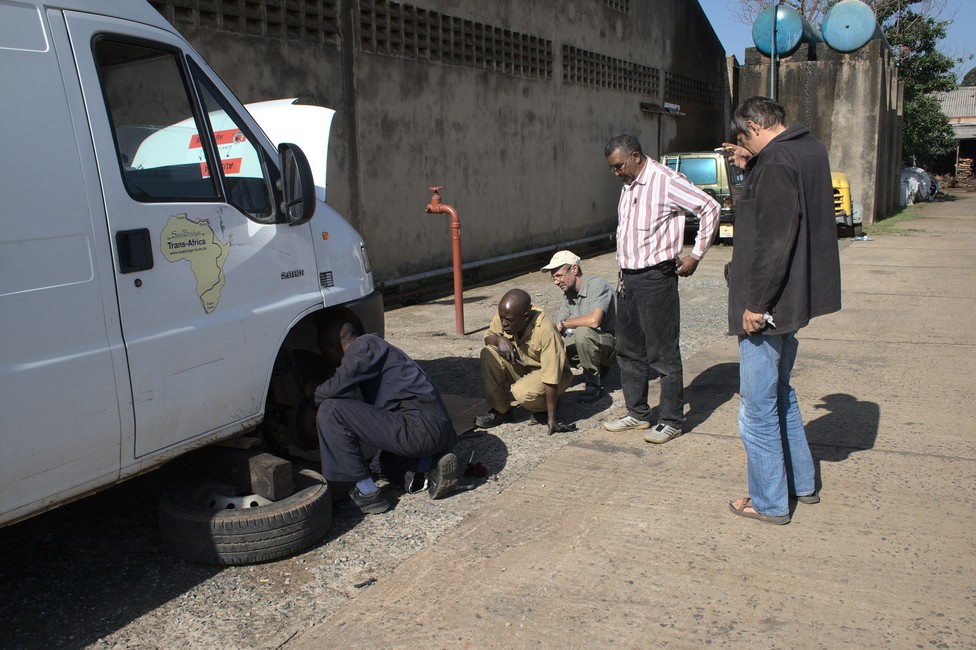
Eldoret Again brake repair
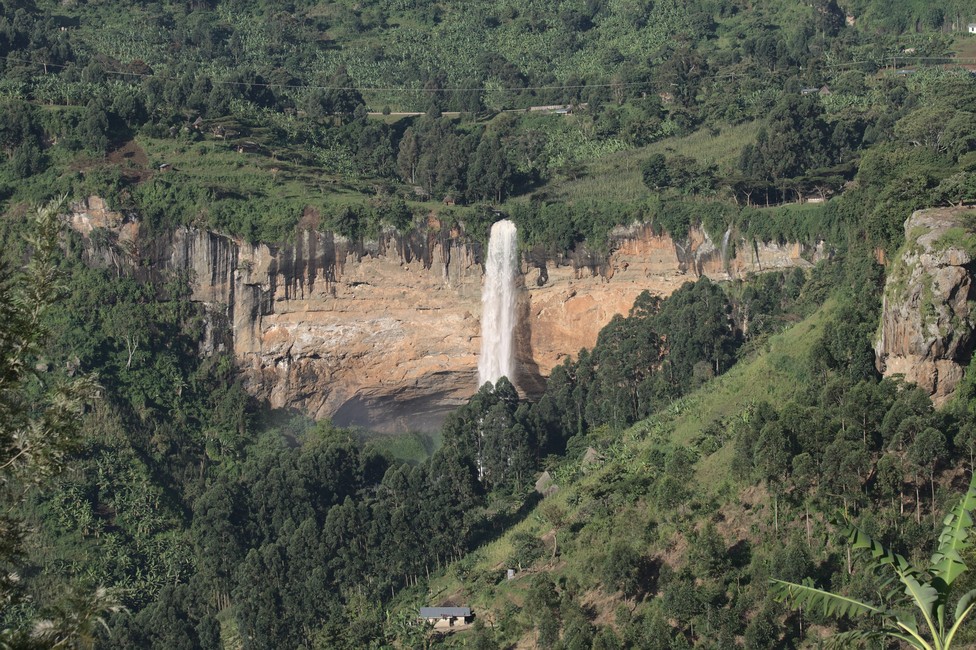
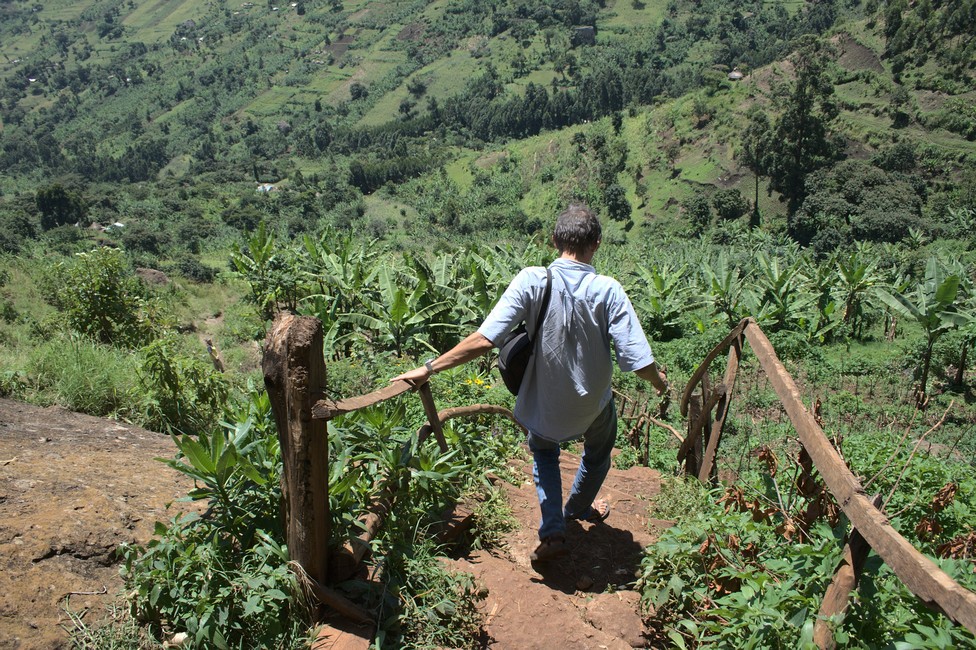
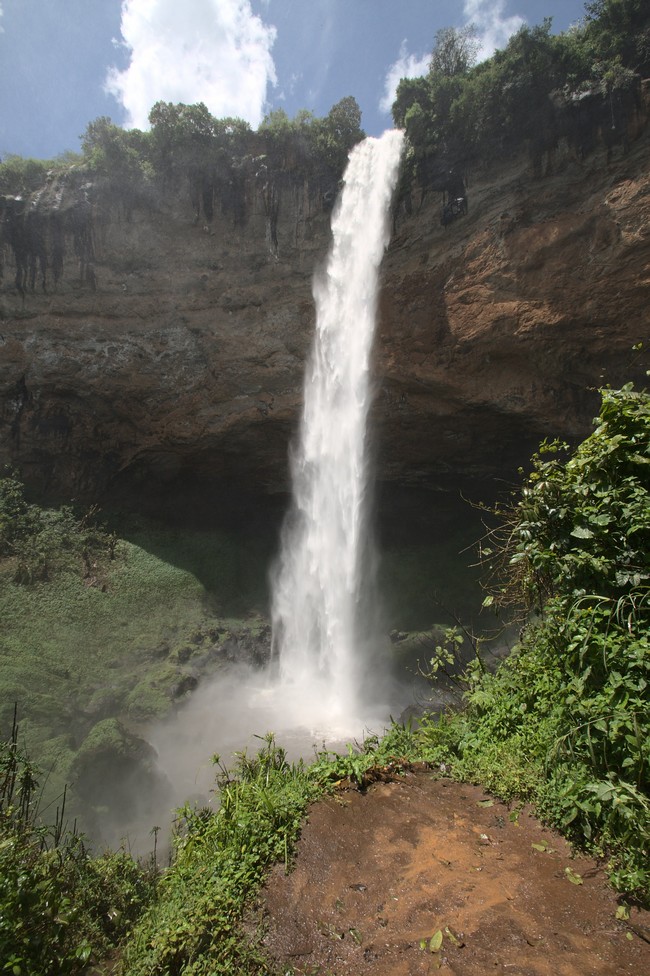
The camp is our last stop in Kenya. Tomorrow we will go over the border into Uganda and come to Sipi Falls. Steffen wants to know, and has chosen the harder route, via Kitale to Uganda, and around Mt Elgon to Sipi Falls. I’m skeptical about this route, but we’ll see.
And already after a few kilometers, we need to change and reverse the route because the road is a disaster. So we have to take a small detour.
What we do not yet know – it is the day of detours.
In Kitale, we squeeze our way through the city, it is the last village before the border.
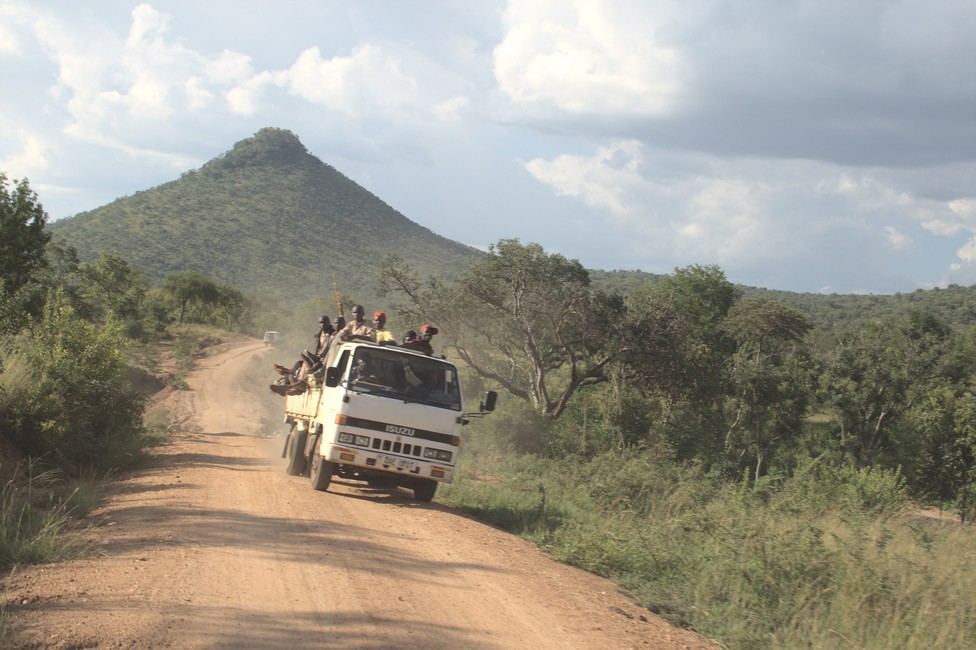
The road gets worse and worse, with deep washouts and harder surface. Actually unbelievable that this is a road that links two states.
We are approaching the border crossing. Uganda we are coming, we are already excited about what we can expect in this country.
The border crossing into Uganda was not a problem, we were warmly welcomed by the officers and pointed out the beauties of the country, Uganda is already sympathetic to us, as the officials left a friendly impression.
The post is situated in the nowhere and first we did not find the officers. A Lady living there showed us to the house where the officer lives. We knock at his door and tell him we wanted to enter. So he got reay and we walked back to the customs house. There he prepared everything stamped our passports and the important carnet de passage . Years later we learned that there is a more simple and cheaper solution for bringing the car in a country.
Our next destination is Lake Baringo. We leave the Masai Mara early in the morning. Those were wonderful days here, today we want to make it to Lake Naivasha.
Still a water crossing, the road is terrible from the Masai Mara to Narok, for about 80 kilometers we will need four hours.
But soon again we have tarmac under the wheels, and soon we are on Lake Naivasha.
Lake Naivasha Flamingo
The campsite is beautiful, right on the lake and suddenly Steffen and Steffi arrive, we have met them in Nairobi.
StephenSteffi
We are happy, some beef on the grill nothing can prevent a great evening. Quickly we realize that we have similar travel plans, and so we decide to go together for the next few weeks.
Lake Naivasha Campsite
At night we were visited by another hippo, what more could you expect. And in the morning we sit in our cars, on the way to Lake Baringo.
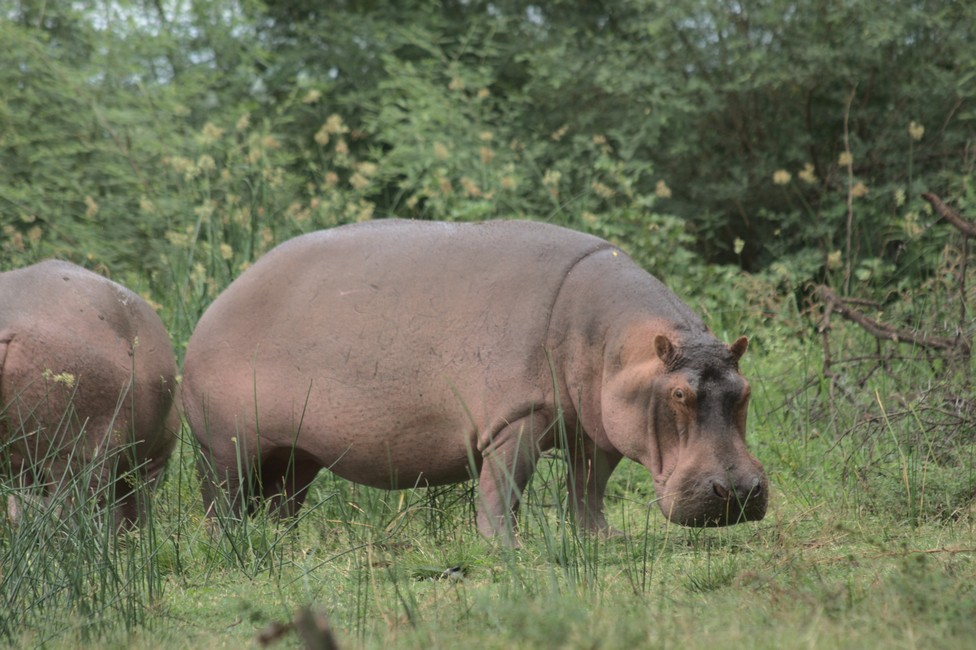
Camp Roberts is idyllic, located directly at the lakeside, and in the afternoon, we are lucky and get a visit from a hippo bull with his ladies.
Lake Baringo Campsite
Hippos look sweet and cute, but they’re not. They are responsible for the most serious accidents or fatal injuries. Especially if you get between Hippo and water, the animals feel threatened and attack. They are damn fast, which is often underestimated. It’s nice to watch the animals, because it is extremely rare that they leave the water during the day and graze on land. About one hour we have the opportunity to watch them. They graze peacefully, but their eyes staring at us. I took te camera and took the tripod and was dilming them. The bull saw me and I thought this is ok for him. The group was grazing towards me slowly and suddenly the bull started to attack me and with a huge jump I disappeared behind the van with the camera. The tripod I left but luckily was not interesting for the bull.
Lake Baringo, Hippo
Finally, they disappear into the lake because the water is their element, where they feel most comfortable.
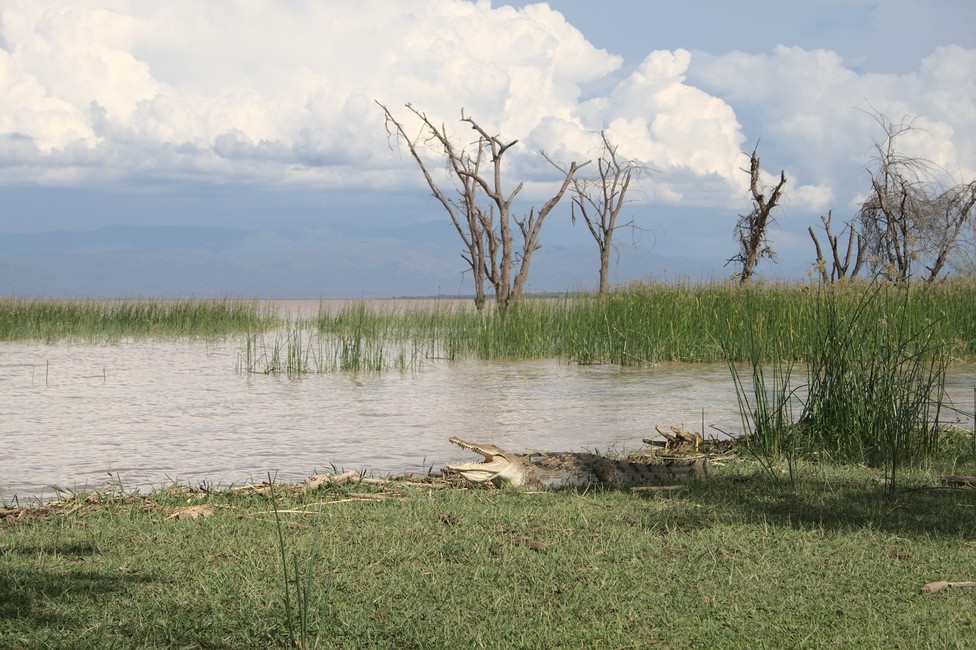
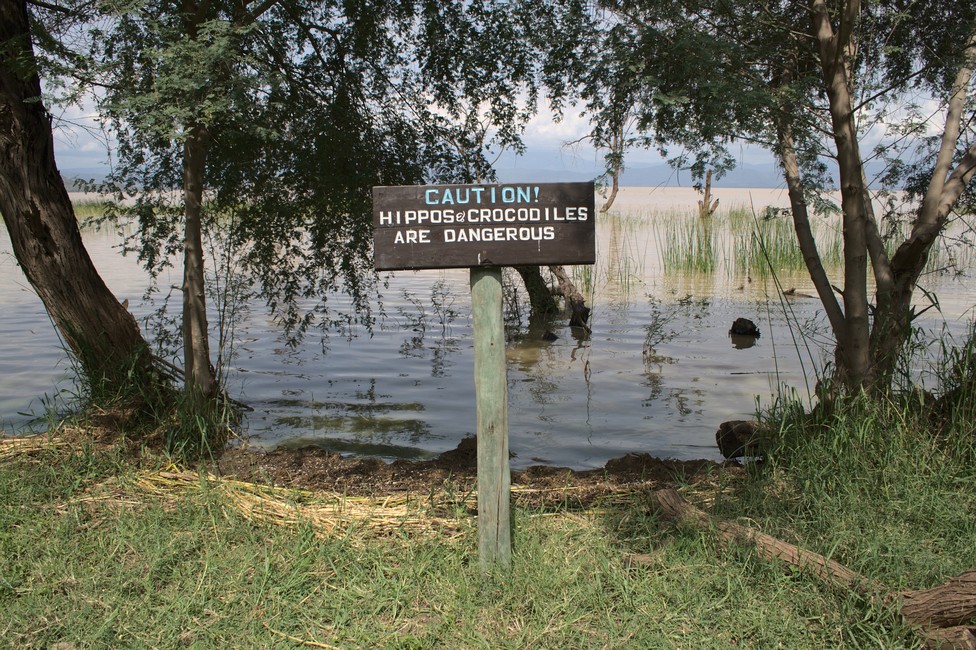
On the shore of the campsite a crocodile sleeps quietly. We are a little worried, especially because of Tara, because we camp not eight feet away from the crocodile.
Lake Baringo fantastic campsite
The next morning we take a boat trip on Lake Baringo. The guide promises fish eagle. We risk the trip.
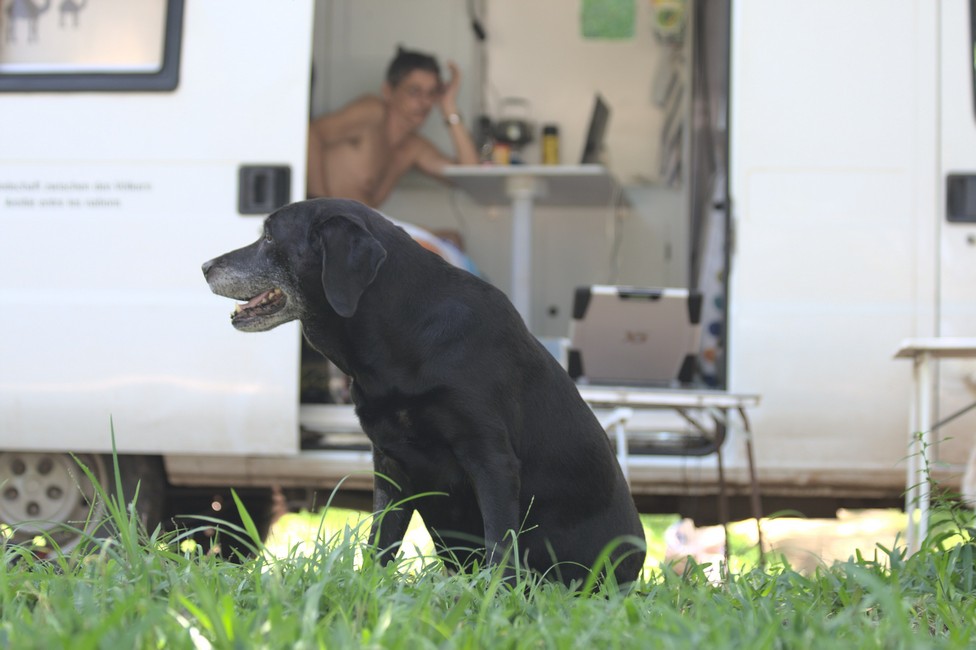
Sign post at the campsite. The owners lost their Labrador dog to a crocodile attack here.
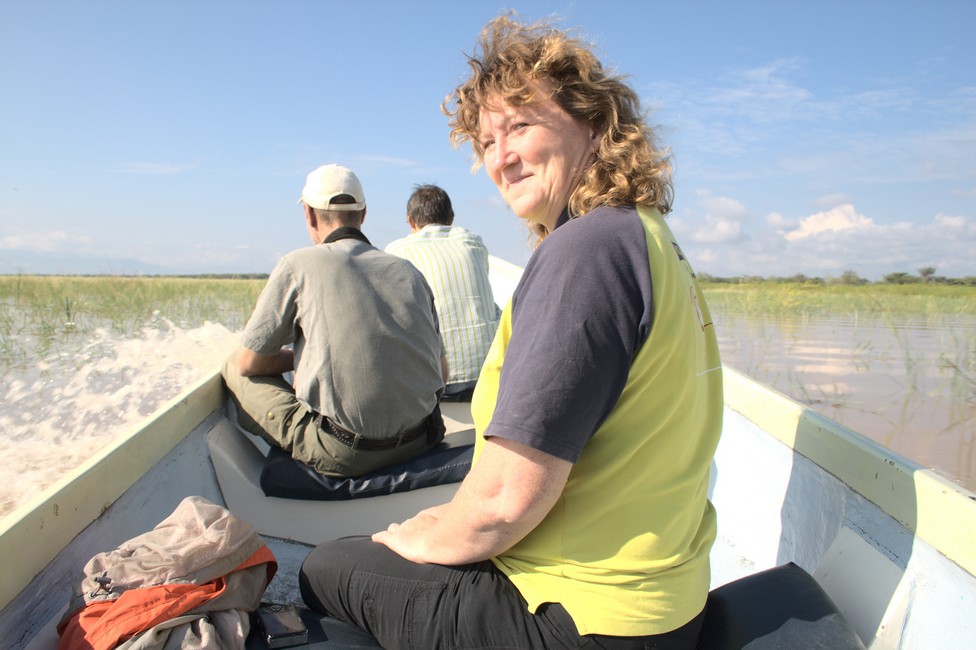
The boat is not very big, but the lake is as smooth as glass, not a ripple. First, it goes along the shore.
Lake Baringo Boats Trip
We need to find a fisherman who sells us fish, because this will serve as bait. Actually, a cruel thing, the fish is pushed a cork in the mouth so that it is not dead, but on the surface moves. That is to attract the fish eagle. Weaver birds’ nests, in the middle of the lake, we have not seen it yet, but the idea is good, because here the nests are safe from snakes.
Fisher man Lake Baringo
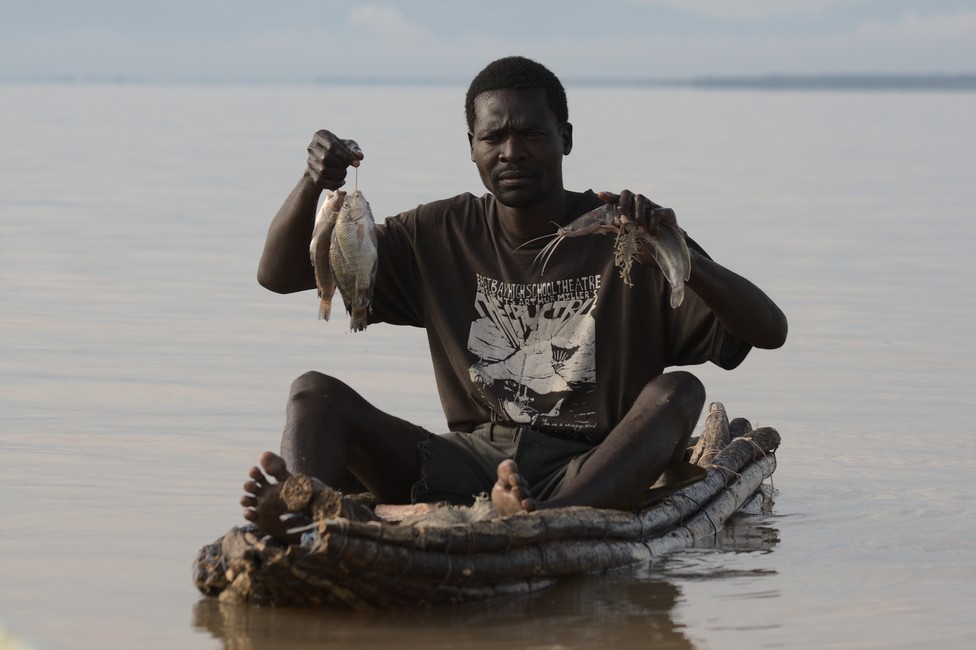
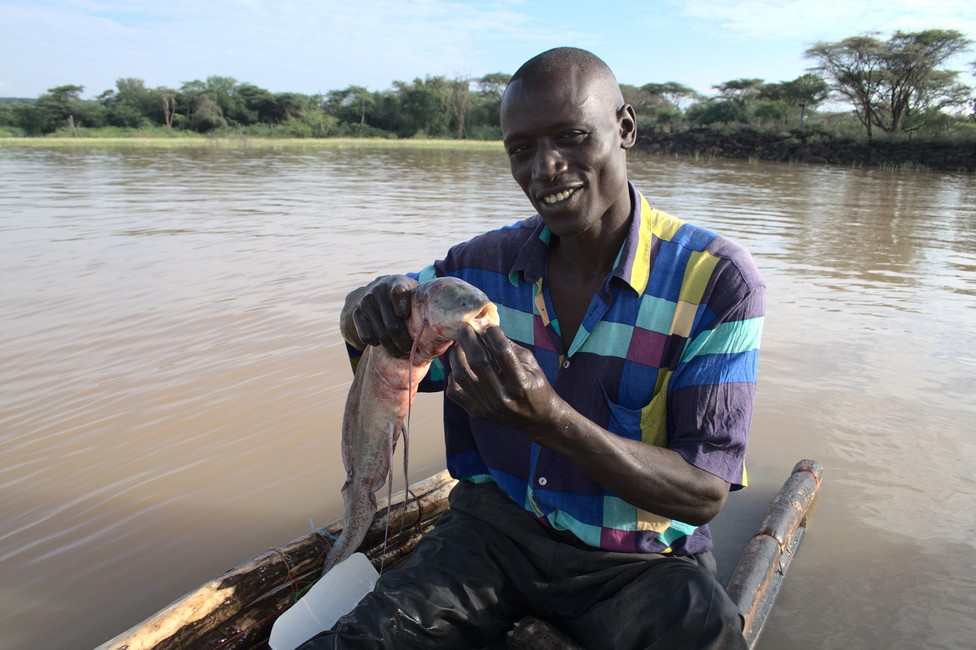
And soon we meet the first Fisherman. In a papyrus boat, as we know it from Ethiopia, he approached paddling. A second approaches. Actually, we could buy dinner here, but we have already bought beef. The fisherman prepares the fish as directed. Quickly, the deal is finished, and we can continue.
Fisher men
We go to an island in the middle of the lake, there should be the fish eagle. But first, we just scare a cormorant, and then a heron. A little later we spot the fish eagle nest high in a tree. Our boat man imitates the cry, but the eagle can not be seen. Bad luck – we return.
Lake Shore
Passing a colony of herons on the shore and we see a crocodile which slowly disappears into the water.
The boat trip was interesting nonetheless, there are no guarantees for wildlife sightings, so much is left to chance. The guide is a nice guy and has been quite trying.
Our day ends with beef barbeque. Tomorrow we continue to Eldoret.
Preparing the Fish
In Eldoret we want to Naiberi Fish River Camp, which is led by an Indian named Raj. The site is beautiful, well maintained with a barbecue and we feel well, Tara also enjoys the atmosphere here.
The camp is our last stop in Kenya. Tomorrow we will go over the border into Uganda and come to Sipi Falls. Steffen wants to know, and has chosen the harder route, via Kitale to Uganda, and around Mt Elgon to Sipi Falls. I’m skeptical about this route, but we’ll see.
The next day we visit with Patrick, his Maasai village.
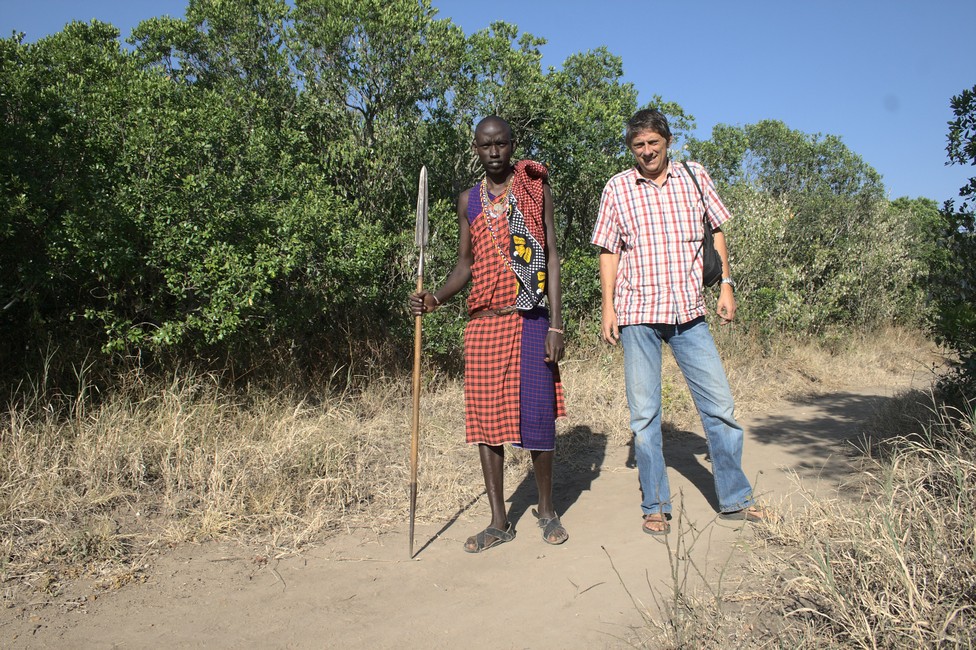
Patrick and me walking to his Maasai Village
We march through the bush, which is not without danger as the walk is about 5 km through the bush, the real bush and you can never be sure wether behind the next bush a lion, a hyena or even worse a leopard is hidind or not. The leopard is even more dangerous as it takes everything as a prey and it is rather sileńt. At least you do not realize for a long time when you are killed. The Maasai are not afraid as they live there and are used to the danger. They claim that they can scare off wild animals and some Maasai say that they know the red cloth they wear and are afraid. We hope they really know the red clothes.
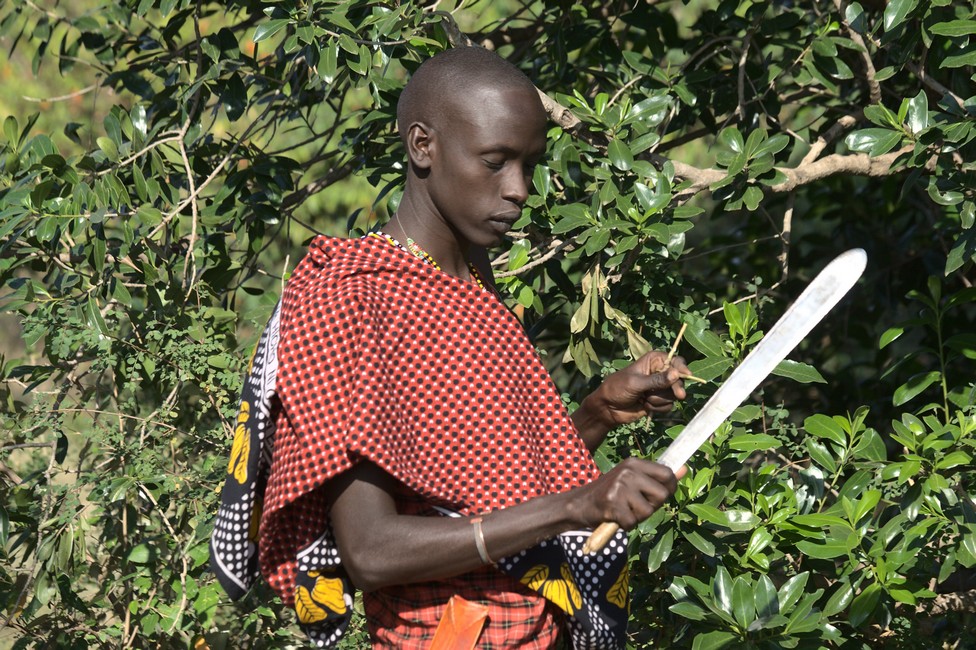
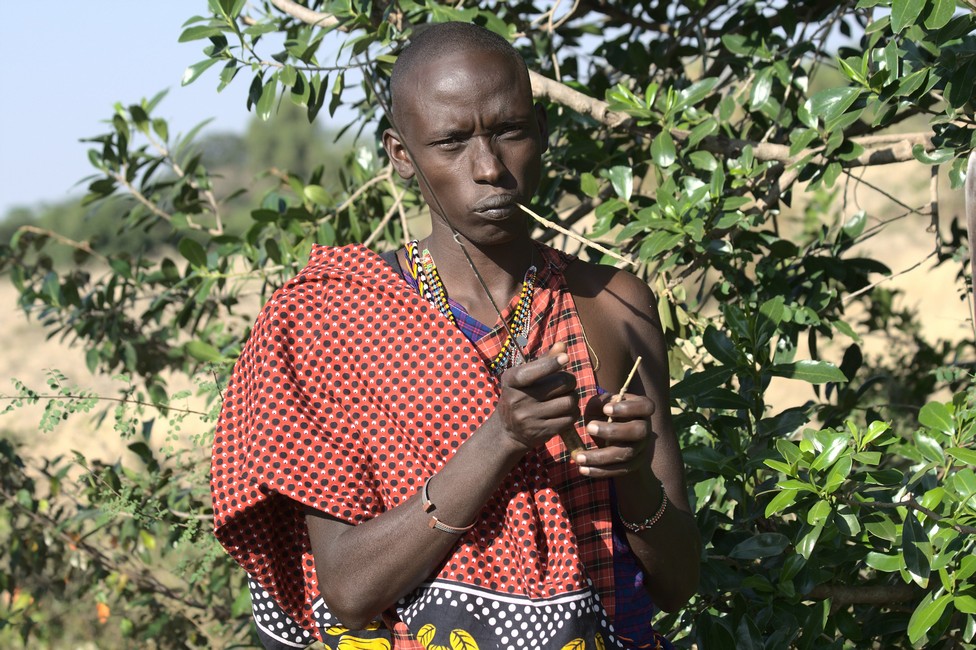
On the way to his village, he shows us some interesting things, like the toothbrush tree, from its branch they gain the twigs to brush their teeth. With this stick, the teeth are scrubbed, without paste, the tree is said to have cleansing power.
Patrick makes a tooth brushMaasai tooth brush
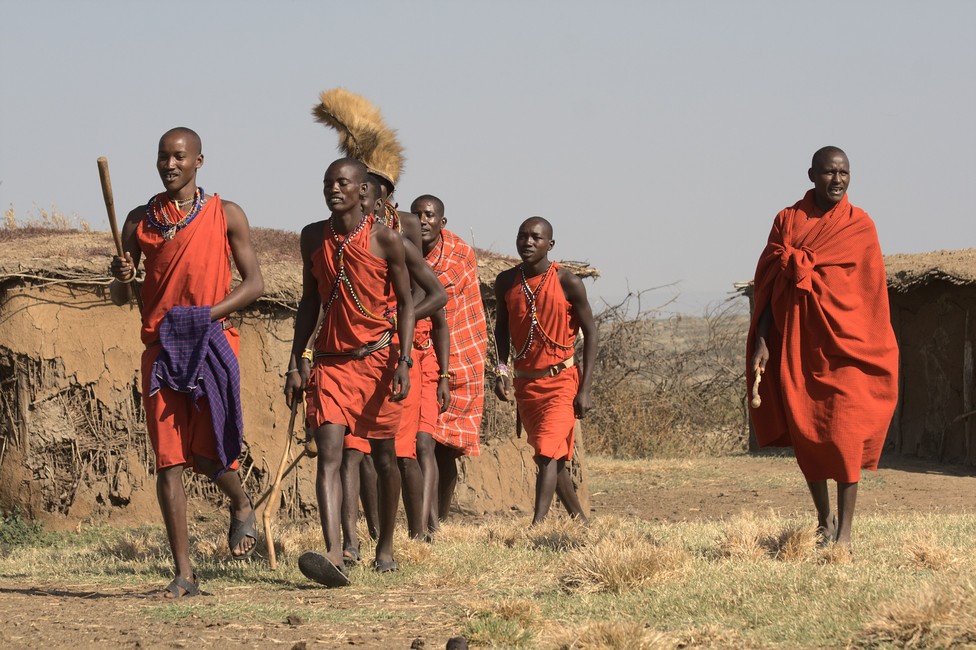
Soon we arrive at Patrick’s manyatta and the young warriors begin to dance for us.
Maasai village
The guys enjoy dancing and dance whenever there is the least possibility to do so. In competition they jump up into the air and compete who is the one that jums highest.
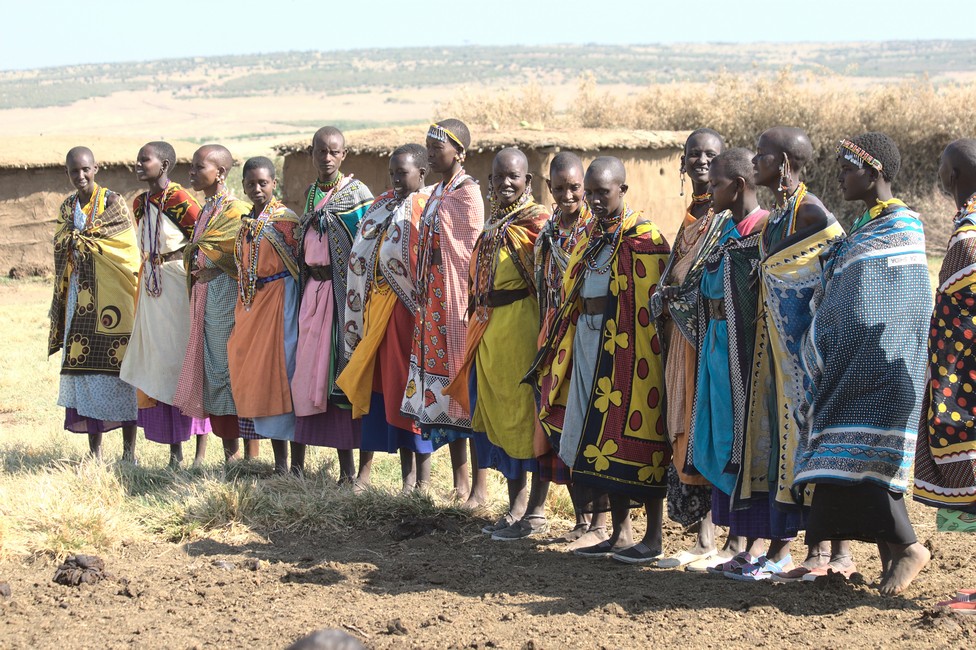
Maasai village, women dance
The dance of the women is more calm but not less interesting and beautiful to watch.
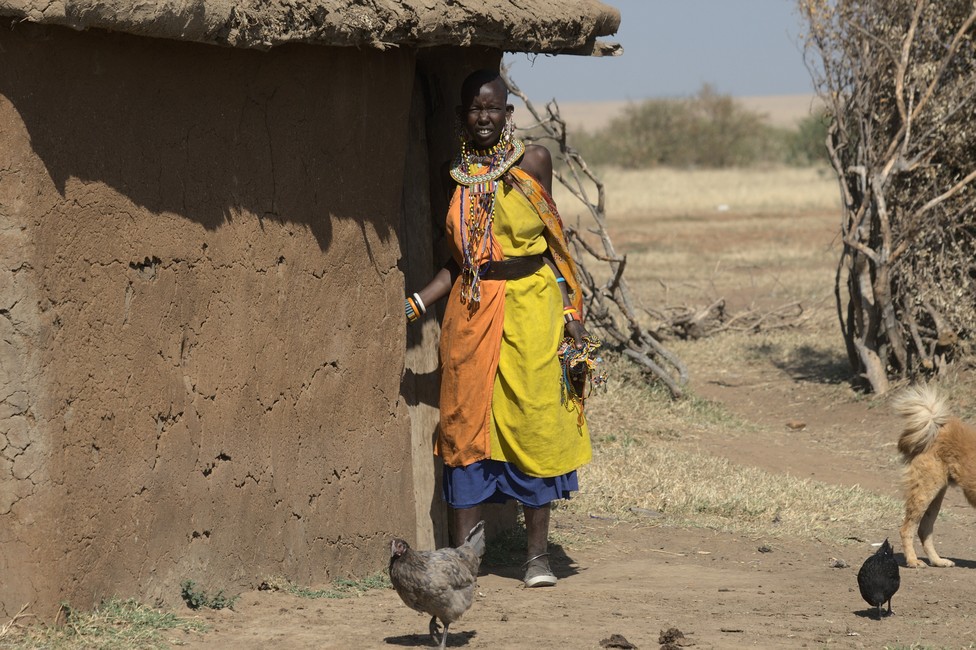
The manyatta consists of several mud houses that are built around a square. The whole manyatta is surrounded with bushes to keep wild animals outside and domestic animals inside. We can look at a house in more detail.
As a farewell even the Masai women dance for us.
Back at the lodge, we end the day quietly, for tomorrow we must move on.
We are heading for Masai Mara National Park. We had to take an armed guide on board, apparently the road is dangerous, it is said that at this place again and again tourists are attacked. We should drop the Ranger at Amboseli National Park, from that point the route to the Masai Mara is safe.
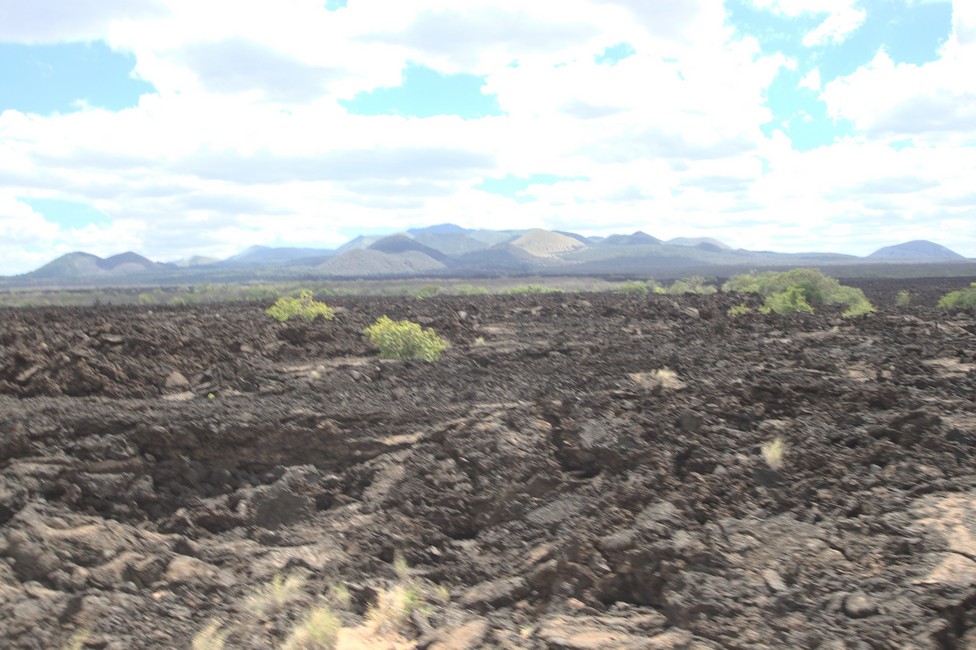
Crossing a lavae field
The gravel road to the Talek gate is no piece of cake and we loose our brake pads, find them again, and go with no brakes to the Aruba Mara Camp, which is run by the German Gerdi. We will spend a few days.
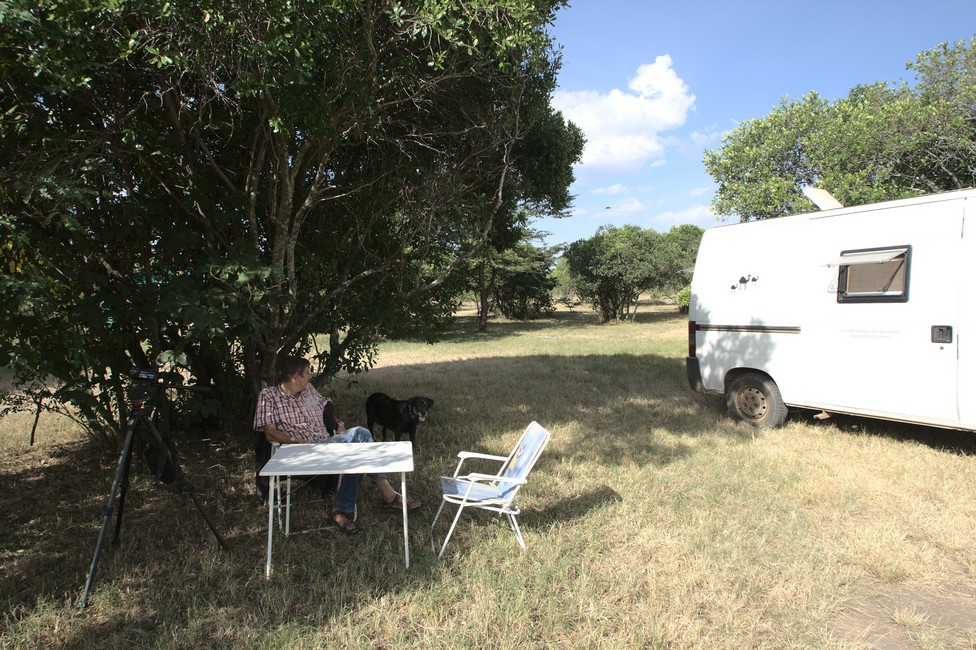
The lodge and the campsite are right on Talek River and we can sit nicely on the bank of the river and watch the animals.
Campsite of Mara Aruba Lodge
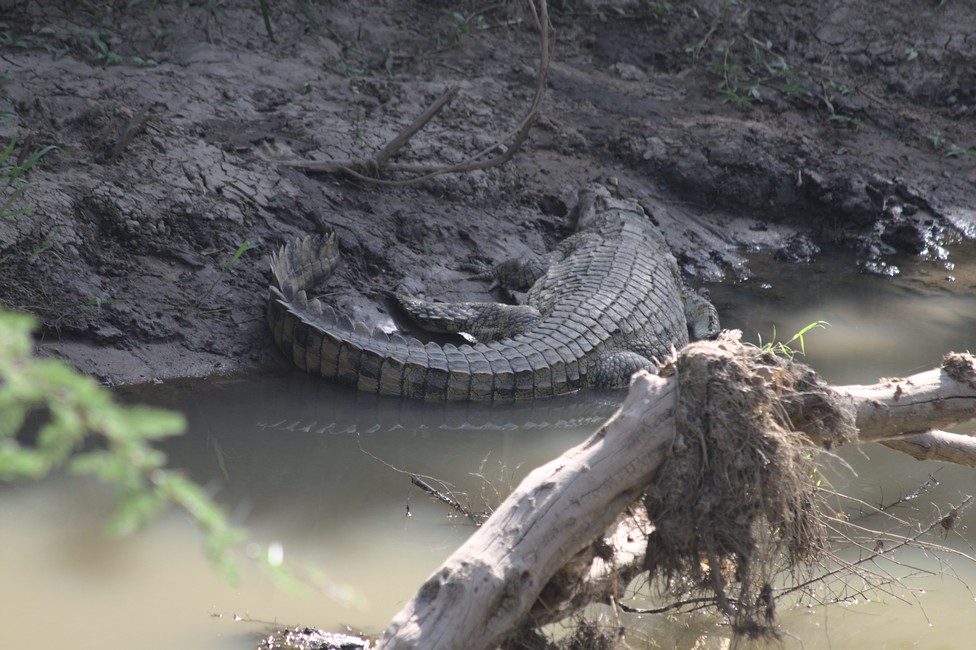
Warthogs romp, and a crocodile sleeps in the shade on the banks of the river.
Crocodile viewing from our camp site
Since our dog Tara is not allowed into the National Park, we have found another solution. She stays in the car in the shade, and we drive with Moses from the lodge for a day trip to the Masai Mara. We start early.
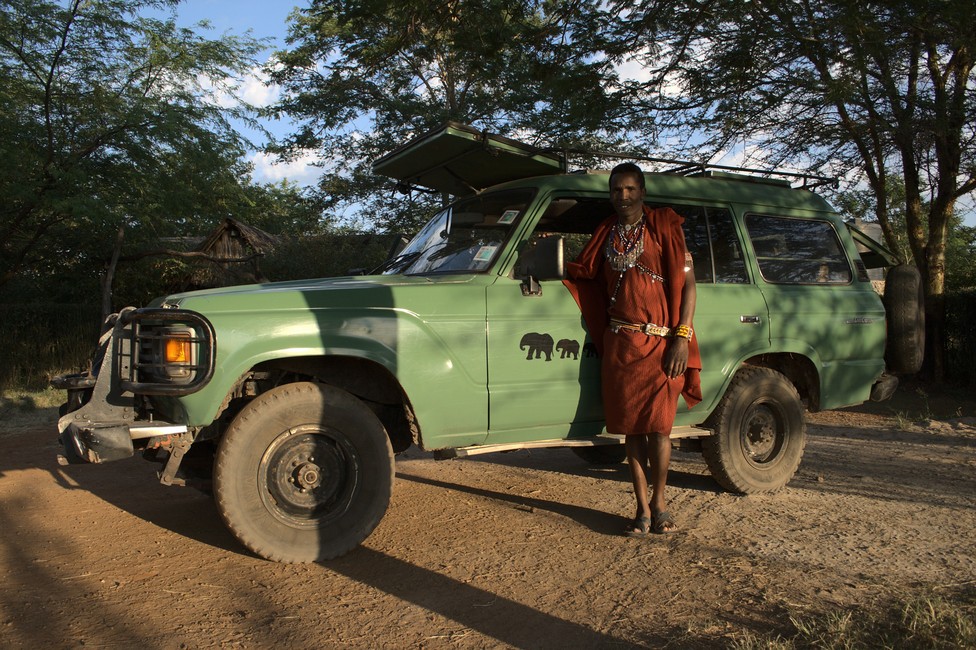
Masai Mara – Moses of Aruba Mara Lodge
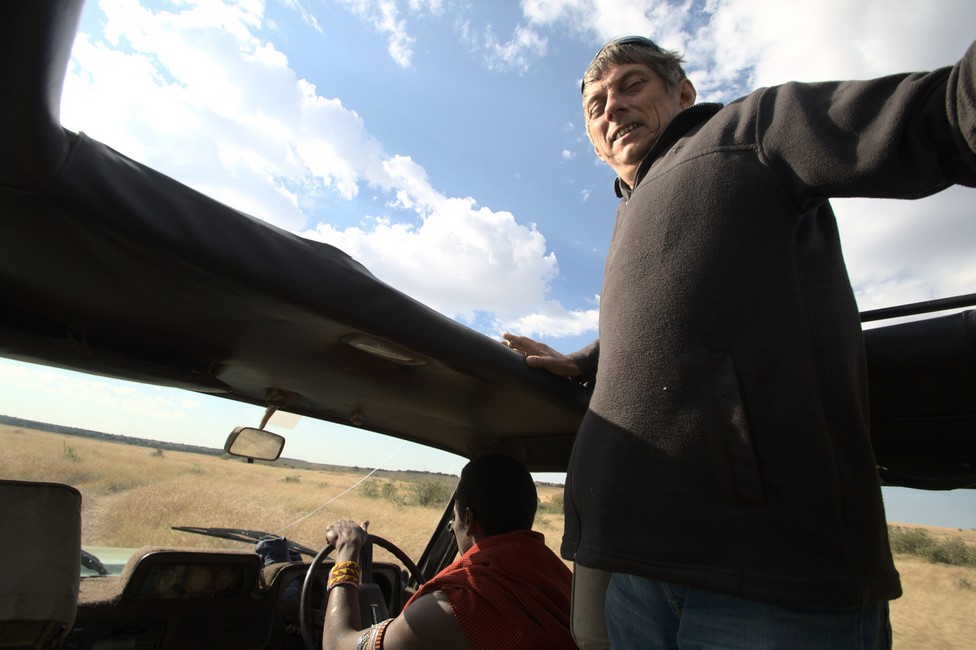
Moses is a traditional living Maasai, who works at the lodge and tours the park with clients. He loads the old Toyota Land Cruiser, and off we go.
After a few minutes game drive, we already see the first wild animals. The Masai Mara has the highest density of animals in all of Kenya.
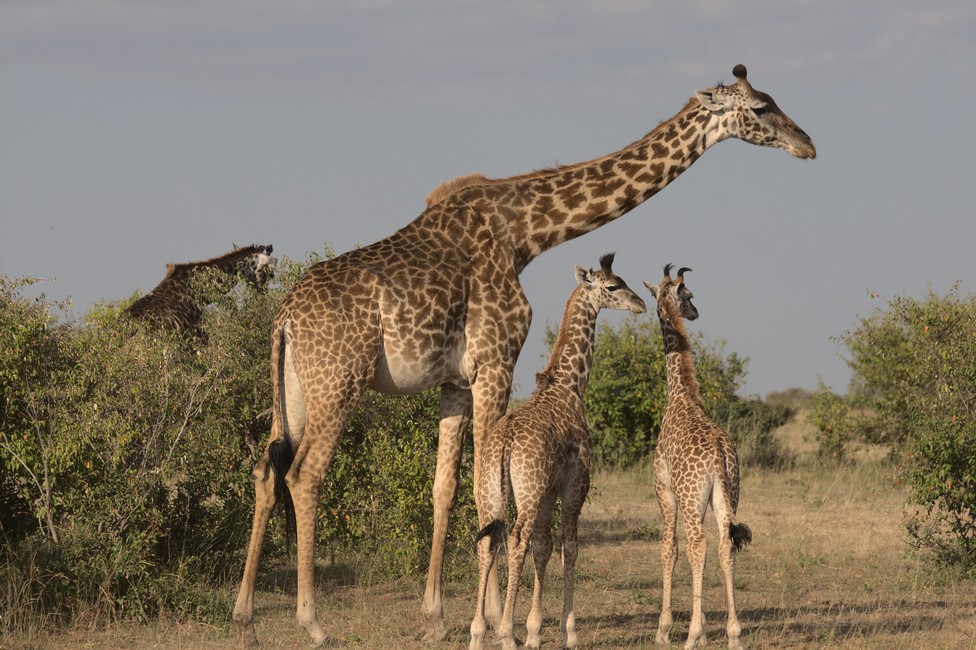
The young giraffe inspects us curiously. Quickly the mother is at hand.
Masai Mara Giraffe
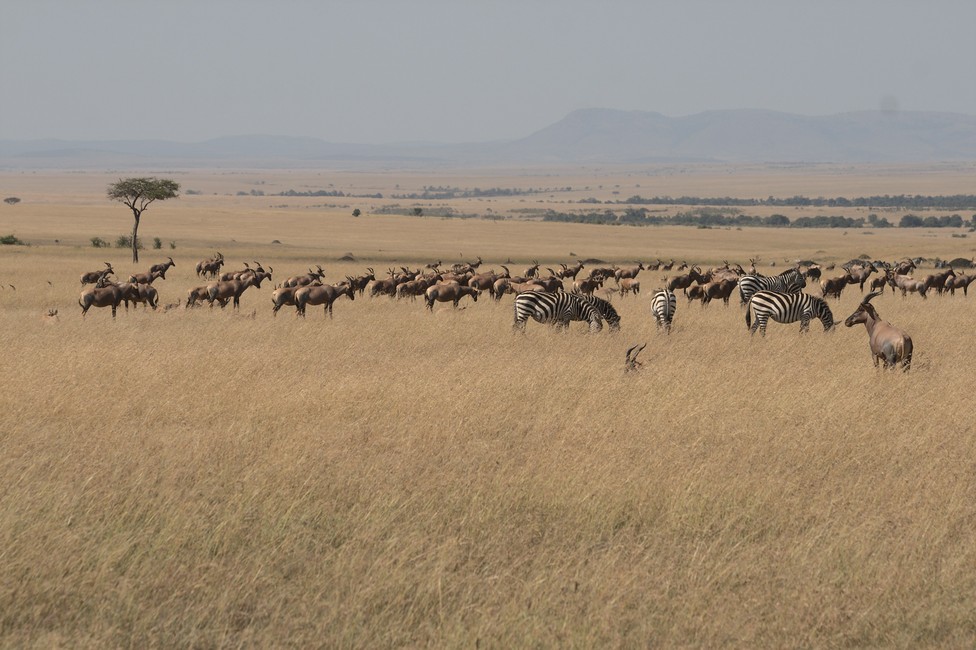
It is just the time of the great migration of wildebeest and zebra,which follow the rains to constantly eat fresh grass.
We and Moses in Masai Mara
Giraffes do not migrate. They are not so dependent on green grass, they eat the leaves of trees which are throughout the year lush and green.
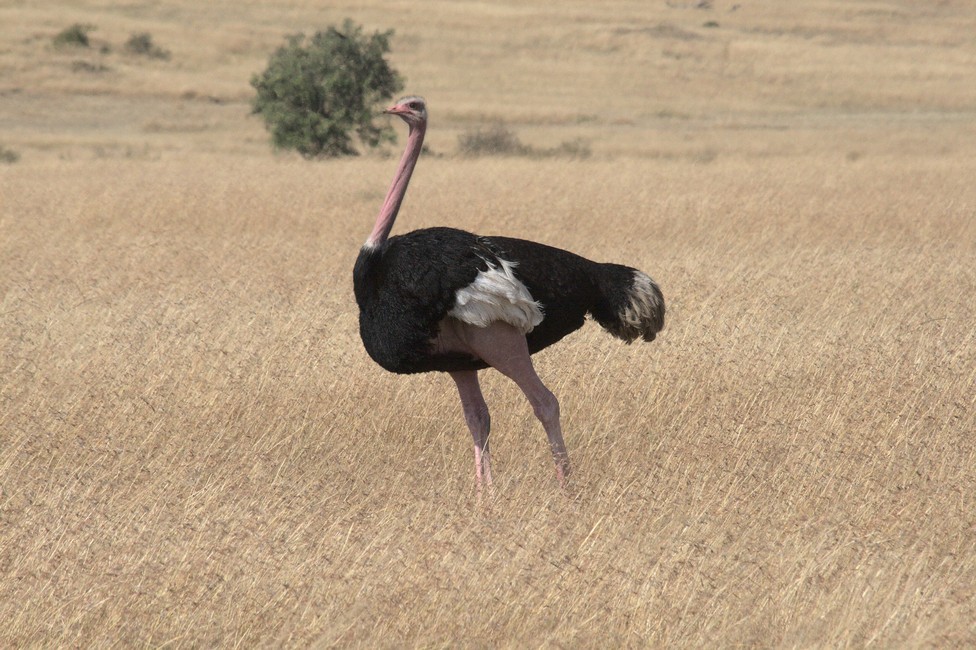
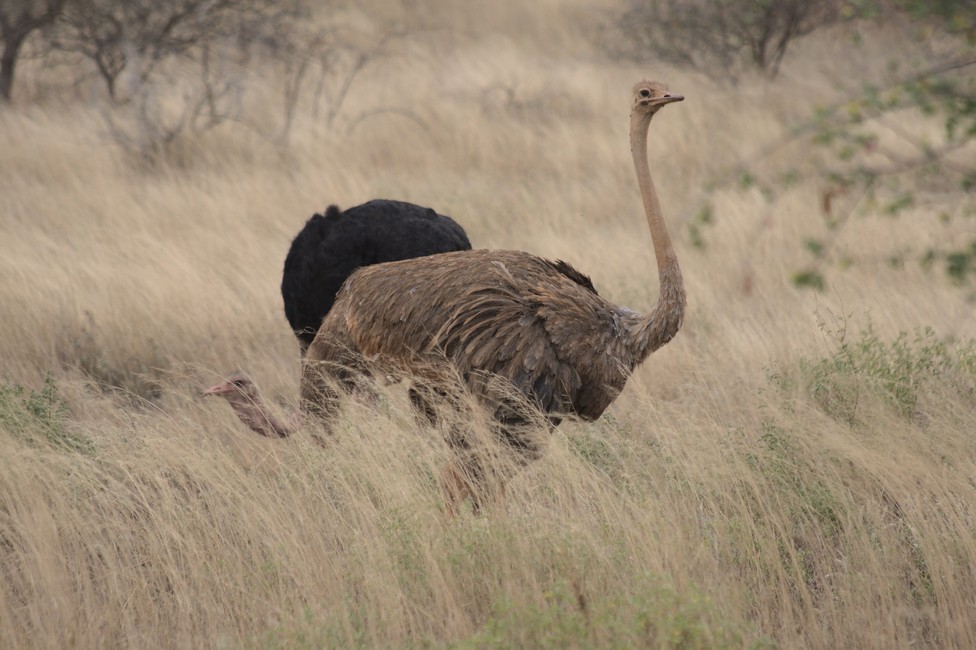
We spot a pair of ostrich. The male has jet-black plumage, the female is light brown color to be camouflaged better during incubation of the eggs.
Ostrich Male
More than 2.5 million animals going to the Great Migration, which is a 1,000-kilometer circuit. 1.7 million wildebeest and 800,000 zebras move, accompanied by Thomson’s gazelle. The tour starts in the south of the Serengeti in Tanzania. In May, the animals begin to migrate gradually to the north, the young are then already large enough to endure the trek. Between August and October, they come to the Mara River, where many of the animals die. In December, they pull back on the east side, in the south of the Serengeti.
Great Migration
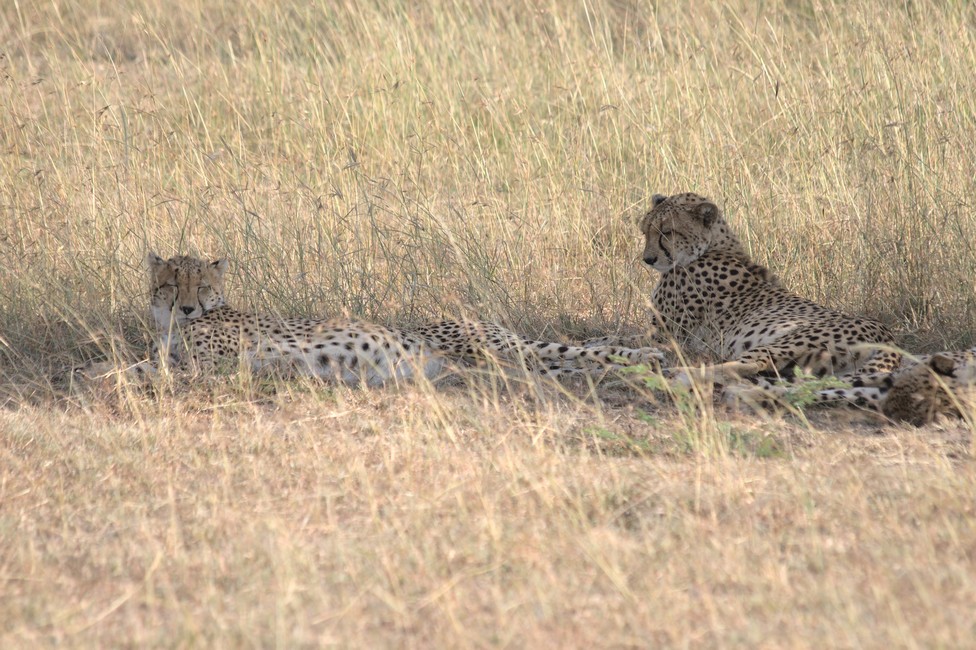
Moses spotted cheetahs. We drive closer. We can not see exactly if they are three brothers or a mother with teenage children. Moses thinks three males who form hunting communities, because the common hunting increases the chance of good prey. Cheetahs are not territorial, they follow the wildebeest on their migration and are fast runners.
Cheetahs
We drive on, we want to the Mara River. Moses drives the cruiser with great skill through water and on the grassy plains. We enjoy the scenery and fascinating wildlife.
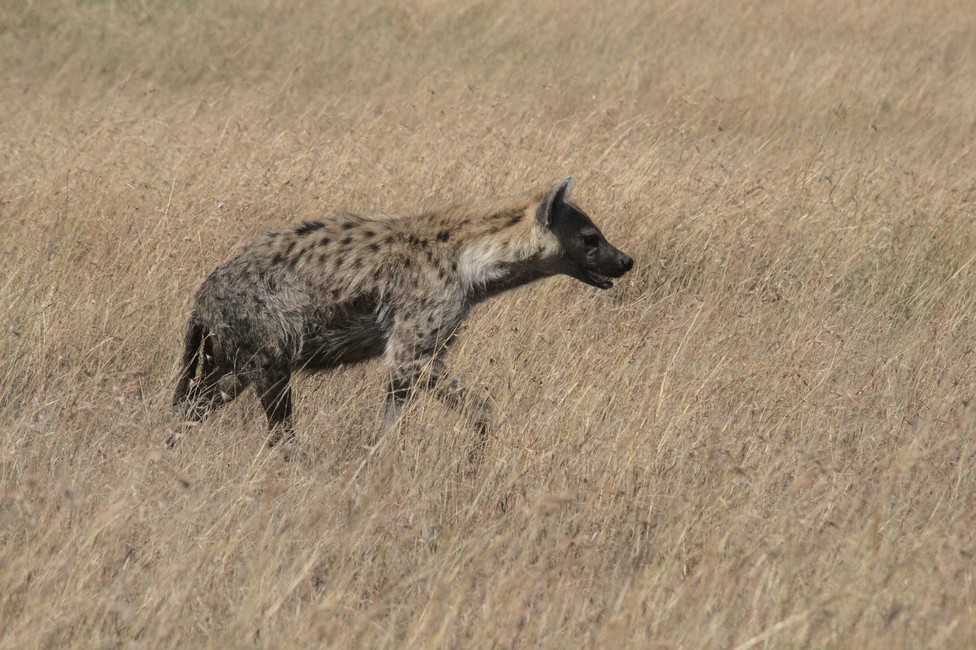
In the tall grass we discover a spotted hyena. It seems to be hunting. She senses in all directions for prey. But she is alone, so the hunt is extremely difficult. The wildebeest have discovered her and flee. A small group of zebras is near, maybe they are the target of the hyena. The Zebras have discovered the hyena and flee as well Not a good day for the predator.
Hyena
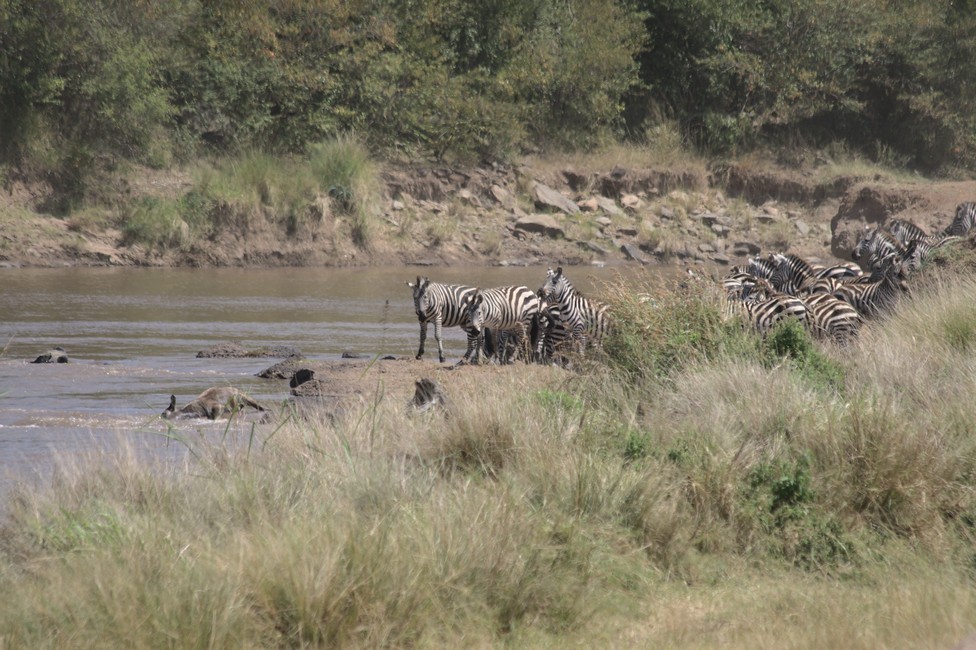
Arriving at the Mara River, a few zebras and wildebeest awaiting their chance to cross the river safely. Again and again, an animal starts an attempt, but turn around at the last second. If an animal dares, the whole group follows.
Mara River in Masai Mara
Some safari vehicles have gathered at the river to wait for the moment when the herd starts. A dead wildebeest is floating in the water. Probably a group further up the river has ventured a crossing and here the wildebeest drowned. Probably fell and drowned. Now the crocodiles will grab it.The group tries it again and again, but does not dare, not without reason, because on the opposite bank there is a mighty crocodile, waiting motionless for prey.
We do not want to wait anymore and decide to make a picnic at the river. Moses explores the situation. Here it seems to be safe. Only a couple of hippos splashing in the water, not very excited by our presence.
And a crocodile takes his laps in the water. A really pleasant picnic area. But Moses knows the nature and the animals better, so we have set up a small table and chairs here.
It’s a really nice place at the river. Moses peering through binoculars, if he can find something interesting. But there is nothing to see. It’s a really nice place at the river. Moses peering through binoculars, if he can find something interesting. But there is nothing to see. Alexandra watched the crocodiles in the water, but it’s time we have to go back.
On the way back we find a lion in a tree with a lioness. An unusual sight. Even Moses had never seen anything like it.
The day is coming to an end and we are tired and come exhausted back to the lodge.
In Tsavo West National Park we drive to Mzima Springs. Shortly before the springs an ostriche crosses our way.
Ostrich
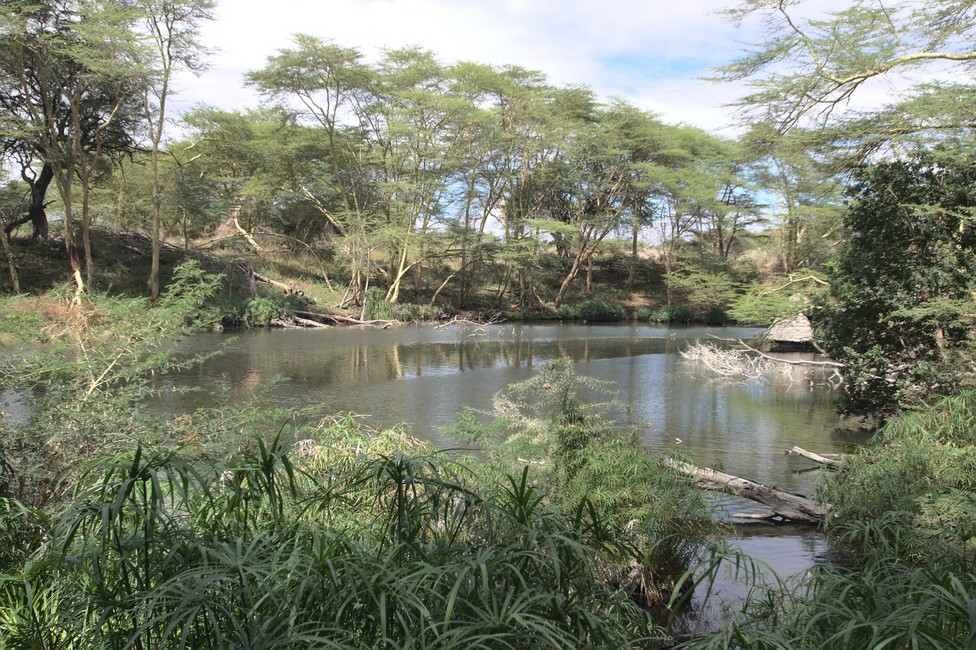
We stop and can see it still in the thick bush. At the springs you are allowed to get out of your car. On a path you can explore the springs quite well. Up to 500 million liters of clean water each day passes through the porous volcanic rock, which collects in pools and ponds. It is believed that it originates 100 kilometers away, at Mount Kilimanjaro and the Chyulu Hills. A path leads along the lake shore of the spring. And to an underwater observatory. One can observe crocodiles and hippos above and under water, but today we have no luck.
Mzima Springs
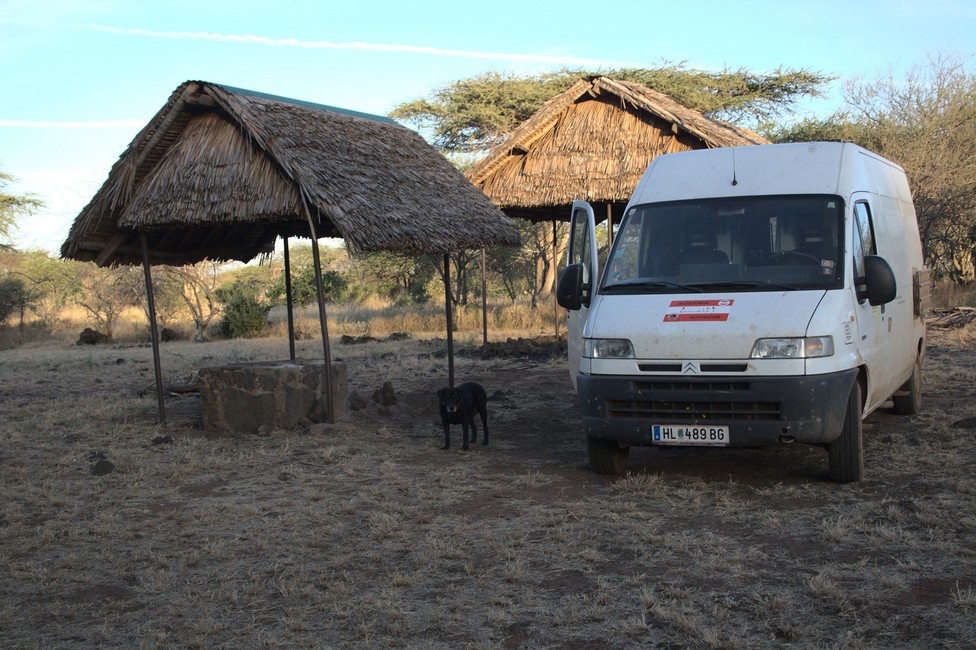
It’s getting late and we drive to the campsite. Along the way, we still see a Masai giraffe, in the light of the setting sun. At the campsite we make a fire for dinner and to keep wild animals away from us. When it got dark we could see lots of eyes in the grass around us, so we decided to better go into the van. You never know.
Campsite in Tsavo
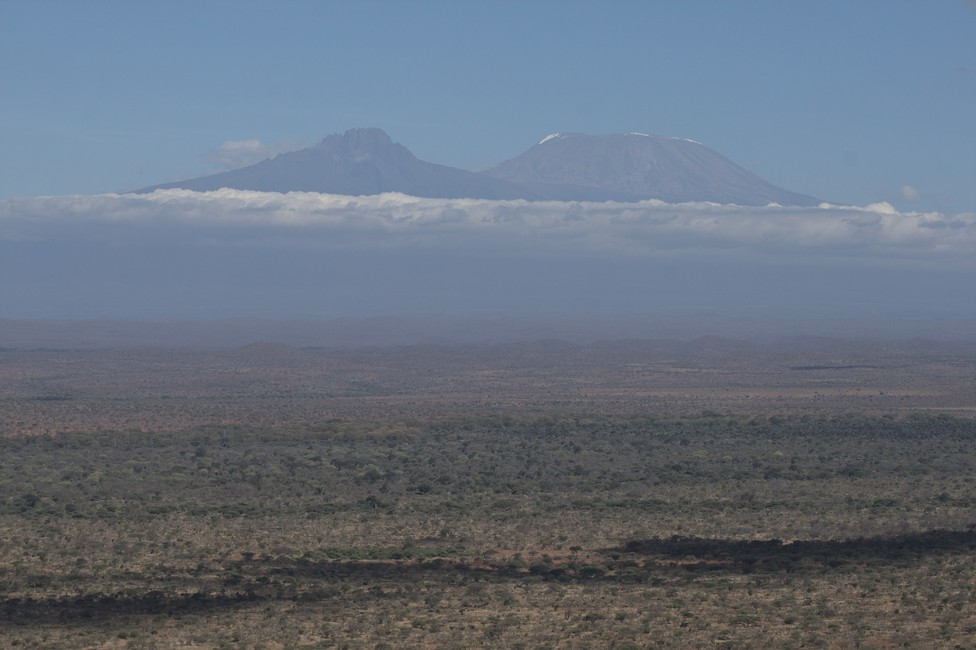
Only in the early morning is a good chance of seeing animals. We leave early, the scenery is great in the morning light, and we catch our first views of Mount Kilimanjaro.
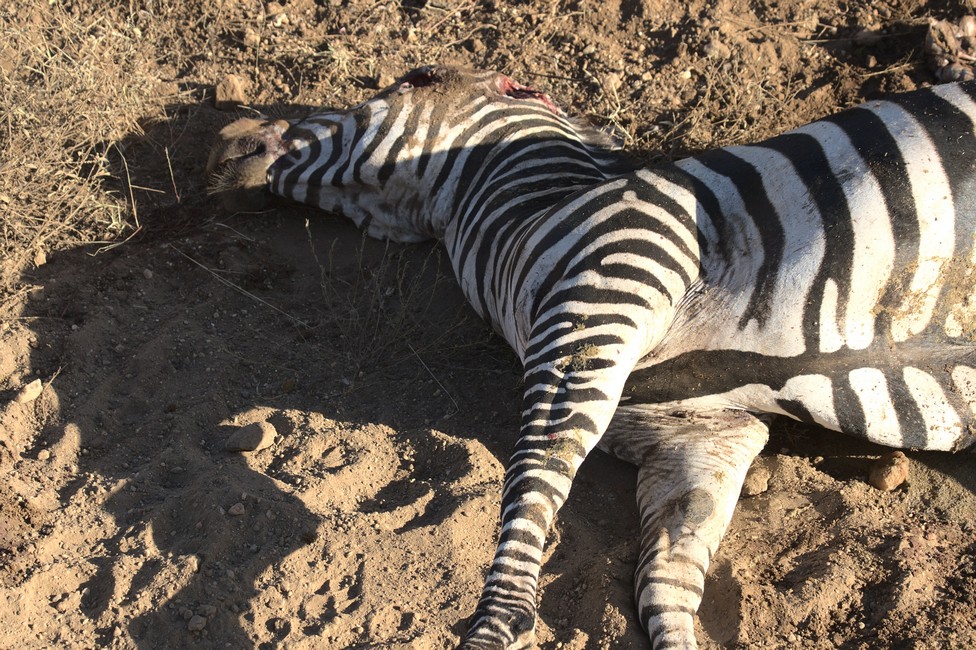
A few kilometers from the campsite, we see a dead zebra. A leopard has killed it, he is still around.
Dead Zebra killed by a Leopard (somewhere in the bush)
Even the charkals are here and make use of the prey. The intestines are towed to a quiet place and consumed.
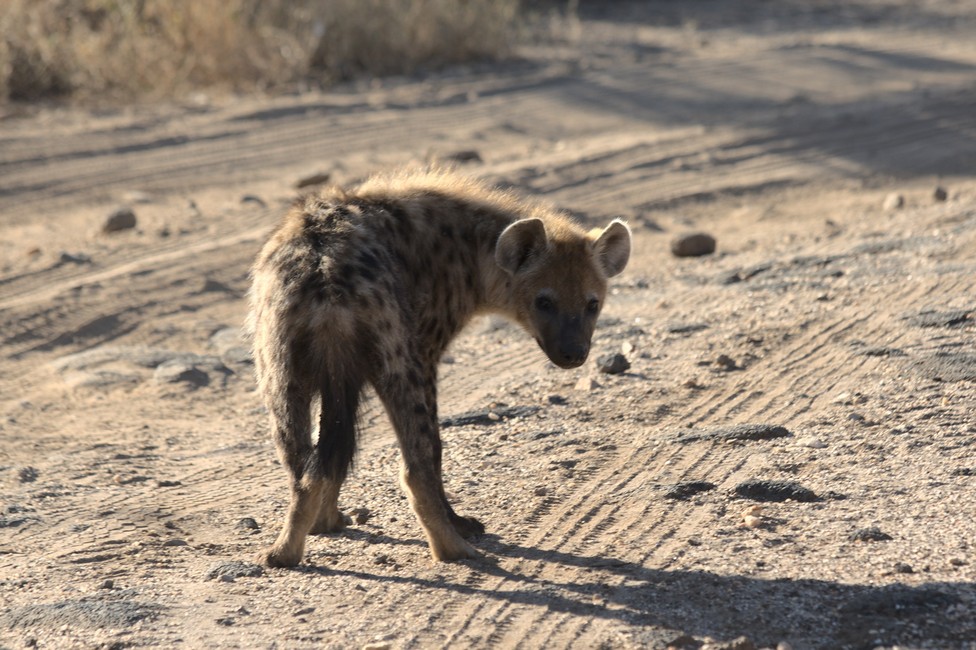
In the sun, the carcass is already bloated. Spotted hyenas are also waiting for their opportunity, but fear the leopard.
Hyena near the zebra
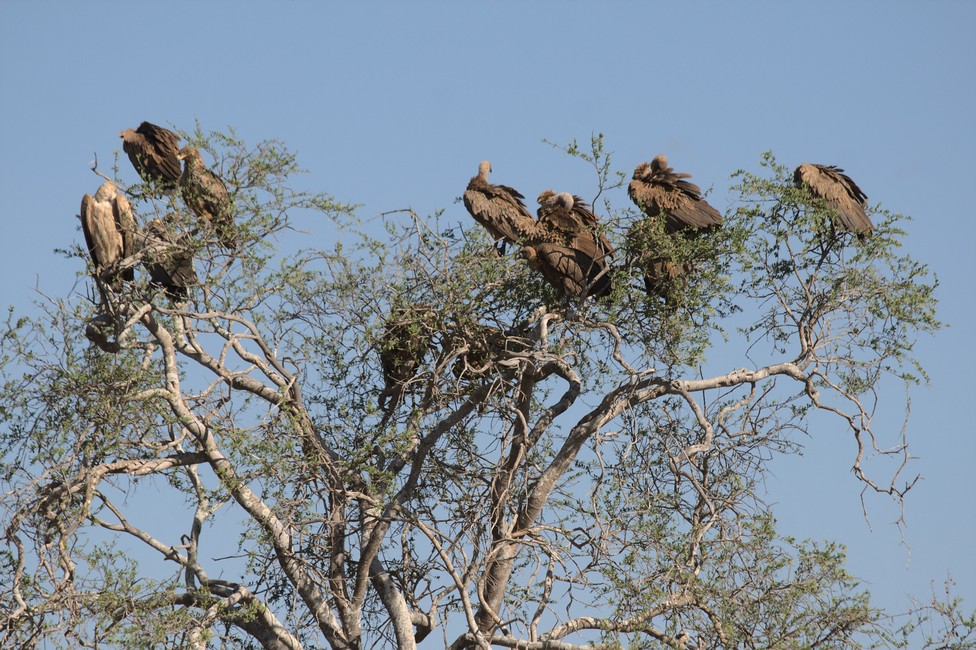
Meanwhile, the back part of the zebra is already missing and the vultures are waiting patiently in the trees until it is their turn.
Vultures
We drive to a hill from which you will have a great view of Mount Kilimanjaro. Behind a hill, we see a herd of zebra, looking startled the distance.
Poachers outlook, good view at Kilimanjaro
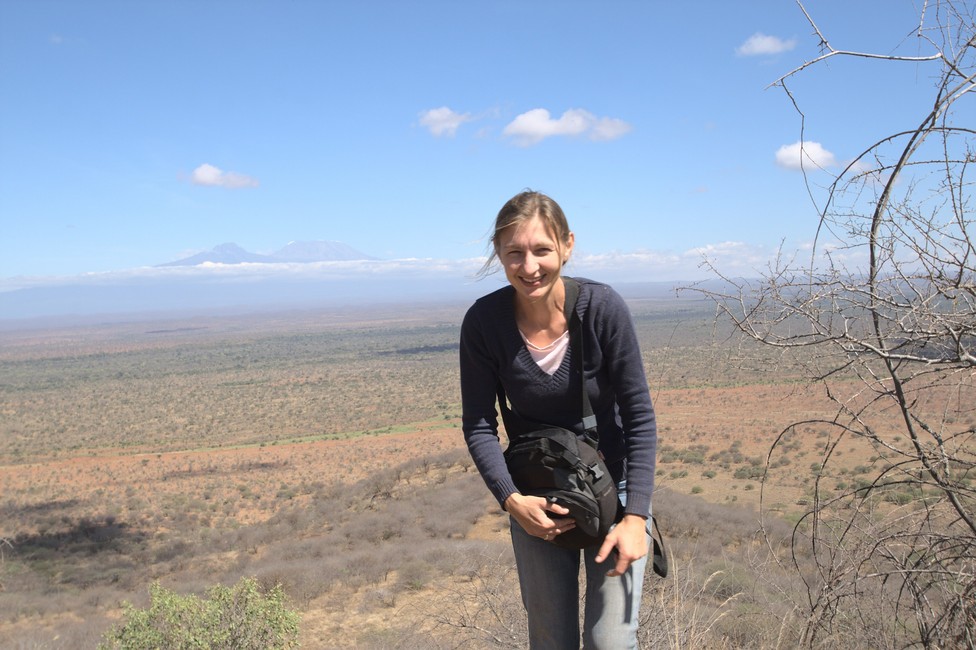
On the lookout we have the magnificent view of the highest mountain in Africa. A beautiful sight with a cloud wreath below the summit. We can hardly get enough, no other tourists here, so we have Kilimanjaro for ourselves.
Alexandra at Poacher´s Outlook
Poacher’s outlook the mountain is called, we now know why, because from here you have a wide view over the savannah, and may well spot for wildlife.
Poacher’s outlook
Then we have luck again. A safari van reveals the presence of lions. A male and female stroll into the bush. The lioness will soon be ready to mate, the male follows her.
We leave Tsavo West National Park, stop at a lava field, but still want to get into the Masai Mara today, the Kenyan part of Serengeti.
Just before sunset we reached Voi next to Tsavo East National Park, we are dog-tired, and we checked into the Red Elephant Lodge. Tomorrow we have to go to a garage.
The specialists say that the tank was completely destroyed, demounted it, though they can not fix it. So the whole thing is put back in and the diesel is filled into the tank again. Oddly, the tank does not leak anymore. Obviously only the hose into the tank or from the tank was loose and now is tightened again. In any case, the action continues until the afternoon. It is too late to continue, so back to the Red Elephant Lodge.
Red Elephant Lodge
We have once again good luck. Red elephants gather at the water hole and we can easily observe them from the lodge. It is a herd of cows with calfs. The mothers are indeed alarmed by our presence, but not particularly worried.
Elephants
The bungalows of the lodge overlooking the water hole are built in typical style of Africa. After the elephants were gone, another squad Baboons comes to the water hole.
After a short time outside of Voi, we see an elephant bull.
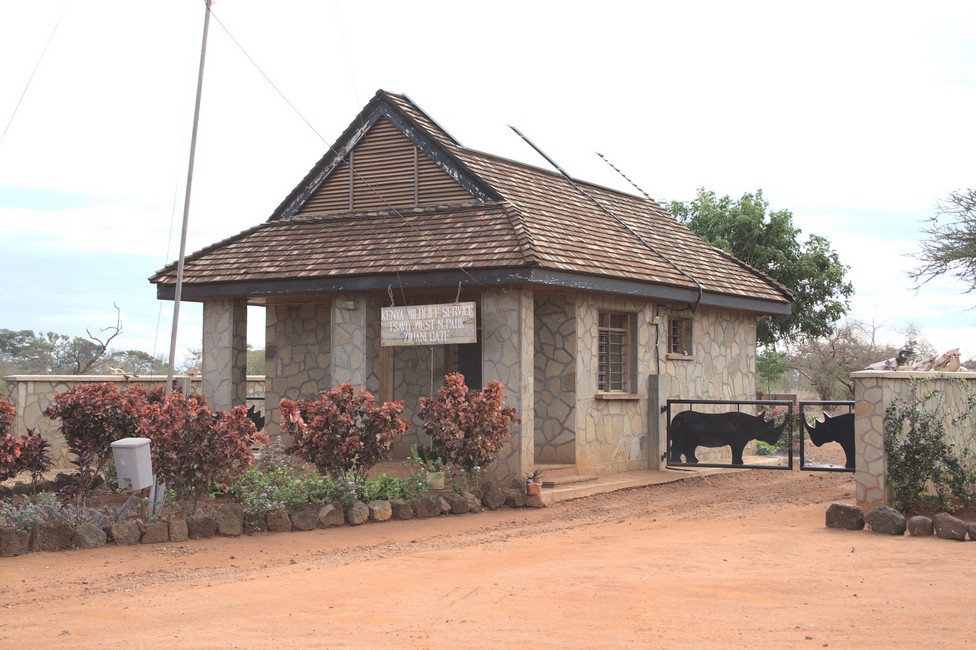
We drive all day and evening, we reached the gate, with a broken stabilizer. The mechanic repaired it during the night, so we can spend the night at the gate and early morning, with permission for Tara, we could enter the park.
Tsavo West Gate
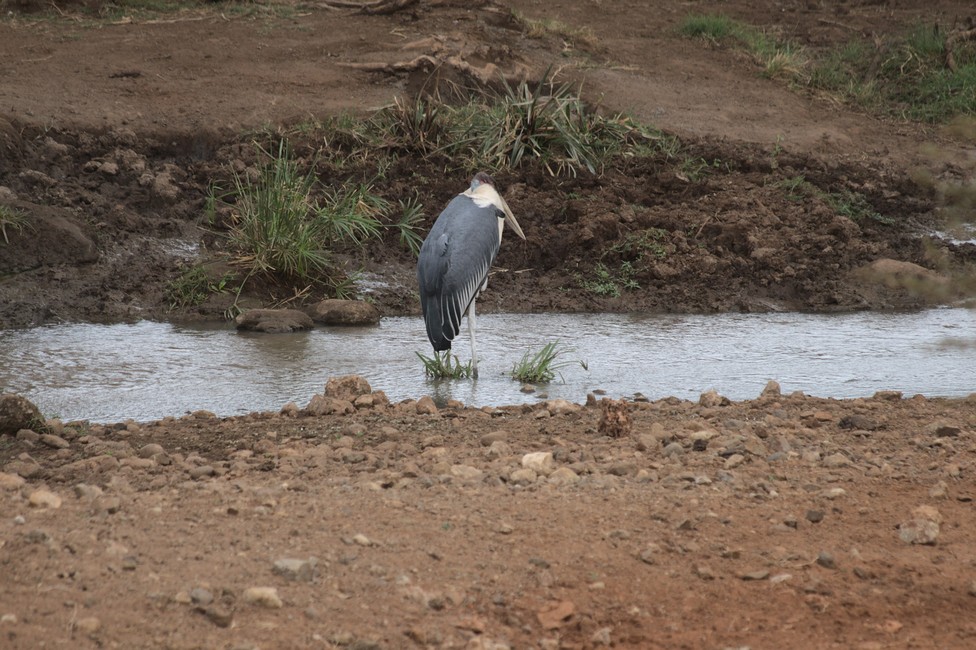
We soon see a marabou stork and enjoy the rugged beauty of the Tsavo National Park. The western part has the most visitors, though the numbers have declined sharply due to high ticket prices. The landscape here is varied and appealing to the perennial leading Tsavo River. The landscape consists of rolling plains and dense riverine forest.
Marabou Stork
We remain a bit on the river and enjoy the silence, hoping that the animals come to the water.
After a while we give up and drive to Mzima Springs. Shortly before the springs an ostriche crosses our way.
The days pass and Sven and Nadine, a German couple with their ancient Land Rover, arrives at the site. They are on the way to Germany, the car they bought in South Africa.
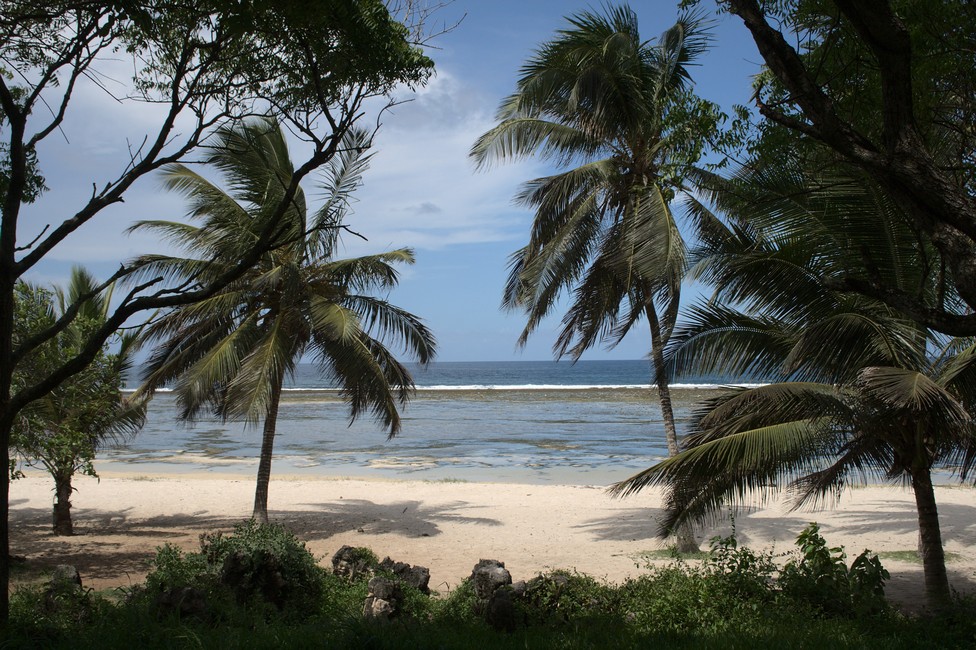
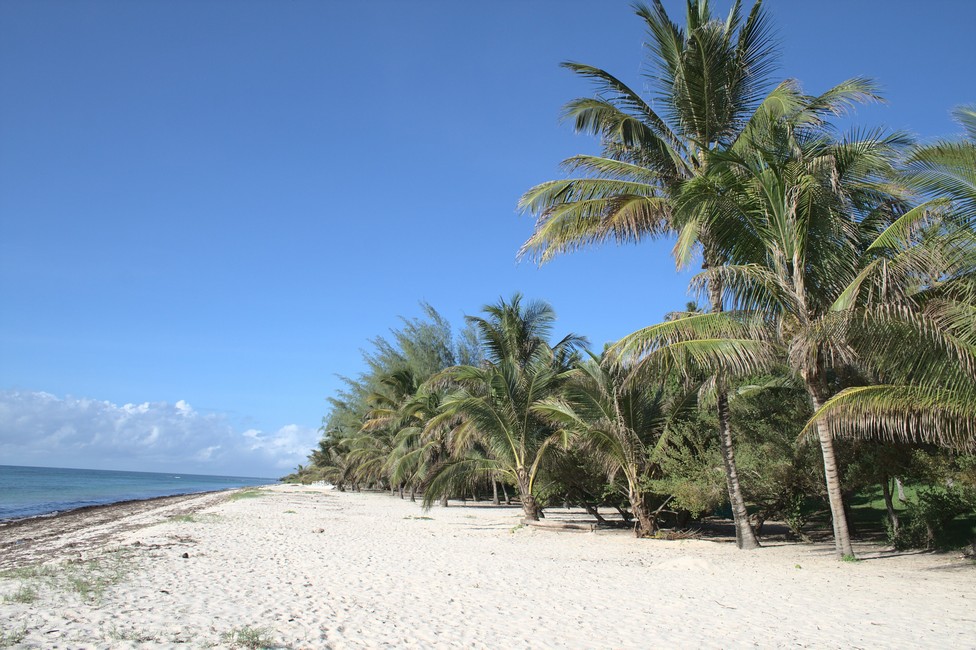
We enjoy a few days in paradise, with palm trees and sandy beach, the rainy season seems to be over, and we are planning to travel with Sven and Nadine a distance together.
Finally, after six weeks we leave Tiwi Beach and drive to the Shimba Hills, we want to visit the National Park.
Through beautiful scenery, we swing around the world. Palm trees along the road, which is not bad and soon we reached the gate of the park. We want to stay here.
But the prices are high, and we give up and decide to continue to Voi to spend the night there.
Initially, the track is still good, but it is getting worse, the rainy season has left its mark, there are still 175 kilometres to Voi, if this keeps up, we need to stay in the bush somewhere.
Shimba Hills during rainy season
We need to stop. A sloping, muddy piece lies ahead. On foot we explore the passage to see if we get through here. We decided to risk it.
Made it, looked worse than it was. Now is Sven’s turn.
Also made. And then it goes on. After an hour we are held back. The road is blocked. A truck spun out and turned over and has lost its load. We have to wait until the road is cleared again.
The thing is evolving into a mud battle, but now there is no turning back. Ouch – We set up very hard, I hope nothing is damaged.
Nadine says, oil is dripping from our van. No, on closer inspection it is diesel. Where it comes from, cannot be localized because of the mud, it is not much, so we should still make it to Voi. Just before sunset we reached Voi, are dog-tired, and we checked into the Red Elephant Lodge. Tomorrow we have to go to a garage.
We have heard of Tiwi Beach. So we leave Nairobi. We want to the coast south of Mombasa to Diani Beach. The road is in perfect condition and we are making good progress. The traffic is dense for African standards, and they drive like crazy, they drive with Jesus and God, because so nothing can happen. Although the road is good we make an overnight stop in Voi at the border of the National Park.
Camping in Voi
Along the way we supplement our supplies at street stalls. Soon the Taita Hills come into view, we have made half the distance to the coast, the weather is worse, it announces the rainy season. After the ferry in Mombasa it rains, but tropical rains do not last long, however, and so the sun is shining, when we arrive in paradise in Tiwi Beach.
Rainy Season
Twiga Lodge is fantastic – green grass, white sandy beach under palm trees, Indian Ocean, a small restaurant, it could be our invention.
Tiwi BeachTiwi Beach
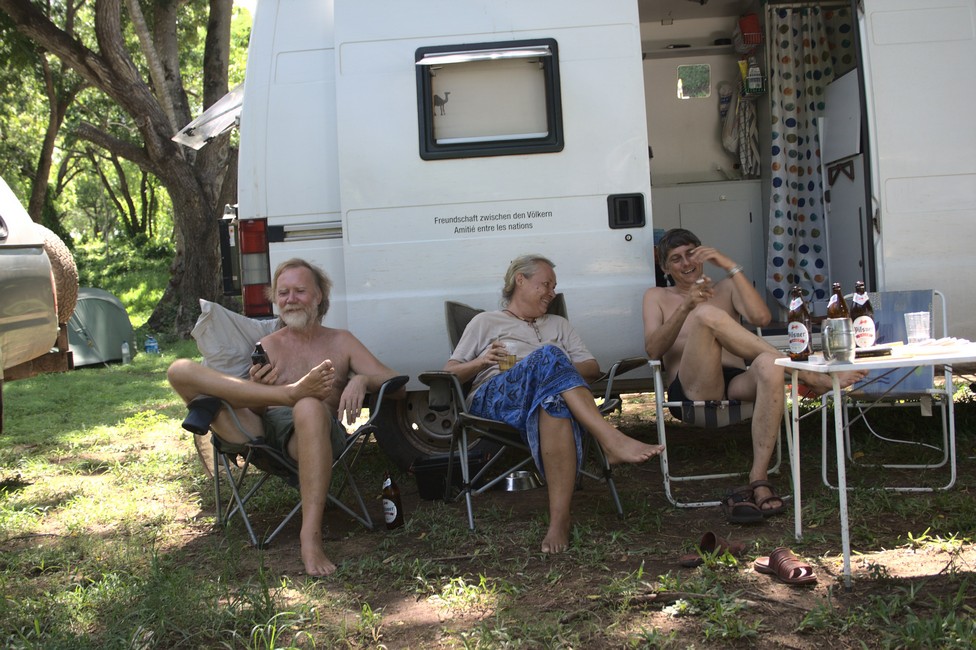
We get to know Bruno and Ursula, two long-term travelers who are traveling for five years. We cook together and share travel tips.
Meeting a German Couple.
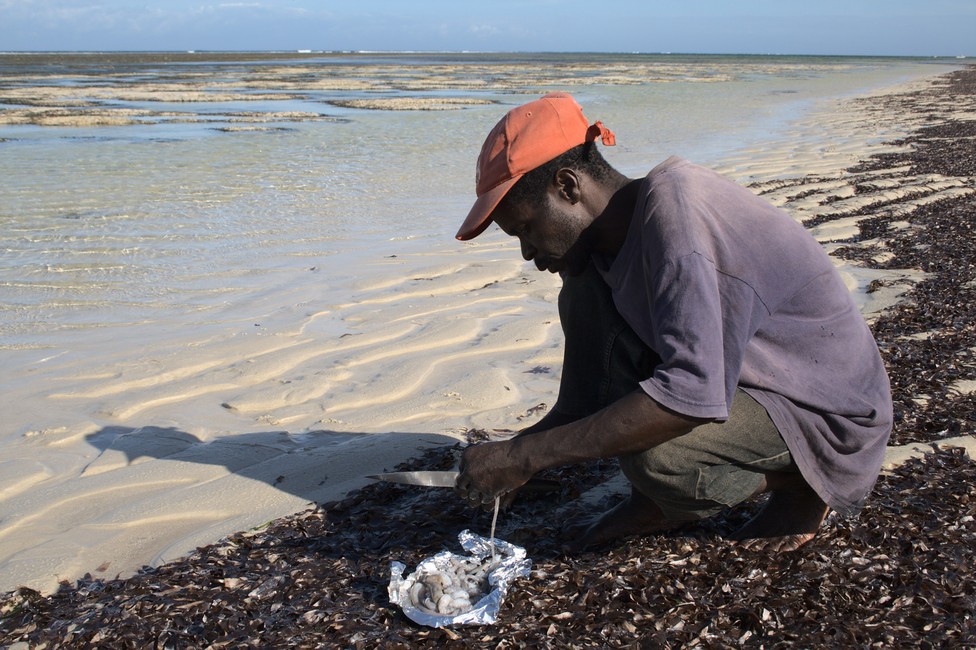
Next morning rainy season hits us again, with hours of heavy rain. Never mind, let’s stay in the van. The rain came as fast, as its over now, and already we have bought our dinner from a fisherman, he filleted the fish on the spot.
Looks delicious, and will end up in the pan. Idi, the caretaker, rounds off the matter with a coconut and introduces us to the art of eating coconut.
Fisher man preparing our dinner
Not only mom have to taste, dad has to take a sip as well, that is how people in Eastern Africa address us foreigners.
Another fisherman offers squid. Also, it will end in the pan.
So we defend our dinner against the monkeys. The coconut,we had to leave to the monkey, it was faster. A crab logs for dinner, but it leaves us better, otherwise it ends up in the pan as well.
So we enjoy our dinner under the palm trees, it could not be better, if Tara were not feeling worse and worse. In a cloak and dagger emergency operation the uterus must get out, otherwise she would bleed to death.
Tara still dizzy after the operation
Paradise is relative, but we are lucky and by the skill of Dr. Peter she survived the surgery. A few days later, he removed the stitches. She is still wobbly, but on the way to recovery. We extend our stay at Twiga Lodge, to give her time to recover, there are worse places to spend your time.
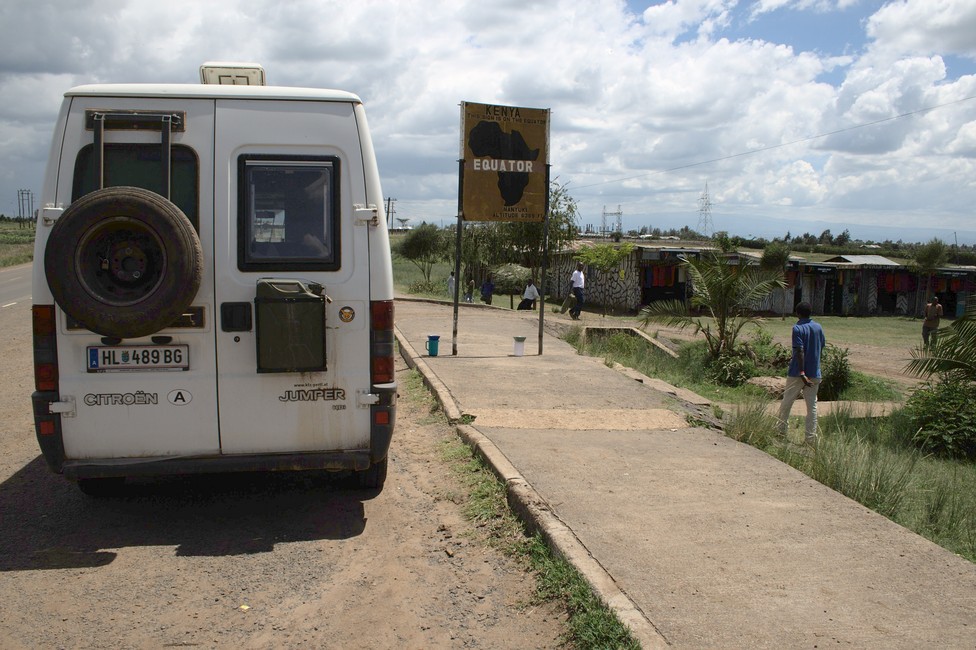
We leave Isiolo to Nairobi, and at the height of Mount Kenya we cross the equator for the first time, we have to take a picture of course. It is not every day you cross the equator.
Crossining the Equator
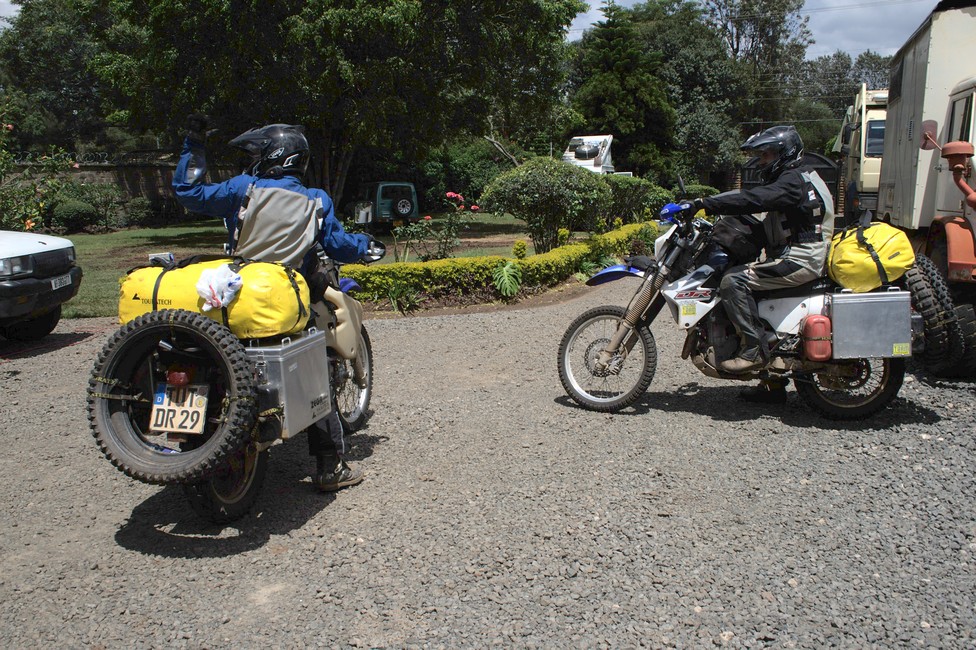
Passing Naro Moro, a small town with little infrastructure, we get to the Rift Valley on very good roads, and after a few hours drive, we are already in the city bustle of Nairobi, where we settle down at a campsite called Jungle Junction, which is led by Chris, because we have a problem again. Our shock absorber suspension is broken.
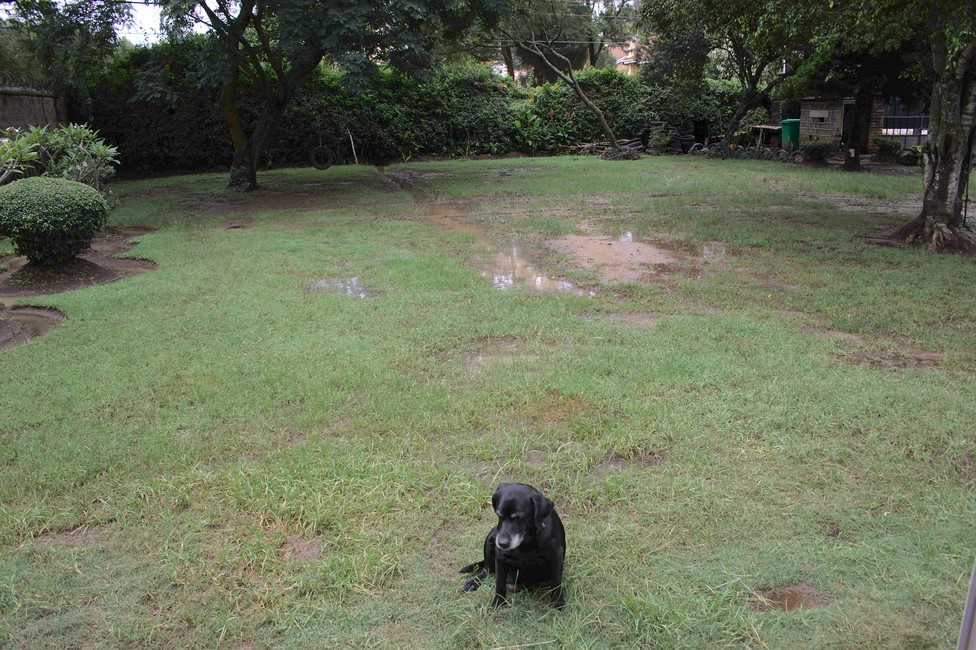
Jungle Junction Nairobi after the rain, Tara enjoys the rest.
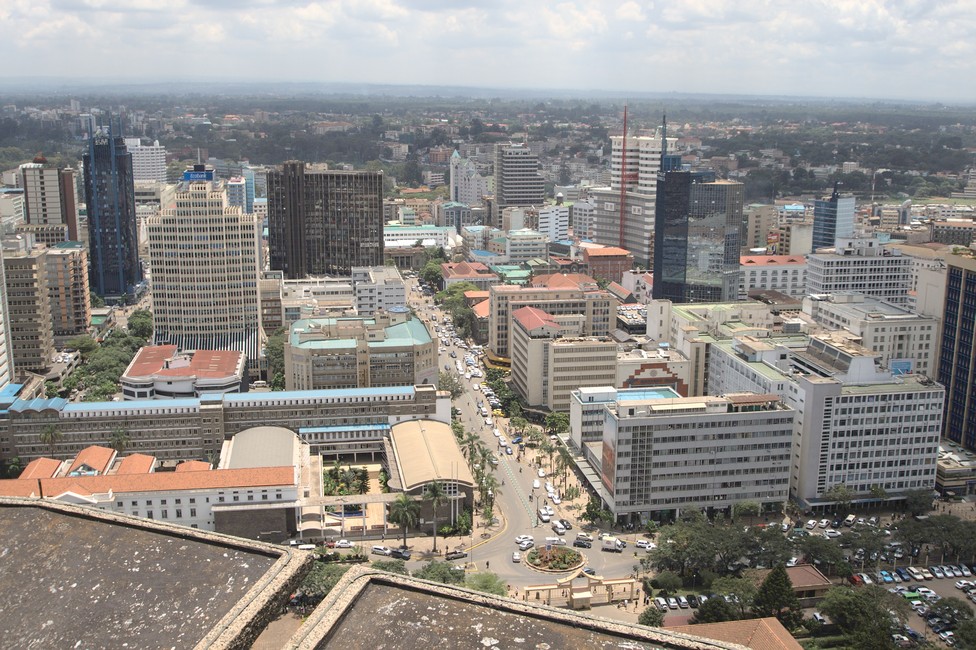
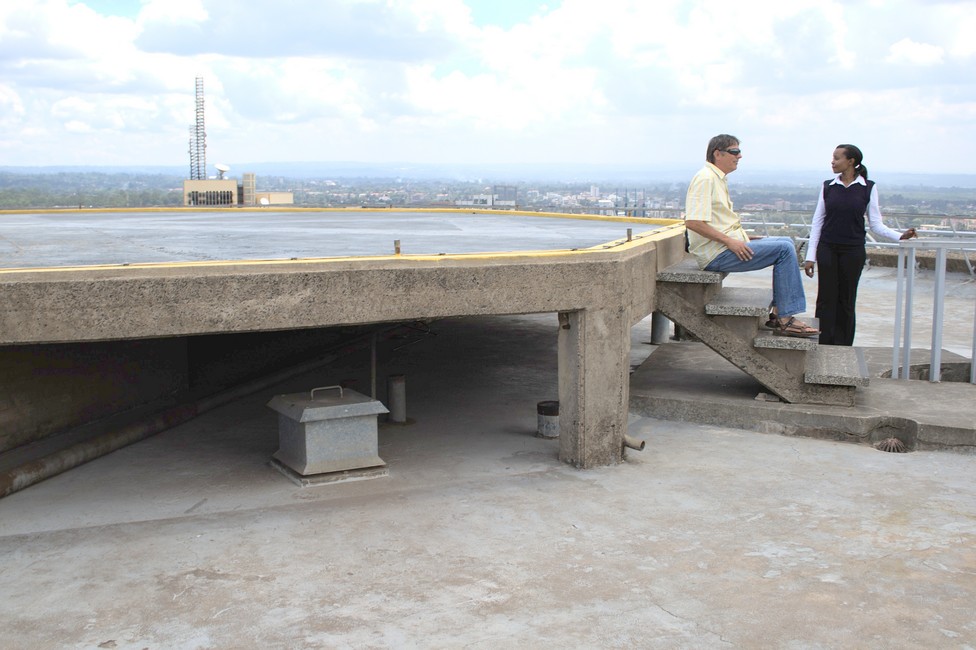
While the mechanics are sorting out the damage, we take a taxi and visit Nairobi sights. Our goal is the tower of the Kenyatta International Centre, from where you have a good view over Nairobi.
Center of Nairobi
From an altitude of 105 meters, we can see modern Nairobi spreading, with high-rise buildings that form the city center.
When I was first in Nairobi in the 1980ies the Tower did not exist and not a single of the skyscrapwer, not even tarmac on the roads.
Nairobi from above with guide, that should prevent people from jumping down.
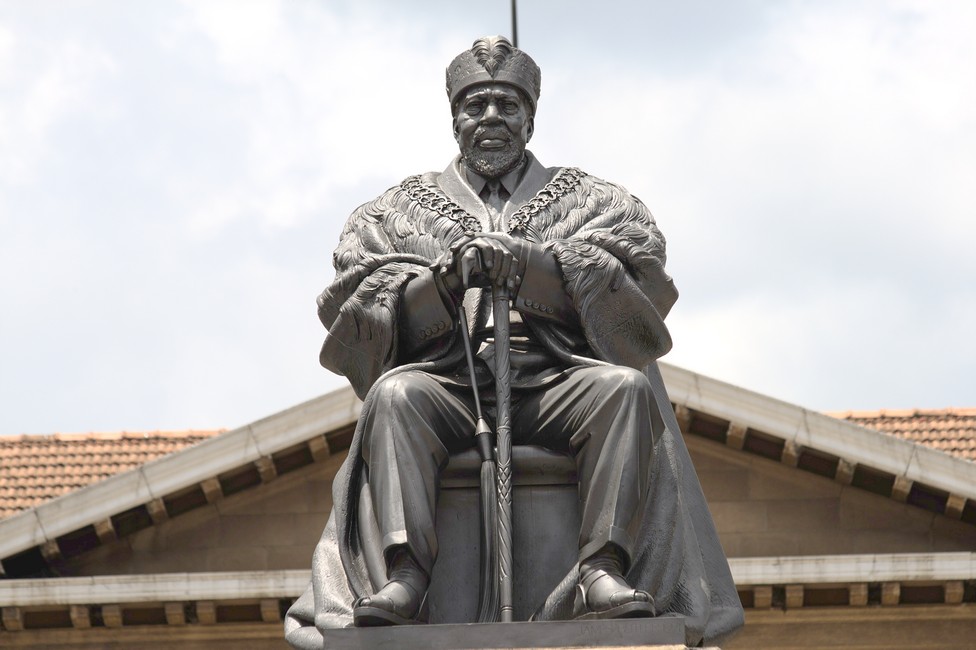
In front of the building there is a statue of the founder Jomo Kenyatta.His eyes are directed at the parliament building with clock tower.
Jomo Kenyatta, the founder of Kenya
When we arrive back at Jungle junction we learn that there are no shock absorbers available for a citroen. NOT AGAIN – DHL from Europe. So I decide to take the mechanics and go for a search myself. In Nairobi there is a quarter that is dedicated only to spare parts shops, little shops run by Indian People and thhey are highly spezialized we go from shop to shop and tell them our problem. In one shop we were lucky we got a used one but highly expensive, as these are rare. At least we got one. Our idea to get a Land Rover gets stronger and stronger. Back at the campsite the mechanics fixes the part and voila it fits.
Jungle Junction Nairobi – Sibille and Wolfgang ( the ones from Buffalo Springs NP) are leaving
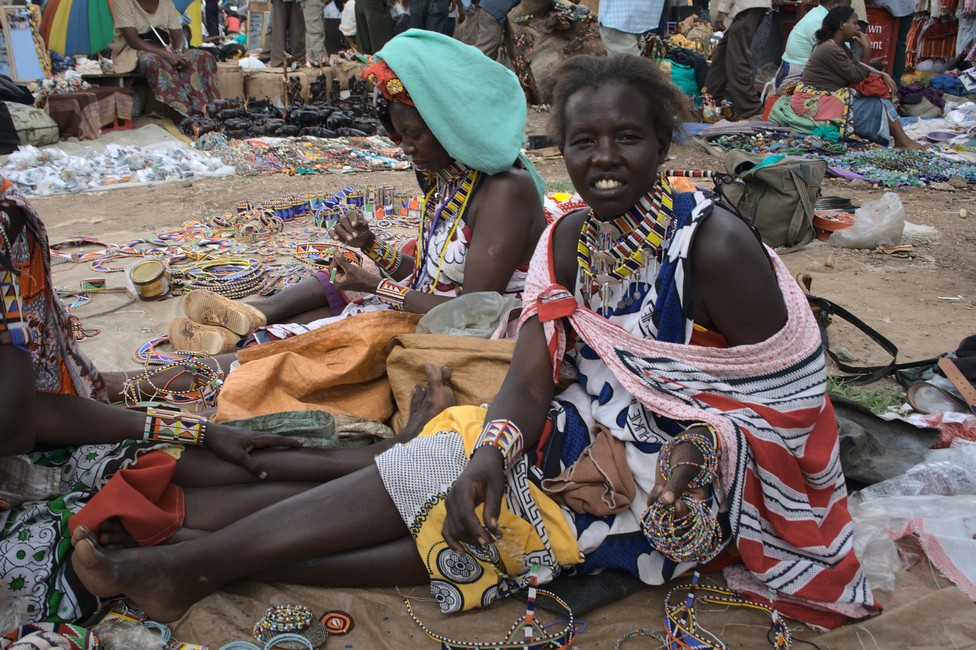
We want to visit the Maasai market in Nairobi. Much to the disadvantage of the tourists, the market is well organized. It is a local market and is managed by the community. When you approach the market, you immediately are accompanied by a guy that presses a bag in your hand and walks through the market with you. Things you want to buy you put into that bag, also if the vendors are different,and at the end you are led behind a bush where you pay. There starts the bargainin, the tourist looses the battle in any case, leaving the market with goods you do not need and are overprized. The best is you leave your money at the Hotel.
Buffalo Springs National Park is our next destination. With last strength we make it to Isiolo in the Gadissa Lodge, 15 kilometers from the lodge our bearing gave up. Now, some good advice, because at the end of the world it is difficult to get spare parts for our vehicle.
Sibille and Wolfgang have also arrived, and a mechanic who takes a close look at the problem.
The problem is quickly identified, we need new wheel bearings and the housing must be welded. Not so easy. With luck we could get new wheel bearings, Wolfgang is a mechanic and supervises the proper installation and soon we are ready to drive again.
In the National Park motorcycles are not allowed, so we do a two-day trip to the park with Wolfgang and Sibille, with our van. We have to smuggle Tara, what we managed, and after the gate, we see our first elephants.
Buffalo Springs National Park
We are excited because so much luck we did not expect. We watch the elephants for a while, and on the game drive warthogs cross our way.
Buffalo Springs National Park
After a short drive, even the long-necked gerenuk was crossing our way. Gerenuks are gazelles and only found in Buffalo Springs National Park.
Buffalo Springs National Park – Gerenuks
After the heavy rains of recent days, the Ewaso Ngivo river, the bridge to Samburu National Park was badly damaged, so there is no way for us to cross. But we still see Grevy’s zebras and lyre antelopes.
Bridge to Samburu National Park
It’s getting late and we set up our bush camp. Sibille and Wolfgang will sleep in tents, Alexandra makes a bush walk with the armed guards of our night camp.
coffee break in the vanRanger in the National ParkBush camp with Sibille and Wolfgang
The new morning greets us with beautiful giraffes, what more could you expect from life.
Giraffe
The reticulated giraffe is living in northern Kenya, as opposed to the southern Masai giraffe, which has a different pattern. At the moment, here is mating season, so we can observe how couples tie their necks around each other, the prelude to the actual mating.