Category Archives: ENG

Zurich City Trip

Zurich City Guide – The Perfect 3-Day Itinerary

Destination: Zurich, Switzerland
Recommended Stay: 2–3 days
Travel Style: City Trip
Guide Format: PDF / Print
Languages: EN / DE / FR / ES
Zurich is Switzerland’s largest city and one of Europe’s most attractive destinations for a short city trip. Located at the northern end of Lake Zurich and surrounded by rolling hills and the distant Alps, the city combines historic architecture, world-class museums, modern culture, and beautiful natural scenery.

Although Zurich is known as a global financial center, it is also a city rich in culture, history, and lifestyle. The charming Old Town (Altstadt) features medieval streets, historic churches, and picturesque squares, while modern districts offer trendy cafés, art galleries, and innovative restaurants.

The city developed as an important trading center during the Middle Ages and later became a hub of intellectual and artistic life. Zurich played a significant role in the Protestant Reformation under the leadership of Huldrych Zwingli and later became a meeting place for writers, artists, and political thinkers.

Today Zurich is known for its high quality of life, efficient public transport, and vibrant cultural scene. Visitors can explore historic landmarks, relax beside the lake, enjoy excellent cuisine, and take scenic excursions into the nearby mountains.

With its compact layout and beautiful surroundings, Zurich is an ideal destination for a relaxing yet culturally rich city break.

This Zurich city guide presents a carefully designed 3-day itinerary that highlights the city’s most important attractions while allowing visitors to explore local neighborhoods and enjoy the relaxed Swiss lifestyle.


Hero Section

Title: Zurich City Guide – The Perfect 3-Day Itinerary

Destination: Zurich, Switzerland
Recommended Stay: 2–3 days
Travel Style: City Trip
Guide Format: PDF / Print
Languages: EN / DE / FR / ES

Buttons:


What’s Inside This Guide

This travel guide includes a detailed itinerary for exploring Zurich efficiently, with walking routes, travel tips and the most important attractions.

Highlights:

  • Complete 3-day Zurich itinerary
  • Walking routes and maps
  • Insider travel tips
  • Restaurant recommendations
  • Hidden attractions
  • Practical travel advice

Zurich’s historic center is compact and easy to explore on foot, while trams and trains connect all parts of the city.


Suggested 3-Day Itinerary

Day 1 – Historic Highlights

Begin your exploration in Zurich Old Town (Altstadt), the historic heart of the city. The area stretches along both sides of the Limmat River and is filled with narrow medieval streets, historic buildings, and charming squares.

Start your visit at the impressive Grossmünster, one of Zurich’s most important churches. The Romanesque church played a central role in the Protestant Reformation and remains a symbol of the city.

Climb the tower for panoramic views of Zurich’s rooftops, the river, and Lake Zurich.

Next walk across the river to visit Fraumünster Church, famous for its stunning stained-glass windows designed by artist Marc Chagall.

Continue your walk toward the elegant Bahnhofstrasse, Zurich’s main shopping street and one of the most famous shopping avenues in Europe. The boulevard stretches from the main railway station to Lake Zurich and is lined with luxury boutiques, cafés, and historic buildings.

In the afternoon visit the lively Paradeplatz, an important financial center surrounded by elegant architecture.

From there walk toward the lakefront and enjoy a relaxing stroll along the Lake Zurich promenade.

End your first day with dinner in the Old Town where you can try traditional Swiss dishes such as fondue, raclette, or Zurich-style veal.


Day 2 – Culture & Museums

Your second day focuses on Zurich’s cultural attractions and scenic parks.

Start your morning at the Swiss National Museum, located near the main train station. The museum presents fascinating exhibits about Swiss history, culture, and traditions.

Next visit the Kunsthaus Zurich, one of Switzerland’s most important art museums. The museum contains an impressive collection of works by European masters as well as modern artists.

In the afternoon explore the beautiful Lindenhof Hill, a historic park located above the Old Town. The park offers peaceful green space and excellent views of the Limmat River and surrounding districts.

Later walk along the scenic Limmat River promenade, which connects several neighborhoods and offers picturesque views of historic buildings.

Spend your evening in the lively Zurich West district, a former industrial area that has transformed into a creative neighborhood filled with restaurants, bars, galleries, and cultural venues.


Day 3 – Neighborhoods & Local Life

Your final day focuses on discovering Zurich’s neighborhoods and natural surroundings.

Start your morning at the vibrant Bürkliplatz Market, a popular open-air market where locals buy fresh produce, flowers, and regional products.

Next take a relaxing boat trip on Lake Zurich, which offers beautiful views of the city, surrounding hills, and lakeside villages.

In the afternoon visit Uetliberg Mountain, located just outside the city. A short train ride brings visitors to the summit where panoramic views extend across Zurich, Lake Zurich, and the distant Alps.

Walking trails and scenic viewpoints make Uetliberg a popular destination for both visitors and locals.

Return to the city center and spend the late afternoon exploring Zurich’s small boutiques, cafés, and historic streets.

Finish your Zurich trip with dinner beside the river or lake while enjoying Swiss cuisine and beautiful evening views.


Explore the City Map

Insert a map showing the main attractions and walking routes.

Examples:

Day 1 walking route

Grossmünster → Fraumünster → Bahnhofstrasse → Lake Zurich promenade

Day 2 museum district

Swiss National Museum → Kunsthaus → Lindenhof Hill → Limmat River

Day 3 neighborhood exploration

Bürkliplatz Market → Lake Zurich boat trip → Uetliberg Mountain

Zurich’s trams and trains make it easy to travel across the city and surrounding areas.


Why Visit Zurich

Zurich offers a fascinating mix of culture, architecture and local lifestyle. Visitors can experience historic landmarks, lively neighborhoods and excellent Swiss cuisine within a compact and walkable city.

Reasons to visit Zurich include:

  • Beautiful historic Old Town
  • Scenic Lake Zurich waterfront
  • World-class museums and galleries
  • Easy access to mountains and nature
  • Excellent food, cafés, and shopping

Zurich’s combination of history, culture, and natural beauty makes it one of Europe’s most attractive city destinations.


Who This Guide Is For

Ideal for:

  • First-time visitors
  • Weekend travelers
  • Independent explorers
  • Travelers who enjoy walking itineraries
  • Visitors with limited time

Get the Complete Zurich Guide

Download the full guide to access the complete itinerary, detailed maps and practical travel advice.

Buttons:

  • Buy PDF Guide
  • Buy Print Guide
  • Preview Sample Pages

More City Guides

You may also enjoy:

  • Paris City Guide
  • Barcelona City Guide
  • Vienna City Guide
  • Prague City Guide

Frequently Asked Questions

How many days do you need in Zurich?
2–3 days is usually enough to explore the main attractions.

What is the best time to visit Zurich?
Spring and autumn usually offer pleasant weather and fewer crowds.

Is Zurich walkable for tourists?
Yes. The historic center is compact and perfect for exploring on foot.
Vilnius City Trip

Vilnius City Guide – The Perfect 3-Day Itinerary

Destination: Vilnius, Lithuania
Recommended Stay: 2–3 days
Travel Style: City Trip
Guide Format: PDF / Print
Languages: EN / DE / FR / ES

Vilnius, the capital of Lithuania, is one of the most charming and underrated cities in Europe. Known for its beautiful Baroque architecture, cobblestone streets, and vibrant cultural life, Vilnius offers visitors a fascinating blend of history, art, and modern creativity.

Located at the meeting point of the Neris and Vilnia rivers, the city has long been a crossroads of cultures. Throughout its history Vilnius has been influenced by Lithuanian, Polish, Jewish, Russian, and German traditions. These diverse influences can still be seen in the city’s architecture, religious buildings, and cultural institutions.

Vilnius Old Town is one of the largest and best-preserved medieval town centers in Central and Eastern Europe and is listed as a UNESCO World Heritage Site. Visitors exploring the historic center will discover elegant churches, historic squares, hidden courtyards, and charming streets filled with cafés and boutiques.

Beyond its historic beauty, Vilnius also has a lively contemporary culture. Art galleries, street art, creative districts, and modern restaurants give the city a dynamic and youthful atmosphere.

With its relaxed pace, friendly locals, and compact historic center, Vilnius is an ideal destination for a short city trip.

This Vilnius city guide presents a carefully designed 3-day itinerary that helps visitors discover the city’s main landmarks while also exploring its neighborhoods and local culture.


Hero Section

Title: Vilnius City Guide – The Perfect 3-Day Itinerary

Destination: Vilnius, Lithuania
Recommended Stay: 2–3 days
Travel Style: City Trip
Guide Format: PDF / Print
Languages: EN / DE / FR / ES

Buttons:


What’s Inside This Guide

This travel guide includes a detailed itinerary for exploring Vilnius efficiently, with walking routes, travel tips and the most important attractions.

Highlights:

  • Complete 3-day Vilnius itinerary
  • Walking routes and maps
  • Insider travel tips
  • Restaurant recommendations
  • Hidden attractions
  • Practical travel advice

Vilnius Old Town is compact and easy to explore on foot, allowing visitors to enjoy many attractions within a short distance.


Suggested 3-Day Itinerary

Day 1 – Historic Highlights

Begin your exploration in Vilnius Old Town, the historic heart of the city.

Start at the impressive Vilnius Cathedral, located in Cathedral Square. This elegant neoclassical cathedral is one of Lithuania’s most important religious buildings and serves as a national symbol.

Next climb the nearby Gediminas Tower, the remaining part of the historic Upper Castle. From the top you can enjoy spectacular panoramic views of the Old Town and the surrounding hills.

Continue walking through the Old Town until you reach the beautiful Gate of Dawn, one of the most important religious sites in Lithuania. The gate houses a famous icon of the Virgin Mary that attracts pilgrims from across the region.

Nearby you can explore the lively streets of Pilies Street, one of the oldest streets in Vilnius. The area is filled with souvenir shops, cafés, and historic buildings.

In the afternoon visit the stunning Church of St. Anne, a masterpiece of Gothic architecture made famous by its intricate red-brick façade.

End your first day with dinner in the Old Town where you can try traditional Lithuanian dishes such as cepelinai (potato dumplings), hearty soups, and local beer.


Day 2 – Culture & Museums

Your second day focuses on Vilnius’s museums and cultural attractions.

Start your morning at the Museum of Occupations and Freedom Fights, located in the former KGB headquarters. The museum offers a powerful insight into Lithuania’s history during the Soviet period.

Next explore the charming Užupis district, a creative neighborhood often compared to Montmartre in Paris. Užupis even declared itself an independent republic and has its own playful constitution displayed on the streets.

The district is filled with art galleries, cafés, sculptures, and street art.

In the afternoon visit the National Museum of Lithuania, which presents the country’s history from ancient times to modern independence.

Later take a relaxing walk through Bernardine Gardens, a beautiful park located near the Old Town along the Vilnia River.

Spend your evening enjoying Vilnius’s lively restaurant scene or attending a cultural event such as a concert or theater performance.


Day 3 – Neighborhoods & Local Life

Your final day focuses on exploring local neighborhoods and scenic viewpoints.

Start your morning at the Hales Market, one of the oldest markets in Vilnius. Here visitors can sample Lithuanian cheeses, pastries, meats, and fresh produce.

Next visit the Three Crosses Monument, located on a hill overlooking the city. The monument is one of Vilnius’s most famous viewpoints and offers beautiful views of the Old Town.

In the afternoon explore the historic Antakalnis district, known for its green spaces and peaceful atmosphere.

Later walk along the banks of the Neris River, where scenic paths provide pleasant walking routes through the city.

Finish your Vilnius trip with dinner in the Old Town or the Užupis district while enjoying local cuisine and a relaxed atmosphere.


Explore the City Map

Insert a map showing the main attractions and walking routes.

Examples:

Day 1 walking route

Vilnius Cathedral → Gediminas Tower → Pilies Street → St. Anne’s Church

Day 2 museum district

Museum of Occupations → Užupis → National Museum → Bernardine Gardens

Day 3 neighborhood exploration

Hales Market → Three Crosses Monument → Neris River walk

Vilnius’s compact layout makes it easy to explore most attractions on foot.


Why Visit Vilnius

Vilnius offers a fascinating mix of culture, architecture and local lifestyle. Visitors can experience historic landmarks, lively neighborhoods and excellent local food within a compact and walkable city.

Reasons to visit Vilnius include:

  • Beautiful Baroque Old Town
  • Historic churches and monuments
  • Creative arts districts such as Užupis
  • Scenic viewpoints and parks
  • Authentic Lithuanian cuisine

Vilnius’s rich cultural heritage and welcoming atmosphere make it one of Europe’s most rewarding hidden gems.


Who This Guide Is For

Ideal for:

  • First-time visitors
  • Weekend travelers
  • Independent explorers
  • Travelers who enjoy walking itineraries
  • Visitors with limited time

Get the Complete Vilnius Guide

Download the full guide to access the complete itinerary, detailed maps and practical travel advice.

Buttons:

  • Buy PDF Guide
  • Buy Print Guide
  • Preview Sample Pages

More City Guides

You may also enjoy:

  • Paris City Guide
  • Barcelona City Guide
  • Vienna City Guide
  • Prague City Guide

Frequently Asked Questions

How many days do you need in Vilnius?
2–3 days is usually enough to explore the main attractions.

What is the best time to visit Vilnius?
Spring and early autumn usually offer the most pleasant weather.

Is Vilnius walkable for tourists?
Yes. The Old Town is compact and perfect for exploring on foot.
Vienna City Trip

Vienna City Guide – The Perfect 3‑Day Itinerary

Destination: Vienna, Austria
Recommended Stay: 2–3 days
Travel Style: City Trip
Guide Format: PDF / Print
Languages: EN / DE / FR / ES

Vienna is Europe’s grand capital of music, cafés, imperial palaces, and elegant streets. Built along the Danube, the city is famous for its rich cultural heritage—from Habsburg grandeur and classical music to modern design and coffeehouse culture. The historic core is a UNESCO World Heritage site, notable for Baroque castles and gardens, the late‑19th‑century Ringstrasse, and a continuing tradition as a music capital.

Visitors arrive to find a beautifully preserved city center, world‑class museums, lush parks, and a relaxed, sophisticated atmosphere. Despite its imperial history, Vienna feels walkable and welcoming, with lots of public spaces, elegant boulevards, and a strong café culture that makes it easy to enjoy the city at any pace.

This Vienna city guide presents a carefully planned 3‑day itinerary that covers the most iconic landmarks, neighborhoods, and cultural experiences, while also giving you time to soak in local life and world‑renowned food.


Hero Section

Title: Vienna City Guide – The Perfect 3‑Day Itinerary

Destination: Vienna, Austria
Recommended Stay: 2–3 days
Travel Style: City Trip
Guide Format: PDF / Print
Languages: EN / DE / FR / ES

Buttons:


What’s Inside This Guide

This travel guide includes a detailed itinerary for exploring Vienna efficiently, combining historic landmarks with scenic walks, café breaks, and cultural highlights.

Highlights:

  • Complete 3‑day Vienna itinerary
  • Walking routes through the historic center and modern districts
  • Insider tips for museums, palaces, and classical music venues
  • Café, market, and restaurant recommendations
  • Hidden attractions and scenic viewpoints
  • Practical travel advice for first‑time visitors

Vienna is compact enough that you can walk between many sights, while a reliable public transport system fills the gaps to museums, gardens, and outlying attractions.


Suggested 3‑Day Itinerary

Day 1 – Historic center and imperial highlights

Start your visit in the historic inner city, the heart of Vienna’s identity and culture.

Morning — St. Stephen’s Cathedral and historic core

Begin at St. Stephen’s Cathedral in Stephansplatz. This Gothic landmark is Austria’s tallest church, with its south tower rising 136 meters, and is considered Vienna’s symbolic center.

  • If you’re up for a climb, the south tower has 343 steps leading to a dramatic city view.
  • Guided tours and rooftop or catacomb experiences are regularly offered; schedules vary by season.

From the cathedral, wander Vienna’s narrow historic streets for a sense of the city’s centuries‑old fabric—stone facades, small shops, and classic Viennese cafés.

Midday — Imperial squares, shops, and lunch

Walk toward Graben and Kohlmarkt, two of Vienna’s most famous pedestrian streets. Graben often features outdoor seating, street musicians, and baroque façades that reflect the city’s grandeur.

Lunch tip: try a traditional Wiener schnitzel or tafelspitz at a nearby restaurant, or stop in a historic café for light fare and coffee—ideal for people‑watching.

Afternoon — Hofburg palace complex and museums

From the pedestrian area, head to the Hofburg, the former imperial palace complex. The sprawling grounds contain several museums, the Imperial Apartments, and the Spanish Riding School.

  • If you want a deep dive into imperial history, plan a visit to the Imperial Apartments or the Sisi Museum, but even a walk around the plazas and courtyards is rewarding.

Nearby is the Spanish Riding School; for a seasonal performance or practice viewing, check schedules in advance. It’s one of Vienna’s most unique cultural traditions.

Evening — Classical music or evening stroll

End Day 1 with a choice:

  • Attend a classical concert, opera, or chamber music performance. Venues around the center often host evening shows that showcase Vienna’s musical legacy.
  • Or take a relaxed evening stroll along Ringstrasse, admiring illuminated buildings such as the Vienna State Opera, parliament, and museums, which line this grand boulevard.

Day 2 — Palaces, museums, and gardens

A day that leans into Vienna’s art, culture, and green spaces outside the very center.

Morning — Schönbrunn Palace or Belvedere

Option A: Schönbrunn Palace

  • Travel to Schönbrunn, the former summer residence of the Habsburgs, a short ride from the center. Explore the palace’s opulent rooms, then stroll the extensive gardens, visit the Gloriette viewpoint, or relax at a café on the grounds.
  • Schönbrunn is a highlight for anyone interested in imperial daily life, architecture, and formal gardens.

Option B: Belvedere Palace

  • If you prefer staying closer to the inner city, visit Belvedere, a beautiful baroque palace complex housing significant Austrian art collections, including works by Gustav Klimt.
  • The gardens between the upper and lower Belvedere buildings offer scenic views over the city and well‑maintained grounds for a peaceful walk.

Midday — Museum visit and lunch

After the palace, head to a nearby museum depending on your option:

  • From Belvedere, you’re already in art‑rich territory. Explore the historical galleries or temporary exhibits, then enjoy lunch in a café nearby.
  • From Schönbrunn, consider returning toward the center or enjoying lunch at the palace’s surroundings with typical Austrian dishes or pastries.

Afternoon — MuseumsQuartier and modern culture

Return to the city core and spend the afternoon in the MuseumsQuartier (MQ), one of the world’s largest cultural complexes. MQ blends baroque buildings with modern architecture, and features:

  • Contemporary art exhibitions, design showcases, and cultural events.
  • Popular outdoor seating areas where residents gather in good weather.

Nearby, explore the Leopold Museum or MUMOK (Museum of Modern Art Ludwig Foundation), depending on your interests. Both are within walking distance inside MQ.

Evening — Café culture, dessert, and a walk

Vienna’s café scene is essential. Choose a historic café—perhaps one near the city center—and savor an iconic dessert such as Sachertorte, apple strudel, or a coffee specialty.
After dessert, head toward a nearby park or square for a quiet evening. Volksgarten near the Hofburg is especially pleasant at dusk, offering rose gardens and a calm atmosphere.


Day 3 — Neighborhoods, markets, and local life

A deeper dive into Vienna’s local flavor, markets, and less crowded neighborhoods.

Morning — Naschmarkt and culinary discovery

Begin at Naschmarkt, Vienna’s famous food market stretching along a lively thoroughfare.

  • Sample cheeses, meats, fresh produce, and international foods, or stop for breakfast at a market stall offering local specialties.
  • It’s a great place for short bites, people watching, and soaking up the everyday atmosphere of the city.

From Naschmarkt, explore nearby streets in the Wieden or Margareten districts—areas known for a mix of traditional eateries and newer, creative shops.

Midday — Danube Canal or Prater park

Option A: Danube Canal area

  • Stroll along the canal banks, where hip cafés, street art, and casual bars line the water.
  • It’s a pleasant contrast to the historic core—more modern, youthful, and open air.

Option B: Prater

  • Visit Prater, the large public park northeast of the center.
  • Ride the historic Ferris wheel at the entrance for panoramic city views, or simply walk through the park’s green spaces and tree‑lined avenues.
  • In warmer months, enjoy outdoor concerts, small food stalls, or cycling.

Lunch in either area can be quick and casual—market food at Naschmarkt, a snack near the canal, or a picnic in Prater.

Afternoon — Hidden gems and viewpoints

After lunch, choose one of the following:

  • City view from a rooftop or tower: Seek out a rooftop terrace or viewpoint that offers a different perspective on Vienna’s skyline, rooftops, and historic domes.
  • Hidden courtyards and small museums: Explore lesser‑known courtyards, artisan workshops, or small museums near the ring or in the inner districts. These can offer calm, local atmosphere and unique finds.

Evening — Last Viennese meal and farewell

Cap your trip with a final dinner at a traditional Viennese restaurant or Heuriger-style wine tavern in a nearby wine village district. Enjoy local wine, hearty meals, and tranquil surroundings away from the main tourist areas. It’s a memorable way to finish your visit with authentic local hospitality.


Explore the City Map

Insert a map showing the main attractions and walking routes.

Examples:

Day 1 walking route
St. Stephen’s Cathedral → Graben / Kohlmarkt → Hofburg area → Ringstrasse (Opera, museums)

Day 2 museum and palace route
Belvedere or Schönbrunn → MuseumsQuartier → nearby gardens or city center cafés

Day 3 neighborhood exploration
Naschmarkt → Danube Canal or Prater → hidden streets and viewpoints

Vienna’s public transport—U-Bahn, trams, and buses—makes it easy to move between districts, especially for longer legs like the palace or Prater.


Why Visit Vienna

Vienna offers an extraordinary blend of history, culture, and everyday life. Visitors can experience imperial architecture, world‑famous art, classical music, and vibrant modern neighborhoods—all within a city that feels gracious and manageable.

Reasons to visit Vienna include:

  • UNESCO‑listed historic center with Baroque architecture and Ringstrasse grandeur.
  • Iconic landmarks such as St. Stephen’s Cathedral with its rich history and view opportunities.
  • World‑class museums, classical music venues, and palace gardens.
  • Engaging café culture, markets, and elegant dining.
  • Scenic parks, riverfronts, and neighborhoods that feel both historic and contemporary.

Vienna’s balance of majestic past and lively present makes it rewarding for first‑time visitors and seasoned travelers alike.


Who This Guide Is For

Ideal for:

  • First‑time visitors
  • Weekend or short‑trip travelers
  • Independent explorers who enjoy walking itineraries
  • Culture lovers, music fans, and architecture enthusiasts
  • Visitors seeking a mix of iconic attractions and local life

Get the Complete Vienna Guide

Download the full guide to access the complete itinerary, detailed maps, and practical travel advice.

Buttons:

  • Buy PDF Guide
  • Buy Print Guide
  • Preview Sample Pages

More City Guides

You may also enjoy:

  • Prague City Guide
  • Budapest City Guide
  • Salzburg City Guide
  • Lisbon City Guide

Frequently Asked Questions

How many days do you need in Vienna?
2–3 days is enough to see the main attractions, though more time lets you explore museums and neighborhoods at a relaxed pace.

What is the best time to visit Vienna?
Spring and autumn are ideal for pleasant weather, fewer crowds, and vibrant outdoor café life. Winter has festive charm and concerts, but can be cold.

Is Vienna walkable for tourists?
Yes. The inner city is compact, and many landmarks lie within walking distance. Public transport fills in for longer trips to palaces, parks, or distant districts.

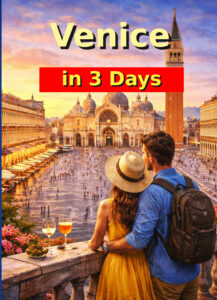
Venice City Trip

Venice City Guide – The Perfect 3-Day Itinerary

Destination: Venice, Italy
Recommended Stay: 2–3 days
Travel Style: City Trip
Guide Format: PDF / Print
Languages: EN / DE / FR / ES

Venice is one of the most unique and romantic cities in the world. Built across more than 100 small islands in a lagoon of the Adriatic Sea, Venice is famous for its canals, historic palaces, ornate churches, and beautiful bridges. Instead of streets and cars, the city is navigated by canals, boats, and narrow pedestrian pathways.

Founded more than 1,500 years ago, Venice grew into one of the most powerful maritime republics in Europe. During the Middle Ages and Renaissance, the city became a wealthy center of trade, art, and culture connecting Europe with the East.

Today Venice remains a city of extraordinary beauty and history. Visitors exploring its winding streets will discover magnificent architecture, historic squares, charming canals, and hidden courtyards. The entire historic center of Venice is designated as a UNESCO World Heritage Site.

The city is also famous for its artistic heritage, including masterpieces by painters such as Titian, Tintoretto, and Veronese. Visitors can explore grand palaces, historic churches, and world-class museums while enjoying the city’s timeless atmosphere.

Despite being one of the world’s most visited destinations, Venice still retains a magical character, especially in the early morning or evening when the crowds disappear and the quiet canals reflect centuries of history.

This Venice city guide presents a carefully designed 3-day itinerary that helps visitors discover the city’s most important landmarks while also exploring charming neighborhoods and local culture.


Hero Section

Title: Venice City Guide – The Perfect 3-Day Itinerary

Destination: Venice, Italy
Recommended Stay: 2–3 days
Travel Style: City Trip
Guide Format: PDF / Print
Languages: EN / DE / FR / ES

Buttons:


What’s Inside This Guide

This travel guide includes a detailed itinerary for exploring Venice efficiently, with walking routes, travel tips and the most important attractions.

Highlights:

  • Complete 3-day Venice itinerary
  • Walking routes and maps
  • Insider travel tips
  • Restaurant recommendations
  • Hidden attractions
  • Practical travel advice

Although Venice has no cars or buses in its historic center, the city is surprisingly easy to explore on foot or by water bus.


Suggested 3-Day Itinerary

Day 1 – Historic Highlights

Start your visit at the magnificent St. Mark’s Square (Piazza San Marco), the most famous square in Venice and the historic center of the city’s political and religious life.

Dominating the square is the spectacular St. Mark’s Basilica, one of the most beautiful churches in Europe. The basilica features impressive Byzantine architecture, golden mosaics, and ornate marble decorations.

Next visit the nearby Doge’s Palace, the historic residence of Venice’s rulers. The palace once served as the center of political power in the Venetian Republic and today functions as a museum showcasing magnificent halls and artworks.

Nearby you will find the famous Bridge of Sighs, a beautiful white stone bridge connecting the Doge’s Palace with the former prison.

In the afternoon take a walk across the iconic Rialto Bridge, the oldest bridge spanning the Grand Canal. The bridge offers excellent views of Venice’s main waterway and is surrounded by lively markets and shops.

Later explore the nearby Rialto Market, where locals buy fresh fish, vegetables, and regional specialties.

End your day with dinner at a traditional Venetian restaurant where you can try local dishes such as risotto al nero di seppia, seafood pasta, and Venetian cicchetti (small tapas-style snacks).


Day 2 – Culture & Museums

Your second day focuses on Venice’s artistic and cultural treasures.

Start your morning at the famous Gallerie dell’Accademia, one of Italy’s most important art museums. The gallery contains masterpieces from Venetian artists such as Titian, Tintoretto, and Veronese.

Next cross the elegant Accademia Bridge for beautiful views along the Grand Canal.

Continue your walk to the impressive Santa Maria della Salute, a magnificent Baroque church built in the 17th century. The church stands at the entrance to the Grand Canal and is one of Venice’s most recognizable landmarks.

In the afternoon visit the Peggy Guggenheim Collection, a museum dedicated to modern art. The museum contains works by Picasso, Dalí, and Jackson Pollock.

Later take a relaxing vaporetto (water bus) ride along the Grand Canal, the main waterway through Venice. This scenic journey passes historic palaces, churches, and bridges.

Spend your evening in the lively Dorsoduro district, known for its artistic atmosphere, local restaurants, and beautiful canals.


Day 3 – Neighborhoods & Local Life

Your final day focuses on discovering Venice’s quieter neighborhoods and nearby islands.

Start your morning in the charming Cannaregio district, one of the most authentic areas of Venice. The district contains peaceful canals, local shops, and historic buildings.

Nearby you can visit the historic Jewish Ghetto, one of the oldest Jewish neighborhoods in Europe.

Next explore the beautiful Ca’ d’Oro Palace, a stunning Gothic palace located along the Grand Canal.

In the afternoon consider taking a boat trip to the nearby island of Murano, famous for its centuries-old glassmaking tradition. Visitors can watch artisans create beautiful glass objects using traditional techniques.

Another popular island destination is Burano, known for its colorful houses and lace-making heritage.

Alternatively, spend your afternoon wandering through Venice’s hidden streets where you will discover quiet canals, charming squares, and small local cafés.

Finish your Venice trip with dinner beside a canal while enjoying the magical evening atmosphere of the city.


Explore the City Map

Insert a map showing the main attractions and walking routes.

Examples:

Day 1 walking route

St. Mark’s Square → Doge’s Palace → Bridge of Sighs → Rialto Bridge

Day 2 museum district

Accademia Gallery → Santa Maria della Salute → Grand Canal

Day 3 neighborhood exploration

Cannaregio → Jewish Ghetto → Murano Island

Venice’s vaporetto boats provide easy transportation between districts and islands.


Why Visit Venice

Venice offers a fascinating mix of culture, architecture and local lifestyle. Visitors can experience historic landmarks, lively neighborhoods and excellent Italian cuisine within one of the most unique cities in the world.

Reasons to visit Venice include:

  • Beautiful canals and historic bridges
  • Magnificent churches and palaces
  • Unique boat transportation system
  • Rich artistic and cultural heritage
  • Romantic atmosphere and stunning architecture

Venice’s timeless beauty and extraordinary history make it one of the most unforgettable destinations in Europe.


Who This Guide Is For

Ideal for:

  • First-time visitors
  • Weekend travelers
  • Independent explorers
  • Travelers who enjoy walking itineraries
  • Visitors with limited time

Get the Complete Venice Guide

Download the full guide to access the complete itinerary, detailed maps and practical travel advice.

Buttons:

  • Buy PDF Guide
  • Buy Print Guide
  • Preview Sample Pages

More City Guides

You may also enjoy:

  • Paris City Guide
  • Barcelona City Guide
  • Vienna City Guide
  • Prague City Guide

Frequently Asked Questions

How many days do you need in Venice?
2–3 days is usually enough to see the main attractions.

What is the best time to visit Venice?
Spring and autumn offer pleasant weather and fewer crowds.

Is Venice walkable for tourists?
Yes. The historic center is entirely pedestrian and easy to explore on foot.

Valencia City Trip

Valencia City Guide – The Perfect 3-Day Itinerary

Destination: Valencia, Spain
Recommended Stay: 2–3 days
Travel Style: City Trip
Guide Format: PDF / Print
Languages: EN / DE / FR / ES

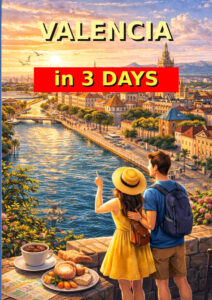
Valencia, Spain’s third-largest city, offers a fascinating combination of historic architecture, Mediterranean beaches, vibrant culture, and innovative modern design. Located on the eastern coast of Spain along the Mediterranean Sea, Valencia blends centuries of history with contemporary attractions, making it one of the most exciting cities to visit in Spain.

Founded by the Romans in 138 BC, Valencia later flourished during the Moorish period before becoming an important Christian kingdom. Throughout its long history the city developed a rich cultural heritage visible today in its medieval streets, grand plazas, and historic monuments.

Modern Valencia is equally impressive. The futuristic City of Arts and Sciences, designed by renowned architect Santiago Calatrava, has transformed the city into a global destination for architecture and science lovers.

Valencia is also famous for its lively food culture. The city is the birthplace of paella, one of Spain’s most iconic dishes. Visitors will find excellent restaurants, bustling food markets, and charming cafés throughout the city.

With its beautiful beaches, historic center, modern attractions, and relaxed Mediterranean lifestyle, Valencia offers an ideal destination for a short city break.

This Valencia city guide presents a carefully planned 3-day itinerary designed to help visitors explore the city’s most important landmarks while discovering its local culture and vibrant atmosphere.


Hero Section

Title: Valencia City Guide – The Perfect 3-Day Itinerary

Destination: Valencia, Spain
Recommended Stay: 2–3 days
Travel Style: City Trip
Guide Format: PDF / Print
Languages: EN / DE / FR / ES

Buttons:


What’s Inside This Guide

This travel guide includes a detailed itinerary for exploring Valencia efficiently, with walking routes, travel tips and the most important attractions.

Highlights:

  • Complete 3-day Valencia itinerary
  • Walking routes and maps
  • Insider travel tips
  • Restaurant recommendations
  • Hidden attractions
  • Practical travel advice

Valencia’s historic center is compact and walkable, while modern public transport makes it easy to reach beaches and outer districts.


Suggested 3-Day Itinerary

Day 1 – Historic Highlights

Start your visit in the historic Old Town (Ciutat Vella), where many of Valencia’s most important landmarks are located.

Begin at the impressive Valencia Cathedral, a magnificent building that blends Romanesque, Gothic, and Baroque architectural styles. The cathedral is famous for housing what many believe to be the Holy Grail, one of Christianity’s most legendary relics.

Next climb the nearby Miguelete Tower, the cathedral’s bell tower, which offers panoramic views of Valencia’s rooftops and historic streets.

From the cathedral walk to the lively Plaza de la Virgen, one of the most beautiful squares in Valencia. The square is surrounded by historic buildings, fountains, and outdoor cafés.

Nearby you can visit the elegant Palace of the Generalitat, an important government building with impressive Gothic architecture.

Continue exploring the narrow streets of the Old Town until you reach the spectacular Lonja de la Seda (Silk Exchange), a UNESCO World Heritage Site. This 15th-century building once served as a center for Valencia’s thriving silk trade and remains one of the finest examples of Gothic civil architecture in Europe.

In the afternoon visit the colorful Central Market (Mercado Central), one of the largest and most beautiful food markets in Europe.

End your day with dinner at a traditional restaurant where you can enjoy authentic Valencian paella.


Day 2 – Culture & Museums

Your second day focuses on Valencia’s modern architecture and cultural attractions.

Start your morning at the spectacular City of Arts and Sciences, one of the most futuristic architectural complexes in Europe.

This impressive complex includes several major attractions:

  • Oceanogràfic, the largest aquarium in Europe
  • Science Museum, featuring interactive exhibitions
  • Hemisfèric, an IMAX cinema and planetarium

Visitors can easily spend several hours exploring this fascinating complex.

In the afternoon take a relaxing walk through the beautiful Turia Gardens, a long green park that stretches across the city along the former Turia Riverbed.

The park contains gardens, sports areas, playgrounds, and scenic paths perfect for walking or cycling.

Later visit the elegant Valencia Museum of Fine Arts, which houses an impressive collection of Spanish paintings.

Spend your evening enjoying dinner in the lively Ruzafa district, known for its trendy restaurants, cafés, and vibrant nightlife.


Day 3 – Neighborhoods & Local Life

Your final day focuses on discovering Valencia’s coastal areas and local neighborhoods.

Start your morning with a visit to Malvarrosa Beach, Valencia’s most famous urban beach. The wide sandy beach offers a beautiful place to relax, swim, or enjoy a walk along the Mediterranean coast.

Nearby you can visit the historic Cabanyal district, a colorful neighborhood known for its traditional houses decorated with ceramic tiles.

In the afternoon explore the charming El Carmen district, one of Valencia’s most historic neighborhoods. Narrow streets, historic buildings, and street art give the area a unique character.

Later visit the impressive Serranos Towers, one of the remaining gates from Valencia’s medieval city walls.

Climbing the towers offers excellent views of the city.

Finish your Valencia trip with dinner at a seaside restaurant while enjoying Mediterranean cuisine and sunset views.


Explore the City Map

Insert a map showing the main attractions and walking routes.

Examples:

Day 1 walking route

Valencia Cathedral → Plaza de la Virgen → Silk Exchange → Central Market

Day 2 museum district

City of Arts and Sciences → Turia Gardens → Fine Arts Museum

Day 3 neighborhood exploration

Malvarrosa Beach → Cabanyal → El Carmen → Serranos Towers

Valencia’s metro and tram system make it easy to travel around the city.


Why Visit Valencia

Valencia offers a fascinating mix of culture, architecture and local lifestyle. Visitors can experience historic landmarks, lively neighborhoods and excellent Mediterranean cuisine within a vibrant and welcoming city.

Reasons to visit Valencia include:

  • Beautiful historic Old Town
  • Futuristic City of Arts and Sciences
  • Mediterranean beaches
  • Famous Valencian cuisine and paella
  • Lively markets and cultural districts

Valencia’s blend of history, innovation, and seaside charm makes it one of Spain’s most rewarding destinations.


Who This Guide Is For

Ideal for:

  • First-time visitors
  • Weekend travelers
  • Independent explorers
  • Travelers who enjoy walking itineraries
  • Visitors with limited time

Get the Complete Valencia Guide

Download the full guide to access the complete itinerary, detailed maps and practical travel advice.

Buttons:

  • Buy PDF Guide
  • Buy Print Guide
  • Preview Sample Pages

More City Guides

You may also enjoy:

  • Paris City Guide
  • Barcelona City Guide
  • Vienna City Guide
  • Prague City Guide

Frequently Asked Questions

How many days do you need in Valencia?
2–3 days is usually enough to explore the main attractions.

What is the best time to visit Valencia?
Spring and autumn usually offer the most pleasant weather.

Is Valencia walkable for tourists?
Yes. The historic center is compact and easy to explore on foot.

Thessaloniki City Trip

Thessaloniki City Guide – The Perfect 3-Day Itinerary

Destination: Thessaloniki, Greece
Recommended Stay: 2–3 days
Travel Style: City Trip
Guide Format: PDF / Print
Languages: EN / DE / FR / ES

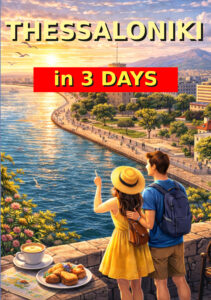
Thessaloniki, Greece’s second-largest city, is one of the most vibrant and historically fascinating destinations in southeastern Europe. Located along the Thermaic Gulf of the Aegean Sea, Thessaloniki combines ancient ruins, Byzantine churches, Ottoman monuments, and lively modern neighborhoods.

Founded in 315 BC by the Macedonian king Cassander, Thessaloniki quickly became an important cultural and commercial center. Over the centuries the city was influenced by Roman, Byzantine, Ottoman, and Jewish cultures, each leaving its mark on the city’s architecture and traditions.

Today Thessaloniki is known for its energetic atmosphere, beautiful waterfront promenade, rich history, and outstanding food scene. The city is also famous for its vibrant nightlife, large student population, and welcoming Mediterranean lifestyle.

Visitors exploring Thessaloniki will discover ancient monuments, lively markets, historic churches, and scenic viewpoints overlooking the sea. The city also serves as an excellent base for exploring nearby destinations such as Mount Olympus, Halkidiki Peninsula, and the famous monasteries of Meteora.

This Thessaloniki city guide presents a carefully designed 3-day itinerary to help visitors explore the city’s most important landmarks while also discovering its lively neighborhoods and local culture.


Hero Section

Title: Thessaloniki City Guide – The Perfect 3-Day Itinerary

Destination: Thessaloniki, Greece
Recommended Stay: 2–3 days
Travel Style: City Trip
Guide Format: PDF / Print
Languages: EN / DE / FR / ES

Buttons:


What’s Inside This Guide

This travel guide includes a detailed itinerary for exploring Thessaloniki efficiently, with walking routes, travel tips and the most important attractions.

Highlights:

  • Complete 3-day Thessaloniki itinerary
  • Walking routes and maps
  • Insider travel tips
  • Restaurant recommendations
  • Hidden attractions
  • Practical travel advice

Thessaloniki’s historic center is relatively compact, allowing visitors to explore many attractions on foot while enjoying the city’s vibrant atmosphere.


Suggested 3-Day Itinerary

Day 1 – Historic Highlights

Begin your visit at the famous White Tower, the most recognizable landmark of Thessaloniki. Built during the Ottoman period, the tower once served as a defensive fortification and later as a prison. Today it houses a museum and offers panoramic views across the city and the sea.

From the White Tower start walking along the beautiful Thessaloniki Waterfront Promenade, one of the most pleasant walking areas in Greece. The promenade stretches for several kilometers along the coast and offers excellent views of the Aegean Sea.

Next head toward Aristotelous Square, the main public square of Thessaloniki. Designed during the early 20th century, the square is surrounded by elegant buildings and lively cafés.

Continue your exploration by visiting the impressive Church of Saint Demetrius, the largest church in Greece dedicated to the city’s patron saint.

Nearby you can explore the fascinating Roman Forum of Thessaloniki, where ancient ruins reveal the city’s importance during Roman times.

In the afternoon wander through the charming streets of the Ladadika district, a historic neighborhood filled with colorful buildings, restaurants, and bars.

End your first day with dinner in Ladadika where you can enjoy traditional Greek dishes such as grilled seafood, souvlaki, and fresh Mediterranean salads.


Day 2 – Culture & Museums

Your second day focuses on Thessaloniki’s rich cultural heritage and fascinating museums.

Start your morning at the Archaeological Museum of Thessaloniki, one of Greece’s most important museums. The museum displays artifacts from ancient Macedonia, including sculptures, jewelry, and everyday objects from classical Greek civilization.

Next visit the nearby Museum of Byzantine Culture, which showcases the city’s importance during the Byzantine Empire.

Continue toward the impressive Rotunda, one of the oldest buildings in Thessaloniki. Originally built by the Roman emperor Galerius, the Rotunda has served as a mausoleum, church, and mosque throughout its long history.

Nearby you can visit the Arch of Galerius, a monumental Roman arch decorated with detailed reliefs.

In the afternoon explore the Upper Town (Ano Poli), one of the most picturesque areas of Thessaloniki. This historic district survived the great fire of 1917 and still features traditional houses, narrow streets, and beautiful viewpoints.

From the Trigonion Tower visitors can enjoy spectacular views across the city and the Thermaic Gulf.

Spend your evening at one of the city’s rooftop bars while enjoying sunset views over the sea.


Day 3 – Neighborhoods & Local Life

Your final day focuses on discovering Thessaloniki’s neighborhoods and local lifestyle.

Start your morning at the lively Modiano Market, one of the city’s most famous food markets. Here visitors can experience everyday Greek life while browsing fresh produce, spices, cheeses, and seafood.

Next explore the Kapani Market, another historic marketplace located nearby.

Continue walking through the city center until you reach the peaceful Navarinou Square, a popular gathering place for students and locals.

In the afternoon take a relaxing walk through the Nea Paralia Park, a modern seaside park with themed gardens and scenic walking paths.

Visitors can also take a short boat trip across the Thermaic Gulf for beautiful views of Thessaloniki’s skyline.

Finish your Thessaloniki trip with dinner at a traditional taverna where you can enjoy local specialties such as moussaka, dolmades, and Greek wine.


Explore the City Map

Insert a map showing the main attractions and walking routes.

Examples:

Day 1 walking route

White Tower → Waterfront Promenade → Aristotelous Square → Saint Demetrius Church

Day 2 museum district

Archaeological Museum → Rotunda → Arch of Galerius → Ano Poli

Day 3 neighborhood exploration

Modiano Market → Kapani Market → Nea Paralia Park

Thessaloniki’s buses and taxis make it easy to travel across the city.


Why Visit Thessaloniki

Thessaloniki offers a fascinating mix of culture, architecture and local lifestyle. Visitors can experience historic landmarks, lively neighborhoods and excellent Greek cuisine within a vibrant Mediterranean city.

Reasons to visit Thessaloniki include:

  • Ancient Roman and Byzantine landmarks
  • Beautiful waterfront promenades
  • Lively markets and historic districts
  • Outstanding Greek cuisine
  • Scenic viewpoints overlooking the sea

Thessaloniki’s combination of history, culture, and energetic atmosphere makes it one of Greece’s most exciting cities.

[Insert 3 city photos]


Who This Guide Is For

Ideal for:

  • First-time visitors
  • Weekend travelers
  • Independent explorers
  • Travelers who enjoy walking itineraries
  • Visitors with limited time

Get the Complete Thessaloniki Guide

Download the full guide to access the complete itinerary, detailed maps and practical travel advice.

Buttons:

  • Buy PDF Guide
  • Buy Print Guide
  • Preview Sample Pages

More City Guides

You may also enjoy:

  • Paris City Guide
  • Barcelona City Guide
  • Vienna City Guide
  • Prague City Guide

Frequently Asked Questions

How many days do you need in Thessaloniki?
2–3 days is usually enough to explore the main attractions.

What is the best time to visit Thessaloniki?
Spring and autumn offer pleasant weather and fewer crowds.

Is Thessaloniki walkable for tourists?
Yes. Most historic areas and attractions are easy to explore on foot.

Tallinn City Trip

Tallinn City Guide – The Perfect 3-Day Itinerary

Destination: Tallinn, Estonia
Recommended Stay: 2–3 days
Travel Style: City Trip
Guide Format: PDF / Print
Languages: EN / DE / FR / ES

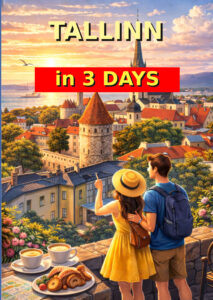
Tallinn, the capital of Estonia, is one of the best-preserved medieval cities in Europe. Located on the shores of the Baltic Sea, Tallinn offers visitors a magical combination of historic architecture, cobblestone streets, colorful houses, and modern Nordic culture.

The city’s historic center, known as Tallinn Old Town, has been designated a UNESCO World Heritage Site thanks to its remarkably intact medieval walls, towers, and churches. Walking through Tallinn feels like stepping into a fairy tale, with winding streets leading to hidden courtyards, charming squares, and panoramic viewpoints.

Tallinn developed as an important trading center during the Middle Ages when it became part of the Hanseatic League, a network of merchant cities around the Baltic Sea. The wealth generated by trade allowed the city to build impressive churches, merchant houses, and defensive fortifications that can still be admired today.

Modern Tallinn also has a dynamic side. The city has become a center for technology and innovation, often called the “Silicon Valley of Europe.” Visitors will find a lively café culture, modern restaurants, and creative districts alongside its historic landmarks.

Tallinn’s compact layout makes it an ideal destination for a short city break. Most major attractions are located within walking distance of each other, allowing visitors to explore the city easily.

This Tallinn city guide presents a carefully planned 3-day itinerary designed to help visitors discover the city’s most important landmarks while also exploring local neighborhoods and cultural attractions.


Hero Section

Title: Tallinn City Guide – The Perfect 3-Day Itinerary

Destination: Tallinn, Estonia
Recommended Stay: 2–3 days
Travel Style: City Trip
Guide Format: PDF / Print
Languages: EN / DE / FR / ES

Buttons:


What’s Inside This Guide

This travel guide includes a detailed itinerary for exploring Tallinn efficiently, with walking routes, travel tips and the most important attractions.

Highlights:

  • Complete 3-day Tallinn itinerary
  • Walking routes and maps
  • Insider travel tips
  • Restaurant recommendations
  • Hidden attractions
  • Practical travel advice

Tallinn’s Old Town is compact and pedestrian-friendly, making it perfect for exploring on foot.


Suggested 3-Day Itinerary

Day 1 – Historic Highlights

Start your exploration at the beautiful Town Hall Square (Raekoja Plats), the central square of Tallinn’s Old Town. Surrounded by colorful medieval buildings, this lively square has been the heart of the city for centuries.

Dominating the square is the impressive Tallinn Town Hall, one of the oldest Gothic town halls in Northern Europe.

From the square walk through the narrow streets of the Lower Old Town until you reach the famous Viru Gate, one of the entrances to the historic city walls.

Continue exploring the medieval streets filled with craft shops, cafés, and historic houses.

Next climb toward Toompea Hill, the upper part of the Old Town where many important historic landmarks are located.

Important sites include:

  • Alexander Nevsky Cathedral, an impressive Russian Orthodox cathedral with striking onion domes
  • Toompea Castle, which today houses the Estonian Parliament

From the nearby Kohtuotsa Viewing Platform, visitors can enjoy one of the best panoramic views of Tallinn’s red rooftops and church towers.

In the afternoon visit the historic St. Olaf’s Church, which was once one of the tallest buildings in the world during the medieval period.

End your day with dinner in the Old Town where you can try traditional Estonian dishes such as smoked fish, rye bread, and hearty soups.


Day 2 – Culture & Museums

Your second day focuses on Tallinn’s museums and cultural attractions.

Start your morning at the fascinating Estonian History Museum, where exhibits explore the country’s rich past from medieval times to modern independence.

Next visit the Kumu Art Museum, Estonia’s largest art museum, located slightly outside the Old Town. The museum showcases Estonian art from classical paintings to modern works.

Return to the city center and take a walk through Kadriorg Park, one of Tallinn’s most beautiful green spaces. The park was originally commissioned by Russian Tsar Peter the Great.

Within the park you can visit the elegant Kadriorg Palace, which now houses an art museum featuring European paintings.

In the afternoon return to the Old Town and explore its charming courtyards and hidden streets.

Later walk along the Tallinn city walls, where several medieval towers remain open to visitors.

Spend your evening enjoying dinner in one of Tallinn’s atmospheric medieval-style restaurants.


Day 3 – Neighborhoods & Local Life

Your final day focuses on discovering Tallinn’s modern districts and local lifestyle.

Start your morning at the lively Balti Jaam Market, a popular market located near the Old Town. Here visitors can sample Estonian foods, fresh produce, and local specialties.

Next explore the creative Telliskivi Creative City, a former industrial complex that has been transformed into a vibrant cultural district. The area features street art, galleries, design shops, cafés, and restaurants.

In the afternoon visit the scenic Tallinn Seaplane Harbour Museum, one of the most interesting maritime museums in Northern Europe.

The museum displays historic ships, submarines, and interactive exhibits about Estonia’s maritime history.

Later walk along the Tallinn waterfront promenade, which offers beautiful views of the Baltic Sea.

Finish your Tallinn trip with dinner in the Old Town while enjoying local Estonian cuisine.


Explore the City Map

Insert a map showing the main attractions and walking routes.

Examples:

Day 1 walking route

Town Hall Square → Viru Gate → Toompea Hill → Alexander Nevsky Cathedral

Day 2 museum district

Kadriorg Park → Kumu Museum → City Walls

Day 3 neighborhood exploration

Balti Jaam Market → Telliskivi Creative City → Seaplane Harbour

Tallinn’s compact size makes it easy to explore most attractions on foot.


Why Visit Tallinn

Tallinn offers a fascinating mix of culture, architecture and local lifestyle. Visitors can experience historic landmarks, lively neighborhoods and excellent local food within a compact and walkable medieval city.

Reasons to visit Tallinn include:

  • Beautiful medieval Old Town
  • Historic city walls and towers
  • Charming cobblestone streets
  • Creative cultural districts
  • Stunning Baltic Sea views

Tallinn’s magical atmosphere and rich history make it one of the most enchanting destinations in Northern Europe.


Who This Guide Is For

Ideal for:

  • First-time visitors
  • Weekend travelers
  • Independent explorers
  • Travelers who enjoy walking itineraries
  • Visitors with limited time

Get the Complete Tallinn Guide

Download the full guide to access the complete itinerary, detailed maps and practical travel advice.

Buttons:

  • Buy PDF Guide
  • Buy Print Guide
  • Preview Sample Pages

More City Guides

You may also enjoy:

  • Paris City Guide
  • Barcelona City Guide
  • Vienna City Guide
  • Prague City Guide

Frequently Asked Questions

How many days do you need in Tallinn?
2–3 days is usually enough to explore the main attractions.

What is the best time to visit Tallinn?
Late spring through early autumn offers pleasant weather and long daylight hours.

Is Tallinn walkable for tourists?
Yes. The Old Town and nearby districts are compact and easy to explore on foot.

Stockholm City Trip

Stockholm City Guide – The Perfect 3-Day Itinerary

Destination: Stockholm, Sweden
Recommended Stay: 2–3 days
Travel Style: City Trip
Guide Format: PDF / Print
Languages: EN / DE / FR / ES

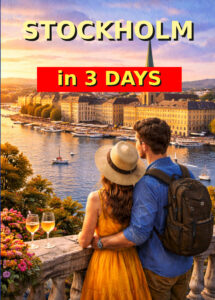
Stockholm, the capital of Sweden, is one of the most beautiful and unique cities in Europe. Spread across 14 islands connected by more than 50 bridges, Stockholm is often called the “Venice of the North.” The city lies where Lake Mälaren meets the Baltic Sea, creating a stunning combination of historic architecture, waterfront views, green parks, and modern Scandinavian design.

Founded in the 13th century, Stockholm developed as an important trading center and later became the political and cultural heart of Sweden. Today it is known for its high quality of life, innovative culture, and strong commitment to sustainability.

Visitors exploring Stockholm will discover charming medieval streets, elegant royal palaces, fascinating museums, and lively waterfront promenades. The historic Gamla Stan (Old Town) offers narrow cobblestone streets and colorful buildings, while modern districts feature stylish cafés, contemporary art galleries, and innovative architecture.

Stockholm also offers easy access to nature. The nearby Stockholm Archipelago consists of thousands of islands and provides opportunities for boat trips, hiking, and scenic coastal views.

This Stockholm city guide presents a carefully designed 3-day itinerary that highlights the city’s most important attractions while also introducing visitors to local neighborhoods, cultural landmarks, and the relaxed Scandinavian lifestyle.


Hero Section

Title: Stockholm City Guide – The Perfect 3-Day Itinerary

Destination: Stockholm, Sweden
Recommended Stay: 2–3 days
Travel Style: City Trip
Guide Format: PDF / Print
Languages: EN / DE / FR / ES

Buttons:


What’s Inside This Guide

This travel guide includes a detailed itinerary for exploring Stockholm efficiently, with walking routes, travel tips and the most important attractions.

Highlights:

  • Complete 3-day Stockholm itinerary
  • Walking routes and maps
  • Insider travel tips
  • Restaurant recommendations
  • Hidden attractions
  • Practical travel advice

Stockholm’s historic districts are compact and easily connected by bridges, ferries, and public transport, making it easy to explore several islands during a short visit.


Suggested 3-Day Itinerary

Day 1 – Historic Highlights

Start your Stockholm adventure in Gamla Stan, the historic Old Town located on the island of Stadsholmen. This charming district dates back to the medieval period and features narrow cobblestone streets, colorful buildings, and historic squares.

Begin at the beautiful Stortorget Square, the oldest square in Stockholm. Surrounded by colorful historic buildings, Stortorget is one of the most photographed places in the city.

Nearby you can visit the impressive Stockholm Cathedral (Storkyrkan), a medieval church known for its beautiful interior and famous statue of Saint George and the Dragon.

Continue walking toward the magnificent Royal Palace, one of the largest royal residences in Europe. The palace contains more than 600 rooms and serves as the official residence of the Swedish monarch.

Visitors can explore several museums within the palace complex and watch the Changing of the Guard ceremony.

In the afternoon walk along the scenic Skeppsbron waterfront, which offers beautiful views across the harbor and surrounding islands.

Later cross the bridge to Riddarholmen Island, where you will find the historic Riddarholmen Church, the burial place of many Swedish kings.

End your first day with dinner in Gamla Stan where you can try traditional Swedish dishes such as meatballs with lingonberries, gravad salmon, and fresh seafood.


Day 2 – Culture & Museums

Your second day focuses on Stockholm’s world-class museums and cultural landmarks.

Start your morning on Djurgården Island, one of Stockholm’s most popular cultural areas. The island contains several of the city’s most famous museums surrounded by beautiful parks and waterfront scenery.

Begin at the fascinating Vasa Museum, which houses the remarkably preserved Vasa warship. The ship sank during its maiden voyage in 1628 and was recovered from the harbor centuries later. Today it remains one of the best-preserved historical ships in the world.

Next visit the nearby ABBA Museum, dedicated to Sweden’s legendary pop group. Interactive exhibits allow visitors to explore the band’s history and music.

Another popular attraction on Djurgården is the Skansen Open-Air Museum, which presents traditional Swedish buildings, crafts, and cultural traditions.

In the afternoon take a relaxing walk along Djurgården’s scenic paths before returning to the city center.

Later visit the impressive Stockholm City Hall, famous for its beautiful architecture and the annual Nobel Prize banquet held in the grand Blue Hall.

Climbing the City Hall tower provides excellent views of Stockholm’s islands and skyline.

Spend your evening in the lively Södermalm district, known for its creative atmosphere, independent shops, and trendy restaurants.


Day 3 – Neighborhoods & Local Life

Your final day focuses on exploring Stockholm’s neighborhoods and experiencing local life.

Start your morning at the Östermalm Market Hall, one of the city’s most famous food markets. Here visitors can sample Swedish delicacies including seafood, cheeses, pastries, and traditional dishes.

Next explore the elegant Östermalm district, known for its beautiful boulevards, boutiques, and cafés.

In the afternoon take a ferry ride through parts of the Stockholm Archipelago. Even short boat trips offer stunning views of the city’s islands, waterfront buildings, and surrounding nature.

Alternatively, you can visit the peaceful Kungsträdgården Park, a popular gathering place for locals.

Later walk along the scenic waterfront at Strandvägen, one of Stockholm’s most beautiful streets lined with historic buildings and luxury boats.

Finish your Stockholm trip with dinner at a waterfront restaurant while enjoying views of the Baltic Sea.


Explore the City Map

Insert a map showing the main attractions and walking routes.

Examples:

Day 1 walking route

Gamla Stan → Stortorget → Royal Palace → Riddarholmen

Day 2 museum district

Djurgården → Vasa Museum → Skansen → City Hall

Day 3 neighborhood exploration

Östermalm Market → Södermalm → Archipelago Ferry

Stockholm’s excellent metro system and ferries make it easy to travel between islands.


Why Visit Stockholm

Stockholm offers a fascinating mix of culture, architecture and local lifestyle. Visitors can experience historic landmarks, lively neighborhoods and excellent local food within a city surrounded by water and nature.

Reasons to visit Stockholm include:

  • Beautiful medieval Old Town
  • Unique city built across islands
  • World-class museums and cultural attractions
  • Scenic waterfront promenades
  • Access to the Stockholm Archipelago

Stockholm’s combination of history, design, and natural beauty makes it one of Europe’s most attractive capitals.


Who This Guide Is For

Ideal for:

  • First-time visitors
  • Weekend travelers
  • Independent explorers
  • Travelers who enjoy walking itineraries
  • Visitors with limited time

Get the Complete Stockholm Guide

Download the full guide to access the complete itinerary, detailed maps and practical travel advice.

Buttons:

  • Buy PDF Guide
  • Buy Print Guide
  • Preview Sample Pages

More City Guides

You may also enjoy:

  • Paris City Guide
  • Barcelona City Guide
  • Vienna City Guide
  • Prague City Guide

Frequently Asked Questions

How many days do you need in Stockholm?
2–3 days is usually enough to see the main attractions.

What is the best time to visit Stockholm?
Late spring, summer, and early autumn offer pleasant weather and long daylight hours.

Is Stockholm walkable for tourists?
Yes. The historic center and many districts are easy to explore on foot.

Split City Trip

Split City Guide – The Perfect 3-Day Itinerary

Destination: Split, Croatia
Recommended Stay: 2–3 days
Travel Style: City Trip
Guide Format: PDF / Print
Languages: EN / DE / FR / ES

Split is one of Croatia’s most beautiful and historically fascinating coastal cities. Located along the Adriatic Sea on the Dalmatian Coast, Split combines ancient Roman architecture, lively Mediterranean squares, stunning seaside promenades, and a relaxed coastal atmosphere.

The city’s most famous landmark is Diocletian’s Palace, a massive Roman complex built in the 4th century by Emperor Diocletian. Over time the palace evolved into a living city filled with homes, cafés, shops, and churches. Today the palace forms the heart of Split’s historic center and is a UNESCO World Heritage Site.

Split is also known for its beautiful waterfront promenade, vibrant local culture, and easy access to nearby islands such as Hvar, Brač, and Šolta. Visitors can enjoy historic streets during the day and lively restaurants and cafés at night.

Despite its popularity as a tourist destination, Split remains an authentic Croatian city where locals gather in public squares, enjoy coffee along the waterfront, and celebrate their Mediterranean lifestyle.

Surrounded by mountains and islands, Split offers an ideal combination of culture, history, nature, and coastal scenery.

This Split city guide provides a carefully designed 3-day itinerary that helps visitors explore the city’s most important landmarks while also discovering local neighborhoods and scenic viewpoints.


Hero Section

Title: Split City Guide – The Perfect 3-Day Itinerary

Destination: Split, Croatia
Recommended Stay: 2–3 days
Travel Style: City Trip
Guide Format: PDF / Print
Languages: EN / DE / FR / ES

Buttons:


What’s Inside This Guide

This travel guide includes a detailed itinerary for exploring Split efficiently, with walking routes, travel tips, and the most important attractions.

Highlights:

  • Complete 3-day Split itinerary
  • Walking routes and maps
  • Insider travel tips
  • Restaurant recommendations
  • Hidden attractions
  • Practical travel advice

Split’s historic center is compact and walkable, making it ideal for exploring on foot.


Suggested 3-Day Itinerary

Day 1 – Historic Highlights

Begin your exploration at the remarkable Diocletian’s Palace, the historic heart of Split. Built around AD 305 as a retirement residence for the Roman emperor Diocletian, the palace is one of the best-preserved Roman monuments in the world.

Unlike most historic ruins, the palace is still a living part of the city. Narrow stone streets are filled with homes, restaurants, shops, and cafés.

Start at the impressive Peristyle Square, the central courtyard of the palace surrounded by ancient Roman columns and arches. Today this atmospheric square often hosts concerts and cultural events.

Nearby you can visit the Cathedral of Saint Domnius, originally built as Diocletian’s mausoleum. The cathedral is one of the oldest Christian cathedrals still in use today.

Visitors can climb the cathedral’s bell tower for panoramic views across Split’s rooftops and the Adriatic Sea.

Continue walking through the palace until you reach the fascinating Temple of Jupiter, a Roman temple later converted into a Christian baptistery.

In the afternoon stroll along the lively Riva Promenade, Split’s beautiful waterfront lined with palm trees, cafés, and restaurants. The promenade is the perfect place to relax and enjoy the Mediterranean atmosphere.

End your first day with dinner at a traditional Dalmatian restaurant where you can try fresh seafood, grilled fish, and local Croatian wine.


Day 2 – Culture & Museums

Your second day focuses on Split’s cultural attractions and scenic viewpoints.

Start your morning with a walk through the charming streets of Split Old Town, where historic buildings and lively squares create a unique atmosphere.

Next visit the Split Archaeological Museum, which houses an impressive collection of Roman artifacts, sculptures, and ancient relics from the region.

Continue toward the scenic Marjan Hill, a large park located west of the city center. Marjan is often called the “green lung” of Split and offers beautiful walking paths, pine forests, and stunning viewpoints.

A short hike leads to the Marjan Viewpoint, which provides spectacular views of Split’s harbor, nearby islands, and the surrounding mountains.

In the afternoon explore the lively Fish Market (Peškarija), where locals buy fresh seafood each morning.

Nearby you can visit the beautiful Republic Square (Prokurative), a large open square surrounded by elegant buildings inspired by Venetian architecture.

Spend your evening enjoying Split’s vibrant nightlife in the Old Town or along the waterfront.


Day 3 – Neighborhoods & Local Life

Your final day focuses on exploring Split’s neighborhoods and coastal scenery.

Start your morning at the bustling Green Market (Pazar) located near the eastern entrance of Diocletian’s Palace. The market is a lively place where locals buy fresh fruits, vegetables, cheeses, and traditional Croatian products.

Next walk toward the popular Bačvice Beach, one of Split’s most famous beaches located close to the city center. The sandy beach is a popular place for swimming, sunbathing, and playing the traditional Croatian game picigin.

In the afternoon explore the charming Veli Varoš district, one of the oldest neighborhoods in Split. Narrow streets and stone houses give this area a traditional Dalmatian character.

Later take a relaxing walk along the harbor where ferries depart for nearby islands.

Many visitors choose to take a short boat trip to the islands of Brač or Hvar, which are famous for their crystal-clear waters and beautiful coastal landscapes.

Finish your Split trip with dinner at a seaside restaurant while watching the sunset over the Adriatic Sea.


Explore the City Map

Insert a map showing the main attractions and walking routes.

Examples:

Day 1 walking route

Diocletian’s Palace → Peristyle Square → Cathedral of Saint Domnius → Riva Promenade

Day 2 museum district

Archaeological Museum → Marjan Hill → Republic Square

Day 3 neighborhood exploration

Green Market → Bačvice Beach → Veli Varoš

Split’s compact layout makes it easy to explore most attractions on foot.


Why Visit Split

Split offers a fascinating mix of culture, architecture, and local lifestyle. Visitors can experience ancient Roman landmarks, lively neighborhoods, and beautiful coastal scenery within a compact Mediterranean city.

Reasons to visit Split include:

  • The spectacular Diocletian’s Palace
  • Historic Old Town streets
  • Beautiful Adriatic coastline
  • Access to nearby islands
  • Delicious Dalmatian cuisine

Split’s combination of history, seaside charm, and vibrant culture makes it one of Croatia’s most attractive destinations.


Who This Guide Is For

Ideal for:

  • First-time visitors
  • Weekend travelers
  • Independent explorers
  • Travelers who enjoy walking itineraries
  • Visitors with limited time

Get the Complete Split Guide

Download the full guide to access the complete itinerary, detailed maps and practical travel advice.

Buttons:

  • Buy PDF Guide
  • Buy Print Guide
  • Preview Sample Pages

More City Guides

You may also enjoy:

  • Paris City Guide
  • Barcelona City Guide
  • Vienna City Guide
  • Prague City Guide

Frequently Asked Questions

How many days do you need in Split?
2–3 days is usually enough to explore the main attractions.

What is the best time to visit Split?
Spring and early autumn offer pleasant weather and fewer crowds.

Is Split walkable for tourists?
Yes. The historic center and most attractions are easy to explore on foot.

Sofia City Trip

Sofia City Guide – The Perfect 3-Day Itinerary

Destination: Sofia, Bulgaria
Recommended Stay: 2–3 days
Travel Style: City Trip
Guide Format: PDF / Print
Languages: EN / DE / FR / ES

Sofia, the capital of Bulgaria, is one of Europe’s oldest and most intriguing cities. Located at the foot of Mount Vitosha, Sofia combines ancient Roman ruins, Orthodox churches, Ottoman mosques, and modern boulevards. With a history that spans more than two thousand years, the city offers a fascinating mix of cultures and architectural styles.

Originally settled by the Thracians and later developed by the Romans, Sofia became an important regional center known as Serdica during the Roman Empire. Remains of this ancient city can still be seen today beneath the modern streets and metro stations of the Bulgarian capital.

Over the centuries Sofia has been influenced by Byzantine, Ottoman, and Russian cultures, each leaving its mark on the city’s architecture and traditions. Today visitors will discover beautiful cathedrals, lively markets, elegant parks, and a growing café and cultural scene.

Despite being one of Europe’s oldest capitals, Sofia remains relatively undiscovered by mass tourism. This allows visitors to experience authentic Bulgarian culture, traditional cuisine, and welcoming hospitality.

Sofia is also an excellent destination for nature lovers. Mount Vitosha rises just outside the city and offers hiking trails, scenic viewpoints, and ski slopes during winter months.

This Sofia city guide presents a carefully planned 3-day itinerary designed to help visitors explore the city’s most important landmarks while also experiencing local neighborhoods and cultural traditions.


Hero Section

Title: Sofia City Guide – The Perfect 3-Day Itinerary

Destination: Sofia, Bulgaria
Recommended Stay: 2–3 days
Travel Style: City Trip
Guide Format: PDF / Print
Languages: EN / DE / FR / ES

Buttons:


What’s Inside This Guide

This travel guide includes a detailed itinerary for exploring Sofia efficiently, with walking routes, travel tips, and the most important attractions.

Highlights:

  • Complete 3-day Sofia itinerary
  • Walking routes and maps
  • Insider travel tips
  • Restaurant recommendations
  • Hidden attractions
  • Practical travel advice

Sofia’s city center is compact and easy to explore on foot, making it perfect for a short city trip.


Suggested 3-Day Itinerary

Day 1 – Historic Highlights

Begin your exploration at the magnificent Alexander Nevsky Cathedral, the most famous landmark in Sofia and one of the largest Orthodox cathedrals in the world. Built in the early 20th century, the cathedral honors Russian soldiers who died during the Russo-Turkish War that helped liberate Bulgaria from Ottoman rule.

The cathedral’s golden domes dominate the skyline, and the interior features beautiful frescoes and religious icons.

Nearby you can visit the historic Saint Sophia Church, which gave the city its name. The church dates back to the 6th century and stands on the site of several earlier religious buildings.

Continue walking toward the National Assembly Building, an elegant government building located in one of Sofia’s central squares.

Next visit the Russian Church (St. Nicholas Church), known for its striking green and gold onion domes.

In the afternoon explore the nearby Serdica Archaeological Complex, where visitors can see the remains of the ancient Roman city beneath modern Sofia. Glass walkways allow visitors to observe ruins that date back nearly two thousand years.

End your day with dinner in the city center where you can try traditional Bulgarian dishes such as shopska salad, banitsa, and grilled meats.


Day 2 – Culture & Museums

Your second day focuses on Sofia’s museums, cultural landmarks, and scenic parks.

Start your morning at the National History Museum, one of Bulgaria’s most important museums. The museum contains fascinating artifacts that illustrate the country’s history from prehistoric times to the modern era.

Next visit the impressive Boyana Church, located on the outskirts of the city. This UNESCO World Heritage Site is famous for its remarkable medieval frescoes dating from the 13th century.

Return to the city center and explore the lively Vitosha Boulevard, Sofia’s main shopping and pedestrian street. The boulevard is lined with cafés, restaurants, and shops.

In the afternoon relax in Borisova Gradina, Sofia’s largest and most popular park. The park features lakes, walking paths, and open spaces where locals gather to relax.

Nearby you can also visit the National Palace of Culture (NDK), a large cultural and conference center surrounded by fountains and gardens.

Spend your evening enjoying Sofia’s vibrant restaurant scene where traditional Bulgarian cuisine meets modern culinary trends.


Day 3 – Neighborhoods & Local Life

Your final day focuses on discovering Sofia’s neighborhoods and scenic landscapes.

Start your morning at the lively Zhenski Market, one of Sofia’s oldest markets. Here visitors can experience everyday local life while browsing stalls selling fresh produce, spices, cheeses, and traditional foods.

Next take a short trip to Mount Vitosha, located just south of the city. The mountain offers beautiful natural scenery and panoramic views of Sofia.

Popular activities include hiking, visiting mountain huts, or simply enjoying the fresh air and landscapes.

In the afternoon return to the city center and explore the creative Kapana-style districts emerging around Sofia, filled with art galleries, cafés, and independent shops.

Later visit the peaceful South Park, another popular green space where locals gather for outdoor activities.

Finish your Sofia trip with dinner at a traditional Bulgarian restaurant while enjoying local wines or rakia.


Explore the City Map

Insert a map showing the main attractions and walking routes.

Examples:

Day 1 walking route

Alexander Nevsky Cathedral → Saint Sophia Church → National Assembly → Serdica Ruins

Day 2 museum district

National History Museum → Boyana Church → Vitosha Boulevard → Borisova Gradina

Day 3 neighborhood exploration

Zhenski Market → Mount Vitosha → South Park

Sofia’s metro and tram system provide convenient transportation throughout the city.


Why Visit Sofia

Sofia offers a fascinating mix of culture, architecture, and local lifestyle. Visitors can experience historic landmarks, lively neighborhoods, and excellent Bulgarian cuisine within a compact and welcoming city.

Reasons to visit Sofia include:

  • Beautiful Orthodox cathedrals
  • Ancient Roman ruins
  • Scenic parks and mountain views
  • Authentic Bulgarian cuisine
  • Rich history and cultural diversity

Sofia’s combination of history, culture, and natural surroundings makes it one of Eastern Europe’s most interesting capitals.


Who This Guide Is For

Ideal for:

  • First-time visitors
  • Weekend travelers
  • Independent explorers
  • Travelers who enjoy walking itineraries
  • Visitors with limited time

Get the Complete Sofia Guide

Download the full guide to access the complete itinerary, detailed maps and practical travel advice.

Buttons:

  • Buy PDF Guide
  • Buy Print Guide
  • Preview Sample Pages

More City Guides

You may also enjoy:

  • Paris City Guide
  • Barcelona City Guide
  • Vienna City Guide
  • Prague City Guide

Frequently Asked Questions

How many days do you need in Sofia?
2–3 days is usually enough to explore the main attractions.

What is the best time to visit Sofia?
Spring and autumn offer pleasant weather and ideal sightseeing conditions.

Is Sofia walkable for tourists?
Yes. The historic center is compact and easy to explore on foot.