Category Archives: ENG

Skopje City Trip

Skopje City Guide – The Perfect 3-Day Itinerary

Destination: Skopje, North Macedonia
Recommended Stay: 2–3 days
Travel Style: City Trip
Guide Format: PDF / Print
Languages: EN / DE / FR / ES
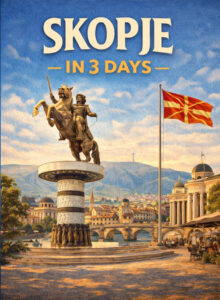
Skopje, the capital of North Macedonia, is a fascinating city where ancient history, Ottoman heritage, and modern architecture come together in an unexpected and intriguing way. Located along the Vardar River and surrounded by mountains, Skopje offers visitors a unique mix of cultures, religions, and historical influences.

Throughout its long history, Skopje has been shaped by Romans, Byzantines, Ottomans, and Yugoslav rule. Each era left its mark on the city’s architecture and traditions. Today visitors can explore Ottoman bazaars, historic mosques, medieval fortresses, and modern monuments all within a relatively compact city center.

One of the most striking aspects of Skopje is its dramatic redevelopment after the 1963 earthquake, which destroyed much of the city. In recent years large-scale urban projects have transformed parts of the city center with new buildings, bridges, and statues, creating a distinctive and sometimes controversial architectural landscape.

Despite these changes, Skopje retains an authentic Balkan atmosphere. Visitors can wander through historic neighborhoods, enjoy traditional Macedonian cuisine, and experience the warm hospitality of the local people.

Skopje also serves as an excellent starting point for exploring the natural beauty of North Macedonia, including nearby mountains, lakes, and historic monasteries.

This Skopje city guide presents a carefully planned 3-day itinerary designed to help visitors explore the city’s most important landmarks while also discovering its vibrant local culture.


Hero Section

Title: Skopje City Guide – The Perfect 3-Day Itinerary

Destination: Skopje, North Macedonia
Recommended Stay: 2–3 days
Travel Style: City Trip
Guide Format: PDF / Print
Languages: EN / DE / FR / ES

Buttons:


What’s Inside This Guide

This travel guide includes a detailed itinerary for exploring Skopje efficiently, with walking routes, travel tips, and the most important attractions.

Highlights:

  • Complete 3-day Skopje itinerary
  • Walking routes and maps
  • Insider travel tips
  • Restaurant recommendations
  • Hidden attractions
  • Practical travel advice

Skopje’s city center is compact and easy to explore on foot, making it ideal for a short city trip.


Suggested 3-Day Itinerary

Day 1 – Historic Highlights

Begin your exploration at Macedonia Square, the central square of Skopje and the heart of the city. The square is dominated by the large Warrior on a Horse statue, widely believed to represent Alexander the Great.

The square is surrounded by impressive buildings, fountains, and statues that reflect the city’s recent redevelopment projects.

From Macedonia Square walk across the famous Stone Bridge, one of the oldest and most important landmarks in Skopje. Built during the Ottoman period, the bridge connects the modern city center with the historic Old Bazaar district.

The Old Bazaar (Čaršija) is one of the largest and best-preserved Ottoman bazaars in the Balkans. Walking through its narrow streets feels like stepping back in time. The area is filled with traditional shops, tea houses, and historic mosques.

Important landmarks here include:

  • Mustafa Pasha Mosque, one of the finest Ottoman buildings in Skopje
  • Sultan Murad Mosque, another important historic religious site
  • Kuršumli An Caravanserai, a historic Ottoman inn

In the afternoon climb up to Skopje Fortress (Kale), located on a hill overlooking the city. The fortress offers excellent panoramic views of the Vardar River and surrounding districts.

End your first day with dinner in the Old Bazaar where you can try traditional Macedonian dishes such as tavče gravče (baked beans), grilled meats, and fresh salads.


Day 2 – Culture & Museums

Your second day focuses on Skopje’s museums, monuments, and cultural attractions.

Start your morning at the Mother Teresa Memorial House, dedicated to the famous humanitarian who was born in Skopje in 1910. The museum presents exhibitions about her life and humanitarian work.

Next visit the Museum of the Republic of North Macedonia, which provides an overview of the country’s history, culture, and archaeological heritage.

Continue your exploration along the Vardar River, where you will see several impressive bridges and monuments.

One of the most interesting attractions is the Archaeological Museum of North Macedonia, located in a grand building along the riverfront. The museum contains important artifacts from ancient Macedonia and Roman times.

In the afternoon relax in City Park, one of Skopje’s largest green spaces. The park offers walking paths, lakes, and shaded areas perfect for a break from sightseeing.

Nearby you can visit the Skopje Zoo or enjoy a coffee in one of the park’s cafés.

Spend your evening exploring Skopje’s modern districts filled with restaurants, bars, and lively nightlife.


Day 3 – Neighborhoods & Local Life

Your final day focuses on discovering Skopje’s scenic viewpoints and local lifestyle.

Start your morning with a trip to Mount Vodno, which rises just south of the city. A cable car takes visitors to the top of the mountain where the enormous Millennium Cross stands.

From the summit you can enjoy spectacular panoramic views of Skopje and the surrounding landscape.

On the slopes of Mount Vodno you can also visit the beautiful St. Panteleimon Monastery, a historic church known for its medieval frescoes.

In the afternoon explore the lively Bit Pazar Market, one of the largest markets in Skopje. Here visitors can experience everyday local life while browsing food stalls, clothing shops, and traditional products.

Later return to the city center and walk along the Vardar River promenade, a pleasant area for evening strolls.

Finish your Skopje trip with dinner at a traditional restaurant where you can enjoy Macedonian cuisine paired with local wines.


Explore the City Map

Insert a map showing the main attractions and walking routes.

Examples:

Day 1 walking route

Macedonia Square → Stone Bridge → Old Bazaar → Mustafa Pasha Mosque → Skopje Fortress

Day 2 museum district

Mother Teresa Memorial → Archaeological Museum → City Park

Day 3 neighborhood exploration

Mount Vodno → Millennium Cross → Bit Pazar Market

Skopje’s buses and taxis make it easy to travel across the city.


Why Visit Skopje

Skopje offers a fascinating mix of culture, architecture, and local lifestyle. Visitors can experience historic landmarks, lively neighborhoods, and excellent Balkan cuisine within a compact and welcoming city.

Reasons to visit Skopje include:

  • Historic Ottoman Old Bazaar
  • Unique mix of architectural styles
  • Beautiful mountain surroundings
  • Rich Balkan culture and cuisine
  • Friendly and welcoming atmosphere

Skopje’s blend of history, culture, and modern energy makes it one of the most interesting destinations in Southeast Europe.


Who This Guide Is For

Ideal for:

  • First-time visitors
  • Weekend travelers
  • Independent explorers
  • Travelers who enjoy walking itineraries
  • Visitors with limited time

Get the Complete Skopje Guide

Download the full guide to access the complete itinerary, detailed maps and practical travel advice.

Buttons:

  • Buy PDF Guide
  • Buy Print Guide
  • Preview Sample Pages

More City Guides

You may also enjoy:

  • Paris City Guide
  • Barcelona City Guide
  • Vienna City Guide
  • Prague City Guide

Frequently Asked Questions

How many days do you need in Skopje?
2–3 days is usually enough to explore the main attractions.

What is the best time to visit Skopje?
Spring and autumn offer pleasant weather and comfortable sightseeing conditions.

Is Skopje walkable for tourists?
Yes. The city center and Old Bazaar are compact and easy to explore on foot.
Sevilla City Trip

Sevilla City Guide – The Perfect 3-Day Itinerary

Destination: Sevilla, Spain
Recommended Stay: 2–3 days
Travel Style: City Trip
Guide Format: PDF / Print
Languages: EN / DE / FR / ES

Sevilla, the capital of the Andalusia region in southern Spain, is one of the most vibrant and historically rich cities in Europe. Known for its stunning Moorish architecture, lively plazas, flamenco music, and delicious tapas, Sevilla offers visitors an unforgettable combination of culture, history, and local lifestyle.

Located along the Guadalquivir River, Sevilla has played an important role throughout Spanish history. During the Age of Discovery in the 16th century, the city became the main port for trade with the Americas, bringing immense wealth and cultural influence to the region.

Walking through Sevilla reveals a fascinating blend of cultures shaped by Roman, Islamic, and Christian influences. The city’s historic center is one of the largest in Europe and contains magnificent landmarks such as the Seville Cathedral, the Royal Alcázar Palace, and the impressive Plaza de España.

In addition to its historic attractions, Sevilla is famous for its passionate atmosphere. The city is widely considered the birthplace of flamenco, and visitors can enjoy authentic performances in traditional venues throughout the city.

Whether exploring medieval streets, relaxing in orange-scented courtyards, or enjoying tapas in a lively square, Sevilla offers a uniquely Andalusian travel experience.

This Sevilla city guide presents a carefully planned 3-day itinerary designed to help visitors explore the city’s main landmarks while discovering its charming neighborhoods and vibrant culture.


Hero Section

Title: Sevilla City Guide – The Perfect 3-Day Itinerary

Destination: Sevilla, Spain
Recommended Stay: 2–3 days
Travel Style: City Trip
Guide Format: PDF / Print
Languages: EN / DE / FR / ES

Buttons:


What’s Inside This Guide

This travel guide includes a detailed itinerary for exploring Sevilla efficiently, with walking routes, travel tips, and the most important attractions.

Highlights:

  • Complete 3-day Sevilla itinerary
  • Walking routes and maps
  • Insider travel tips
  • Restaurant recommendations
  • Hidden attractions
  • Practical travel advice

Sevilla’s historic center is compact and perfect for exploring on foot.


Suggested 3-Day Itinerary

Day 1 – Historic Highlights

Begin your visit at the magnificent Seville Cathedral, the largest Gothic cathedral in the world. Built during the 15th century on the site of a former mosque, the cathedral reflects the immense wealth of Sevilla during Spain’s golden age.

Inside the cathedral you will find the tomb of Christopher Columbus and numerous beautiful chapels filled with artwork.

Next climb the famous La Giralda Tower, originally built as the minaret of the mosque that once stood on this site. Today the tower serves as the cathedral’s bell tower and offers panoramic views of the city.

Nearby you can explore the charming streets of the Santa Cruz district, Sevilla’s historic Jewish quarter. This picturesque neighborhood is filled with narrow alleyways, small squares, orange trees, and hidden courtyards.

Continue walking through Santa Cruz until you reach the beautiful Royal Alcázar of Sevilla, one of Spain’s most impressive palaces. The Alcázar features stunning Moorish architecture, decorative tilework, and magnificent gardens.

In the afternoon stroll along the scenic Guadalquivir River, where you can enjoy views of historic bridges and waterfront landmarks.

End your day with dinner in the historic center while enjoying traditional Andalusian tapas such as jamón ibérico, gazpacho, and fried fish.


Day 2 – Culture & Museums

Your second day focuses on Sevilla’s cultural landmarks and beautiful parks.

Start your morning at the spectacular Plaza de España, one of the most famous squares in Spain. Built for the 1929 Ibero-American Exposition, the square features a large semicircular building decorated with colorful ceramic tiles representing the provinces of Spain.

Next explore the nearby María Luisa Park, one of Sevilla’s most beautiful green spaces. The park contains gardens, fountains, and shaded walking paths that provide a peaceful escape from the busy city center.

In the afternoon visit the impressive Metropol Parasol, a modern wooden structure often called Las Setas (“The Mushrooms”). The structure features a panoramic terrace offering excellent views across Sevilla’s rooftops.

Nearby you can explore the Sevilla Fine Arts Museum, which houses one of Spain’s most important collections of Spanish paintings.

Later walk along the Triana Bridge to the historic Triana district, located across the Guadalquivir River. Triana is known for its ceramic workshops, flamenco heritage, and lively local atmosphere.

Spend your evening enjoying a traditional flamenco show, one of the most authentic cultural experiences in Sevilla.


Day 3 – Neighborhoods & Local Life

Your final day focuses on exploring Sevilla’s neighborhoods and experiencing everyday local life.

Start your morning at the lively Mercado de Triana, a traditional market where locals buy fresh produce, seafood, and regional specialties.

Next visit the historic Torre del Oro, a medieval watchtower located along the Guadalquivir River. The tower once served as part of Sevilla’s defensive walls and now houses a small maritime museum.

Continue walking along the river until you reach the beautiful Alameda de Hércules, one of Sevilla’s most popular gathering places. The square is surrounded by cafés, bars, and restaurants.

In the afternoon explore the trendy Macarena district, where you can visit the impressive Basilica de la Macarena, home to one of Sevilla’s most famous religious statues.

Later relax in one of Sevilla’s many rooftop bars where you can enjoy views of the cathedral and city skyline.

Finish your Sevilla trip with dinner in a traditional Andalusian restaurant while enjoying local wine and tapas.


Explore the City Map

Insert a map showing the main attractions and walking routes.

Examples:

Day 1 walking route

Seville Cathedral → La Giralda → Santa Cruz → Royal Alcázar → Guadalquivir River

Day 2 museum district

Plaza de España → María Luisa Park → Metropol Parasol → Triana

Day 3 neighborhood exploration

Triana Market → Torre del Oro → Alameda de Hércules → Macarena

Sevilla’s trams and buses provide easy transportation across the city.


Why Visit Sevilla

Sevilla offers a fascinating mix of culture, architecture, and local lifestyle. Visitors can experience historic landmarks, lively neighborhoods, and excellent Andalusian cuisine within a compact and walkable city.

Reasons to visit Sevilla include:

  • Stunning Moorish and Gothic architecture
  • Historic palaces and cathedrals
  • Authentic flamenco culture
  • Beautiful plazas and gardens
  • Delicious tapas and Andalusian cuisine

Sevilla’s vibrant atmosphere and rich heritage make it one of Spain’s most unforgettable destinations.


Who This Guide Is For

Ideal for:

  • First-time visitors
  • Weekend travelers
  • Independent explorers
  • Travelers who enjoy walking itineraries
  • Visitors with limited time

Get the Complete Sevilla Guide

Download the full guide to access the complete itinerary, detailed maps and practical travel advice.

Buttons:

  • Buy PDF Guide
  • Buy Print Guide
  • Preview Sample Pages

More City Guides

You may also enjoy:

  • Paris City Guide
  • Barcelona City Guide
  • Vienna City Guide
  • Prague City Guide

Frequently Asked Questions

How many days do you need in Sevilla?
2–3 days is usually enough to see the main attractions.

What is the best time to visit Sevilla?
Spring and autumn offer the most pleasant weather.

Is Sevilla walkable for tourists?
Yes. The historic center is compact and ideal for walking.

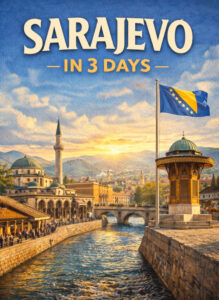
Sarajevo City Trip

Sarajevo City Guide – The Perfect 3-Day Itinerary

Destination: Sarajevo, Bosnia and Herzegovina
Recommended Stay: 2–3 days
Travel Style: City Trip
Guide Format: PDF / Print
Languages: EN / DE / FR / ES

Sarajevo, the capital of Bosnia and Herzegovina, is one of Europe’s most fascinating and culturally diverse cities. Nestled in a valley surrounded by mountains along the Miljacka River, Sarajevo has long been known as the “Jerusalem of Europe” because of the close coexistence of different religions and cultures.

Walking through Sarajevo reveals an extraordinary blend of influences. Ottoman mosques, Austro-Hungarian architecture, Orthodox churches, and Catholic cathedrals stand within a few minutes’ walk of each other. This unique mixture reflects the city’s complex history as a meeting point between East and West.

Sarajevo played a major role in European history. In 1914, the assassination of Archduke Franz Ferdinand in Sarajevo triggered the events that led to World War I. Later, during the 1990s, the city endured a long siege during the Bosnian War. Despite these difficult periods, Sarajevo has emerged as a vibrant and welcoming destination with a lively café culture, fascinating museums, and friendly locals.

Visitors to Sarajevo will discover historic bazaars, scenic viewpoints, traditional restaurants, and beautiful mountain landscapes surrounding the city. The city’s old Ottoman quarter, Baščaršija, remains one of the most atmospheric places in the Balkans.

This Sarajevo city guide presents a carefully designed 3-day itinerary that helps visitors explore the city’s main landmarks while also experiencing its unique culture and local lifestyle.


Hero Section

Title: Sarajevo City Guide – The Perfect 3-Day Itinerary

Destination: Sarajevo, Bosnia and Herzegovina
Recommended Stay: 2–3 days
Travel Style: City Trip
Guide Format: PDF / Print
Languages: EN / DE / FR / ES

Buttons:


What’s Inside This Guide

This travel guide includes a detailed itinerary for exploring Sarajevo efficiently, with walking routes, travel tips, and the most important attractions.

Highlights:

  • Complete 3-day Sarajevo itinerary
  • Walking routes and maps
  • Insider travel tips
  • Restaurant recommendations
  • Hidden attractions
  • Practical travel advice

Sarajevo’s historic center is compact and easily walkable, allowing visitors to explore many attractions within a short distance.


Suggested 3-Day Itinerary

Day 1 – Historic Highlights

Begin your exploration in Baščaršija, Sarajevo’s historic Ottoman bazaar and the cultural heart of the city. This lively district dates back to the 15th century and still features narrow streets, traditional shops, and historic buildings.

At the center of Baščaršija stands the iconic Sebilj Fountain, a wooden Ottoman-style fountain that has become one of the most recognizable symbols of Sarajevo.

Nearby you will find numerous small workshops selling traditional crafts such as copperware, jewelry, and handmade souvenirs.

Continue walking through the bazaar to visit the historic Gazi Husrev-beg Mosque, one of the most important Islamic buildings in Bosnia and Herzegovina. Built in the 16th century during the Ottoman period, the mosque remains an important religious and architectural landmark.

Nearby attractions include:

  • Gazi Husrev-beg Madrasa, an Islamic school
  • Sarajevo Clock Tower, which still measures lunar time

In the afternoon walk along the Miljacka River toward the famous Latin Bridge. This bridge is historically significant as the site where Archduke Franz Ferdinand was assassinated in 1914.

Today a small museum nearby explains the events that led to the outbreak of World War I.

End your first day with dinner in Baščaršija where you can try traditional Bosnian dishes such as ćevapi, burek, and strong Bosnian coffee.


Day 2 – Culture & Museums

Your second day focuses on Sarajevo’s museums and cultural landmarks.

Start your morning at the Sarajevo Tunnel Museum, also known as the Tunnel of Hope. During the siege of Sarajevo in the 1990s, this underground tunnel served as a lifeline for the city, allowing supplies and people to enter and leave safely.

The museum provides powerful insight into the city’s recent history.

Next visit the National Museum of Bosnia and Herzegovina, one of the most important museums in the country. The museum contains archaeological artifacts, historical exhibits, and cultural collections representing Bosnia’s diverse heritage.

Nearby you can explore the impressive Vijećnica (Sarajevo City Hall), a beautiful building constructed during the Austro-Hungarian period. The building’s colorful interior and Moorish architectural style make it one of Sarajevo’s most striking landmarks.

In the afternoon relax in the peaceful Veliki Park, a green space located near the city center.

Later visit the Sacred Heart Cathedral, the largest Catholic church in Bosnia and Herzegovina and an important religious site in Sarajevo.

Spend your evening in one of the city’s many cafés where locals gather to enjoy coffee and conversation.


Day 3 – Neighborhoods & Local Life

Your final day focuses on exploring Sarajevo’s scenic viewpoints and local neighborhoods.

Start your morning with a trip to the Yellow Fortress (Žuta Tabija), a historic fort located on a hill above the city. The fortress offers spectacular panoramic views of Sarajevo and the surrounding mountains.

Nearby you can also visit the White Fortress, another historic viewpoint overlooking the city.

In the afternoon explore the lively Markale Market, one of Sarajevo’s most famous markets. Here visitors can experience daily local life while browsing fresh produce, cheeses, and traditional foods.

Later take a cable car up Mount Trebević, which rises above the city and offers beautiful views of the surrounding landscape. The mountain was once the site of Olympic events during the 1984 Winter Olympics, which were hosted by Sarajevo.

Walking trails and viewpoints make Trebević a popular destination for locals and visitors alike.

Finish your Sarajevo trip with dinner in the historic center while enjoying Bosnian cuisine and local hospitality.


Explore the City Map

Insert a map showing the main attractions and walking routes.

Examples:

Day 1 walking route

Baščaršija → Sebilj Fountain → Gazi Husrev-beg Mosque → Latin Bridge

Day 2 museum district

Tunnel Museum → National Museum → City Hall → Sacred Heart Cathedral

Day 3 neighborhood exploration

Yellow Fortress → Markale Market → Trebević Mountain

Sarajevo’s trams and buses provide convenient transportation across the city.


Why Visit Sarajevo

Sarajevo offers a fascinating mix of culture, architecture, and local lifestyle. Visitors can experience historic landmarks, lively neighborhoods, and excellent local food within a compact and welcoming city.

Reasons to visit Sarajevo include:

  • Unique mix of Ottoman and European architecture
  • Historic Baščaršija bazaar
  • Important historical landmarks
  • Scenic mountain surroundings
  • Warm hospitality and vibrant culture

Sarajevo’s rich history and cultural diversity make it one of the most intriguing destinations in Southeast Europe.


Who This Guide Is For

Ideal for:

  • First-time visitors
  • Weekend travelers
  • Independent explorers
  • Travelers who enjoy walking itineraries
  • Visitors with limited time

Get the Complete Sarajevo Guide

Download the full guide to access the complete itinerary, detailed maps and practical travel advice.

Buttons:

  • Buy PDF Guide
  • Buy Print Guide
  • Preview Sample Pages

More City Guides

You may also enjoy:

  • Paris City Guide
  • Barcelona City Guide
  • Vienna City Guide
  • Prague City Guide

Frequently Asked Questions

How many days do you need in Sarajevo?
2–3 days is usually enough to see the main attractions.

What is the best time to visit Sarajevo?
Spring and autumn offer pleasant weather and fewer crowds.

Is Sarajevo walkable for tourists?
Yes. The historic center is compact and easy to explore on foot.
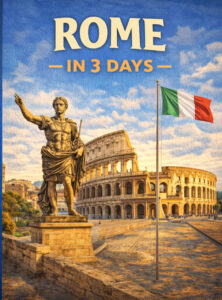
Rome City Trip

Rome City Guide – The Perfect 3-Day Itinerary

Destination: Rome, Italy
Recommended Stay: 2–3 days
Travel Style: City Trip
Guide Format: PDF / Print
Languages: EN / DE / FR / ES

Rome, the capital of Italy, is one of the most historically rich and fascinating cities in the world. Often called the “Eternal City,” Rome offers visitors an extraordinary journey through more than two thousand years of history. Ancient ruins, Renaissance palaces, Baroque churches, and lively piazzas create a unique urban landscape where every street seems to reveal another remarkable landmark.

Founded according to legend in 753 BC, Rome became the center of the powerful Roman Empire, which once ruled much of Europe, North Africa, and the Middle East. Many of the city’s most famous monuments—including the Colosseum, the Roman Forum, and the Pantheon—date back to this ancient period and remain among the most impressive archaeological sites in the world.

In addition to its ancient heritage, Rome is also the heart of the Catholic Church and home to Vatican City, the smallest independent state in the world. Visitors can explore magnificent churches, art-filled museums, and historic squares that reflect centuries of artistic and cultural development.

Modern Rome combines this rich history with vibrant Italian lifestyle. Visitors will find charming cafés, bustling markets, traditional trattorias, and lively neighborhoods filled with energy and character.

This Rome city guide presents a carefully designed 3-day itinerary that highlights the city’s most important landmarks while allowing travelers to experience its unique atmosphere and local culture.


Hero Section

Title: Rome City Guide – The Perfect 3-Day Itinerary

Destination: Rome, Italy
Recommended Stay: 2–3 days
Travel Style: City Trip
Guide Format: PDF / Print
Languages: EN / DE / FR / ES

Buttons:


What’s Inside This Guide

This travel guide includes a detailed itinerary for exploring Rome efficiently, with walking routes, travel tips, and the most important attractions.

Highlights:

  • Complete 3-day Rome itinerary
  • Walking routes and maps
  • Insider travel tips
  • Restaurant recommendations
  • Hidden attractions
  • Practical travel advice

Although Rome is a large city, many of its most famous landmarks are located within walking distance in the historic center.


Suggested 3-Day Itinerary

Day 1 – Historic Highlights

Begin your exploration at the iconic Colosseum, the largest amphitheater built during the Roman Empire. Completed in AD 80, this impressive structure once hosted gladiator contests, public spectacles, and dramatic performances for tens of thousands of spectators.

Nearby you will find the remarkable ruins of the Roman Forum, which served as the political, religious, and commercial center of ancient Rome. Walking through the ruins allows visitors to imagine life during the height of the Roman Empire.

Continue toward Palatine Hill, one of the seven hills of Rome and traditionally considered the birthplace of the city. The hill offers spectacular views of the Roman Forum and contains the remains of ancient imperial palaces.

Next walk toward Piazza Venezia, a busy square dominated by the impressive Vittoriano Monument, also known as the Altar of the Fatherland.

From here stroll through the historic streets toward the famous Trevi Fountain, one of the most beautiful Baroque fountains in the world. According to tradition, tossing a coin into the fountain ensures that you will return to Rome.

Continue walking to the elegant Spanish Steps, a popular gathering place surrounded by boutiques and cafés.

End your first day with dinner in the historic center while enjoying traditional Roman dishes such as carbonara, cacio e pepe, or amatriciana pasta.


Day 2 – Culture & Museums

Your second day focuses on Rome’s extraordinary museums and religious landmarks.

Start your morning in Vatican City, home to the Pope and the spiritual center of the Catholic Church.

Begin at the impressive St. Peter’s Basilica, one of the largest and most important churches in the world. The basilica’s interior features magnificent sculptures and artworks, including Michelangelo’s Pietà.

Visitors can also climb the dome for spectacular views across Rome.

Next explore the Vatican Museums, which contain one of the world’s most important art collections. The highlight of the museums is the breathtaking Sistine Chapel, where Michelangelo painted his famous ceiling frescoes.

In the afternoon walk along the scenic Tiber River toward the historic Castel Sant’Angelo, a fortress originally built as a mausoleum for the Roman emperor Hadrian.

Later cross the beautiful Ponte Sant’Angelo, a bridge decorated with statues of angels, and return to the historic center.

Spend your evening in the charming Trastevere district, one of Rome’s most atmospheric neighborhoods known for its narrow streets, lively piazzas, and traditional restaurants.


Day 3 – Neighborhoods & Local Life

Your final day focuses on exploring Rome’s neighborhoods and experiencing everyday Italian life.

Start your morning at the lively Campo de’ Fiori Market, where local vendors sell fresh produce, flowers, and regional foods.

Next visit the nearby Pantheon, one of the best-preserved buildings from ancient Rome. Built nearly two thousand years ago, the Pantheon’s enormous dome remains an architectural masterpiece.

Continue walking toward Piazza Navona, one of Rome’s most beautiful squares. The square features elegant fountains, cafés, and the famous Fountain of the Four Rivers designed by Bernini.

In the afternoon explore the peaceful Villa Borghese Gardens, one of the largest parks in Rome. The park contains museums, scenic paths, and beautiful viewpoints overlooking the city.

Within the park you can also visit the Borghese Gallery, which houses masterpieces by artists such as Bernini, Caravaggio, and Raphael.

Finish your Rome trip with dinner at a traditional Roman trattoria while enjoying Italian wine and local specialties.


Explore the City Map

Insert a map showing the main attractions and walking routes.

Examples:

Day 1 walking route

Colosseum → Roman Forum → Palatine Hill → Trevi Fountain → Spanish Steps

Day 2 museum district

Vatican Museums → St. Peter’s Basilica → Castel Sant’Angelo → Trastevere

Day 3 neighborhood exploration

Campo de’ Fiori → Pantheon → Piazza Navona → Villa Borghese

Rome’s metro and bus network make it easy to travel across the city.


Why Visit Rome

Rome offers a fascinating mix of culture, architecture, and local lifestyle. Visitors can experience historic landmarks, lively neighborhoods, and excellent Italian food within a city that feels like a living museum.

Reasons to visit Rome include:

  • Ancient Roman monuments and ruins
  • Magnificent churches and Vatican landmarks
  • Beautiful historic squares and fountains
  • World-famous Italian cuisine
  • A vibrant and lively atmosphere

Rome’s incredible history and timeless charm make it one of the most unforgettable destinations in Europe.


Who This Guide Is For

Ideal for:

  • First-time visitors
  • Weekend travelers
  • Independent explorers
  • Travelers who enjoy walking itineraries
  • Visitors with limited time

Get the Complete Rome Guide

Download the full guide to access the complete itinerary, detailed maps and practical travel advice.

Buttons:

  • Buy PDF Guide
  • Buy Print Guide
  • Preview Sample Pages

More City Guides

You may also enjoy:

  • Paris City Guide
  • Barcelona City Guide
  • Vienna City Guide
  • Prague City Guide

Frequently Asked Questions

How many days do you need in Rome?
2–3 days is enough to see many of the major landmarks, although longer stays allow deeper exploration.

What is the best time to visit Rome?
Spring and autumn offer pleasant temperatures and fewer crowds.

Is Rome walkable for tourists?
Yes. Many of the main attractions are located within the historic center.

Riga City Trip

Riga City Guide – The Perfect 3-Day Itinerary

Destination: Riga, Latvia
Recommended Stay: 2–3 days
Travel Style: City Trip
Guide Format: PDF / Print
Languages: EN / DE / FR / ES

Riga, the capital of Latvia, is one of the most beautiful and culturally rich cities in the Baltic region. Located on the banks of the Daugava River near the Baltic Sea, Riga combines medieval architecture, elegant Art Nouveau buildings, lively markets, and a vibrant café culture.

Founded in 1201 by German merchants, Riga developed into an important trading center within the Hanseatic League, a powerful network of merchant cities across northern Europe. Over the centuries the city has been influenced by German, Swedish, Russian, and Latvian cultures, creating a fascinating blend of architectural styles and traditions.

Today Riga is known for its beautifully preserved Old Town (Vecrīga), which has been designated a UNESCO World Heritage Site. The city also contains one of the largest collections of Art Nouveau architecture in Europe, making it a paradise for architecture lovers.

Visitors exploring Riga will discover charming cobblestone streets, historic churches, lively squares, scenic river views, and excellent local cuisine. Despite its rich history, Riga is also a modern city with a vibrant arts scene, stylish restaurants, and energetic nightlife.

This Riga city guide presents a carefully planned 3-day itinerary designed to help visitors explore the city’s most important landmarks while also discovering hidden corners and authentic local culture.


Hero Section

Title: Riga City Guide – The Perfect 3-Day Itinerary

Destination: Riga, Latvia
Recommended Stay: 2–3 days
Travel Style: City Trip
Guide Format: PDF / Print
Languages: EN / DE / FR / ES

Buttons:


What’s Inside This Guide

This travel guide includes a detailed itinerary for exploring Riga efficiently, with walking routes, travel tips, and the most important attractions.

Highlights:

  • Complete 3-day Riga itinerary
  • Walking routes and maps
  • Insider travel tips
  • Restaurant recommendations
  • Hidden attractions
  • Practical travel advice

Riga’s historic center is compact and easy to explore on foot, while public transport makes it simple to reach nearby districts.


Suggested 3-Day Itinerary

Day 1 – Historic Highlights

Begin your exploration in Riga Old Town (Vecrīga), the historic heart of the city. The area is filled with medieval buildings, narrow streets, and lively squares that reflect Riga’s rich history.

Start at the impressive Riga Cathedral, one of the largest medieval churches in the Baltic region. Built in the 13th century, the cathedral is famous for its massive organ and beautiful cloister.

Next walk toward the nearby Town Hall Square, where you will find the striking House of the Blackheads. This historic building once served as the headquarters of a guild of unmarried merchants and remains one of Riga’s most recognizable landmarks.

Continue exploring the Old Town’s charming streets until you reach the famous Three Brothers, a group of historic houses that illustrate how Riga’s architecture developed over several centuries.

Nearby stands the impressive St. Peter’s Church, one of Riga’s tallest buildings. Visitors can take an elevator to the church tower for panoramic views of the Old Town and the Daugava River.

In the afternoon walk along the scenic Daugava River promenade, which offers beautiful views of Riga’s skyline and bridges.

End your first day with dinner in one of the Old Town’s traditional restaurants where you can try Latvian dishes such as grey peas with bacon, smoked fish, and local rye bread.


Day 2 – Culture & Museums

Your second day focuses on Riga’s cultural attractions and famous Art Nouveau architecture.

Start your morning in the Art Nouveau district, located just north of the Old Town. Riga contains more than 800 Art Nouveau buildings, making it one of the best places in the world to see this architectural style.

The most impressive buildings can be found along Alberta Street, where ornate façades feature sculptures, decorative balconies, and elaborate designs.

Next visit the Art Nouveau Museum, which recreates an elegant early 20th-century apartment and offers insight into life during Riga’s golden age.

Continue toward the Latvian National Museum of Art, which houses a large collection of Latvian paintings, sculptures, and contemporary artworks.

In the afternoon relax in the beautiful Bastejkalns Park, a peaceful green space located near the Old Town. The park features canals, bridges, and walking paths.

Nearby you can visit the Freedom Monument, an important national symbol honoring Latvia’s struggle for independence.

Later explore the lively Central Market, one of the largest markets in Europe. The market halls are located inside former Zeppelin hangars and offer a wide variety of fresh food, local products, and traditional snacks.

Spend your evening in the Old Town enjoying Riga’s vibrant nightlife.


Day 3 – Neighborhoods & Local Life

Your final day focuses on exploring Riga’s neighborhoods and local lifestyle.

Start your morning at the Kalnciema Quarter, a charming district known for its wooden houses, artisan shops, and weekend markets.

Next visit the peaceful Mežaparks district, a large green area located near Lake Ķīšezers. The park offers walking paths, cycling routes, and beautiful lakeside views.

In the afternoon return to the city center and explore Riga’s modern districts filled with cafés, galleries, and boutiques.

A great place to experience local culture is the Miera Street district, known for its creative atmosphere and independent shops.

Later take a relaxing walk along the Daugava River while enjoying views of the city skyline.

Finish your Riga trip with dinner at a restaurant serving modern Baltic cuisine paired with local craft beer or Latvian wines.


Explore the City Map

Insert a map showing the main attractions and walking routes.

Examples:

Day 1 walking route

Riga Cathedral → House of the Blackheads → Three Brothers → St. Peter’s Church

Day 2 museum district

Art Nouveau Street → Art Nouveau Museum → Freedom Monument → Central Market

Day 3 neighborhood exploration

Kalnciema Quarter → Mežaparks → Miera Street → Daugava River Walk

Riga’s trams and buses provide convenient transportation across the city.


Why Visit Riga

Riga offers a fascinating mix of culture, architecture, and local lifestyle. Visitors can experience historic landmarks, lively neighborhoods, and excellent local food within a compact and walkable area.

Reasons to visit Riga include:

  • Beautiful medieval Old Town
  • Exceptional Art Nouveau architecture
  • Historic churches and monuments
  • Vibrant markets and cafés
  • Rich Baltic culture and traditions

Riga’s combination of history, architecture, and relaxed atmosphere makes it one of Europe’s most interesting capitals.


Who This Guide Is For

Ideal for:

  • First-time visitors
  • Weekend travelers
  • Independent explorers
  • Travelers who enjoy walking itineraries
  • Visitors with limited time

Get the Complete Riga Guide

Download the full guide to access the complete itinerary, detailed maps, and practical travel advice.

Buttons:

  • Buy PDF Guide
  • Buy Print Guide
  • Preview Sample Pages

More City Guides

You may also enjoy:

  • Paris City Guide
  • Barcelona City Guide
  • Vienna City Guide
  • Prague City Guide

Frequently Asked Questions

How many days do you need in Riga?
2–3 days is usually enough to explore the main attractions.

What is the best time to visit Riga?
Spring and summer offer pleasant weather and many outdoor events.

Is Riga walkable for tourists?
Yes. The historic center is compact and perfect for exploring on foot.

Prague City Trip

Prague City Guide – The Perfect 3-Day Itinerary

Destination: Prague, Czech Republic
Recommended Stay: 2–3 days
Travel Style: City Trip
Guide Format: PDF / Print
Languages: EN / DE / FR / ES

Prague, the capital of the Czech Republic, is one of Europe’s most beautiful and historically rich cities. Known as the “City of a Hundred Spires,” Prague captivates visitors with its medieval streets, Gothic cathedrals, elegant bridges, and impressive castles. The city’s historic center, a UNESCO World Heritage Site, is remarkably well preserved and offers one of the finest collections of historic architecture in Europe.

Located along the Vltava River, Prague developed over more than a thousand years as a major cultural and political center of Central Europe. The city has been influenced by Gothic, Renaissance, Baroque, and Art Nouveau architecture, creating a fascinating blend of styles.

Visitors exploring Prague will discover magnificent churches, lively squares, historic palaces, and charming neighborhoods filled with cafés and restaurants. The city is also famous for its traditional beer culture and vibrant nightlife.

Whether walking across the iconic Charles Bridge, exploring the vast Prague Castle complex, or relaxing in one of the city’s historic squares, Prague offers an unforgettable travel experience.

This Prague city guide provides a carefully designed 3-day itinerary to help visitors explore the city’s most important landmarks while also discovering hidden corners and authentic local culture.


Hero Section

Title: Prague City Guide – The Perfect 3-Day Itinerary

Destination: Prague, Czech Republic
Recommended Stay: 2–3 days
Travel Style: City Trip
Guide Format: PDF / Print
Languages: EN / DE / FR / ES

Buttons:


What’s Inside This Guide

This travel guide includes a detailed itinerary for exploring Prague efficiently, with walking routes, travel tips, and the most important attractions.

Highlights:

  • Complete 3-day Prague itinerary
  • Walking routes and maps
  • Insider travel tips
  • Restaurant recommendations
  • Hidden attractions
  • Practical travel advice

Prague’s historic center is compact and easy to explore on foot, making it ideal for a short city trip.


Suggested 3-Day Itinerary

Day 1 – Historic Highlights

Begin your exploration at the famous Old Town Square, the historic heart of Prague. This beautiful square is surrounded by colorful medieval buildings, churches, and historic landmarks.

One of the most popular attractions here is the Prague Astronomical Clock, a medieval clock installed in the 15th century. Every hour visitors gather to watch the clock’s moving figures perform a short mechanical show.

Nearby stands the impressive Church of Our Lady before Týn, one of Prague’s most recognizable Gothic churches.

From Old Town Square walk through the charming streets of the Old Town toward the Charles Bridge, one of the most famous bridges in Europe. Built in the 14th century during the reign of Emperor Charles IV, the bridge is decorated with statues and offers beautiful views of the Vltava River.

Street musicians and artists often perform along the bridge, creating a lively atmosphere.

Cross the bridge and enter the historic Malá Strana district, also known as the Lesser Town. This charming neighborhood features Baroque architecture, narrow streets, and hidden courtyards.

In the afternoon climb the hill to Prague Castle, the largest ancient castle complex in the world. The castle has served as the seat of Czech kings, emperors, and presidents for centuries.

Important landmarks within the castle complex include:

  • St. Vitus Cathedral, a magnificent Gothic cathedral
  • Old Royal Palace
  • Golden Lane, a picturesque street of small historic houses

End your day with dinner in the Malá Strana district while enjoying traditional Czech cuisine.


Day 2 – Culture & Museums

Your second day focuses on Prague’s cultural attractions and historic neighborhoods.

Start your morning in the elegant New Town (Nové Město) district at the large Wenceslas Square. This historic boulevard has been the setting for many important events in Czech history.

Nearby you can visit the National Museum, which houses collections related to Czech history, natural sciences, and culture.

Next explore the charming Josefov district, Prague’s historic Jewish Quarter. Important landmarks here include the Old Jewish Cemetery, one of the oldest surviving Jewish burial grounds in Europe.

You can also visit several historic synagogues that now serve as part of the Jewish Museum.

In the afternoon walk along the scenic Vltava River embankment, which offers beautiful views of Prague’s bridges and skyline.

Later visit the impressive Dancing House, a modern architectural landmark designed by architects Frank Gehry and Vlado Milunić.

Spend your evening enjoying traditional Czech beer in one of the city’s historic pubs.


Day 3 – Neighborhoods & Local Life

Your final day focuses on discovering Prague’s local neighborhoods and scenic viewpoints.

Start your morning at the lively Havelské Market, one of Prague’s oldest markets. Here visitors can find local crafts, souvenirs, and traditional foods.

Next visit the beautiful Petřín Hill, a large park offering peaceful walking paths and panoramic views of the city.

At the top of the hill stands the Petřín Tower, a structure inspired by the Eiffel Tower that provides spectacular views across Prague.

In the afternoon explore the trendy Vinohrady district, known for its Art Nouveau buildings, cafés, and restaurants.

Later return to the historic center and take a relaxing Vltava River cruise, which offers a unique perspective of Prague’s skyline and historic landmarks.

Finish your Prague trip with dinner in the Old Town while enjoying Czech dishes such as goulash, dumplings, and locally brewed beer.


Explore the City Map

Insert a map showing the main attractions and walking routes.

Examples:

Day 1 walking route

Old Town Square → Astronomical Clock → Charles Bridge → Malá Strana → Prague Castle

Day 2 museum district

Wenceslas Square → National Museum → Jewish Quarter → Vltava River Walk

Day 3 neighborhood exploration

Havelské Market → Petřín Hill → Vinohrady → River Cruise

Prague’s trams and metro system make it easy to travel between districts.


Why Visit Prague

Prague offers a fascinating mix of culture, architecture, and local lifestyle. Visitors can experience historic landmarks, lively neighborhoods, and excellent local food within a compact and walkable area.

Reasons to visit Prague include:

  • Beautiful medieval Old Town
  • The iconic Charles Bridge
  • The impressive Prague Castle complex
  • Historic churches and palaces
  • Famous Czech beer culture

Prague’s fairy-tale architecture and rich history make it one of Europe’s most enchanting destinations.


Who This Guide Is For

Ideal for:

  • First-time visitors
  • Weekend travelers
  • Independent explorers
  • Travelers who enjoy walking itineraries
  • Visitors with limited time

Get the Complete Prague Guide

Download the full guide to access the complete itinerary, detailed maps and practical travel advice.

Buttons:

  • Buy PDF Guide
  • Buy Print Guide
  • Preview Sample Pages

More City Guides

You may also enjoy:

  • Paris City Guide
  • Barcelona City Guide
  • Vienna City Guide
  • Budapest City Guide

Frequently Asked Questions

How many days do you need in Prague?
2–3 days is usually enough to see the main attractions.

What is the best time to visit Prague?
Spring and autumn usually offer the best weather and fewer crowds.

Is Prague walkable for tourists?
Yes. The historic center is compact and perfect for exploring on foot.

Porto City Trip

Porto City Guide – The Perfect 3-Day Itinerary

Destination: Porto, Portugal
Recommended Stay: 2–3 days
Travel Style: City Trip
Guide Format: PDF / Print
Languages: EN / DE / FR / ES

Porto, Portugal’s second-largest city, is one of Europe’s most atmospheric and beautiful destinations. Located along the banks of the Douro River in northern Portugal, Porto is famous for its colorful riverside houses, historic churches, scenic viewpoints, and world-renowned port wine.

The city’s history dates back more than two thousand years to Roman times, and its historic center has been designated a UNESCO World Heritage Site. Porto’s narrow medieval streets, Baroque churches, and tiled buildings reflect centuries of maritime trade and cultural exchange.

Unlike many modern European cities, Porto has maintained its authentic character. Visitors will find lively local markets, family-run restaurants, historic wine cellars, and spectacular views over the Douro River.

Porto is also known for its warm hospitality and relaxed atmosphere. Whether walking through the old Ribeira district, exploring historic churches decorated with traditional azulejo tiles, or tasting port wine in riverside cellars, travelers quickly discover why Porto is one of Portugal’s most rewarding destinations.

This Porto city guide presents a carefully designed 3-day itinerary that highlights the city’s most important attractions while allowing visitors to explore its charming neighborhoods and local culture.


Hero Section

Title: Porto City Guide – The Perfect 3-Day Itinerary

Destination: Porto, Portugal
Recommended Stay: 2–3 days
Travel Style: City Trip
Guide Format: PDF / Print
Languages: EN / DE / FR / ES

Buttons:


What’s Inside This Guide

This travel guide includes a detailed itinerary for exploring Porto efficiently, with walking routes, travel tips, and the most important attractions.

Highlights:

  • Complete 3-day Porto itinerary
  • Walking routes and maps
  • Insider travel tips
  • Restaurant recommendations
  • Hidden attractions
  • Practical travel advice

Porto’s historic center is compact and built on hills, which means exploring the city often includes scenic viewpoints overlooking the Douro River.


Suggested 3-Day Itinerary

Day 1 – Historic Highlights

Begin your Porto exploration in the historic Ribeira district, one of the most picturesque areas in Portugal. Located along the Douro River, Ribeira is famous for its colorful houses, narrow streets, and lively waterfront atmosphere.

Walking through this area feels like stepping into a postcard. Small cafés, restaurants, and traditional buildings line the riverbank.

Next cross the famous Dom Luís I Bridge, one of Porto’s most iconic landmarks. Designed by a student of Gustave Eiffel, the double-deck iron bridge connects Porto with the neighboring city of Vila Nova de Gaia.

The bridge offers spectacular panoramic views of the river and city skyline.

Return to Porto’s historic center and visit the impressive Porto Cathedral (Sé do Porto), one of the city’s oldest monuments. The cathedral sits on a hill overlooking the city and features a mix of Romanesque and Gothic architecture.

Nearby you can explore the charming medieval streets of the old town.

In the afternoon visit the famous São Bento Railway Station, known for its magnificent blue-and-white tile panels that depict scenes from Portuguese history.

Continue walking toward the elegant Clérigos Tower, a Baroque landmark that offers one of the best viewpoints in Porto. Climbing the tower rewards visitors with spectacular views across the city’s rooftops.

End your first day with dinner along the Douro River while enjoying traditional Portuguese dishes such as bacalhau (salted cod) or grilled seafood.


Day 2 – Culture & Museums

Your second day focuses on Porto’s cultural attractions and historic architecture.

Start your morning at the famous Livraria Lello, often considered one of the most beautiful bookstores in the world. Its grand staircase and decorative interior attract visitors from around the globe.

Next visit the impressive Church of São Francisco, a Gothic church known for its extraordinary Baroque interior covered in gold leaf.

Continue walking through the historic center until you reach Palácio da Bolsa, a 19th-century palace built for Porto’s commercial association. The palace’s magnificent Arab Room is particularly famous for its elaborate decoration.

In the afternoon cross the river to Vila Nova de Gaia, home to Porto’s historic wine cellars.

This area is where the famous port wine is aged and stored. Visitors can tour traditional wine cellars and enjoy tastings while learning about the history of Portugal’s most famous wine.

Popular cellars include historic producers that have been exporting port wine for centuries.

Later enjoy a relaxing walk along the Gaia riverfront promenade, which offers some of the best views of Porto’s skyline.


Day 3 – Neighborhoods & Local Life

Your final day focuses on exploring Porto’s neighborhoods and experiencing everyday local life.

Start your morning at the lively Bolhão Market, one of the most traditional markets in Porto. The market features stalls selling fresh produce, seafood, cheeses, and local specialties.

Next walk along Rua de Santa Catarina, Porto’s main shopping street filled with cafés, boutiques, and historic buildings.

Along this street you will find the famous Café Majestic, a beautiful historic café known for its elegant Belle Époque interior.

In the afternoon head toward the scenic Foz do Douro district, where the Douro River meets the Atlantic Ocean. This coastal neighborhood features beautiful beaches, promenades, and seaside restaurants.

Visitors can enjoy a relaxing walk along the ocean or watch the sunset over the Atlantic.

Return to the city center and explore Porto’s lively nightlife districts such as Galerias de Paris, where bars and restaurants create a vibrant evening atmosphere.

Finish your Porto trip with dinner overlooking the river while enjoying local wine and Portuguese cuisine.


Explore the City Map

Insert a map showing the main attractions and walking routes.

Examples:

Day 1 walking route

Ribeira → Dom Luís I Bridge → Porto Cathedral → São Bento Station → Clérigos Tower

Day 2 museum district

Livraria Lello → Church of São Francisco → Palácio da Bolsa → Gaia Wine Cellars

Day 3 neighborhood exploration

Bolhão Market → Rua de Santa Catarina → Foz do Douro → Atlantic Coast

Porto’s metro, trams, and walking routes make it easy to explore different parts of the city.


Why Visit Porto

Porto offers a fascinating mix of culture, architecture, and local lifestyle. Visitors can experience historic landmarks, lively neighborhoods, and excellent local food within a compact and walkable area.

Reasons to visit Porto include:

  • Beautiful riverside historic center
  • Famous port wine cellars
  • Spectacular viewpoints and bridges
  • Traditional Portuguese cuisine
  • Authentic local atmosphere

Porto’s charm, scenic landscapes, and rich history make it one of Europe’s most memorable travel destinations.


Who This Guide Is For

Ideal for:

  • First-time visitors
  • Weekend travelers
  • Independent explorers
  • Travelers who enjoy walking itineraries
  • Visitors with limited time

Get the Complete Porto Guide

Download the full guide to access the complete itinerary, detailed maps and practical travel advice.

Buttons:

  • Buy PDF Guide
  • Buy Print Guide
  • Preview Sample Pages

More City Guides

You may also enjoy:

  • Paris City Guide
  • Barcelona City Guide
  • Vienna City Guide
  • Prague City Guide

Frequently Asked Questions

How many days do you need in Porto?
2–3 days is usually enough to see the main attractions.

What is the best time to visit Porto?
Spring and autumn usually offer the best weather and fewer crowds.

Is Porto walkable for tourists?
Yes. The historic center is compact, although the city’s hills require some climbing.

Paris City Trip

Paris City Guide – The Perfect 3-Day Itinerary

Destination: Paris, France
Recommended Stay: 2–3 days
Travel Style: City Trip
Guide Format: PDF / Print
Languages: EN / DE / FR / ES

Paris, the capital of France, is one of the most famous and romantic cities in the world. Known for its elegant boulevards, historic monuments, world-class museums, and charming cafés, Paris has long been a cultural center of Europe. Visitors come to admire iconic landmarks such as the Eiffel Tower, explore the art treasures of the Louvre, stroll along the Seine River, and experience the refined atmosphere of the French capital.

The city’s history stretches back more than two thousand years to its origins as a Roman settlement called Lutetia. Over centuries Paris grew into one of Europe’s most important centers of politics, art, literature, and fashion. Today the city remains a global capital of culture, design, gastronomy, and architecture.

Walking through Paris reveals a remarkable blend of historic neighborhoods and grand monuments. Medieval churches stand alongside elegant 19th-century boulevards designed by Baron Haussmann, while modern architecture and contemporary art galleries highlight the city’s creative energy.

From the historic Île de la Cité to the lively streets of Montmartre, Paris offers countless discoveries. Whether you are visiting for the first time or returning again, the city’s beauty, culture, and atmosphere make every trip memorable.

This Paris city guide presents a carefully designed 3-day itinerary that helps visitors explore the most famous attractions while also discovering charming neighborhoods and local experiences.


Hero Section

Title: Paris City Guide – The Perfect 3-Day Itinerary

Destination: Paris, France
Recommended Stay: 2–3 days
Travel Style: City Trip
Guide Format: PDF / Print
Languages: EN / DE / FR / ES

Buttons:


What’s Inside This Guide

This travel guide includes a detailed itinerary for exploring Paris efficiently, with walking routes, travel tips, and the most important attractions.

Highlights:

  • Complete 3-day Paris itinerary
  • Walking routes and maps
  • Insider travel tips
  • Restaurant recommendations
  • Hidden attractions
  • Practical travel advice

Paris is a large city, but many of its most famous landmarks are located close together in central districts, making it easy to explore on foot or by metro.


Suggested 3-Day Itinerary

Day 1 – Historic Highlights

Begin your exploration of Paris on the historic island of Île de la Cité, the birthplace of the city. This small island in the Seine River contains some of Paris’s most important landmarks.

Start at the magnificent Notre-Dame Cathedral, one of the finest examples of Gothic architecture in Europe. Construction began in the 12th century, and the cathedral remains one of Paris’s most iconic buildings.

Next visit the nearby Sainte-Chapelle, a beautiful royal chapel famous for its extraordinary stained-glass windows that fill the interior with colorful light.

Continue walking toward the Latin Quarter, one of the city’s oldest and most lively neighborhoods. The area is home to the historic Sorbonne University, charming bookshops, and traditional cafés.

From here stroll through the peaceful Luxembourg Gardens, a beautiful park filled with fountains, statues, and tree-lined paths.

In the afternoon head toward the Seine River and walk along its scenic riverbanks. The river offers beautiful views of bridges, historic buildings, and the city skyline.

End your day at the Eiffel Tower, the most famous symbol of Paris. Built for the 1889 World’s Fair, the tower rises more than 300 meters above the city and offers spectacular panoramic views.


Day 2 – Culture & Museums

Your second day focuses on Paris’s extraordinary museums and cultural landmarks.

Start your morning at the Louvre Museum, the largest and most visited museum in the world. The museum houses an extraordinary collection of art spanning thousands of years, including masterpieces such as the Mona Lisa and the Venus de Milo.

The Louvre itself is located in a magnificent former royal palace, and visitors can easily spend several hours exploring its galleries.

After visiting the Louvre, walk through the elegant Tuileries Garden, which stretches toward the grand Place de la Concorde.

From here continue along the famous Champs-Élysées, one of the most celebrated avenues in the world. The boulevard is lined with luxury boutiques, theaters, and cafés.

At the end of the avenue stands the impressive Arc de Triomphe, a monumental arch built to honor Napoleon’s military victories. Visitors can climb to the top for panoramic views across Paris.

In the afternoon visit the renowned Musée d’Orsay, located in a former railway station. The museum houses an outstanding collection of Impressionist and Post-Impressionist paintings by artists such as Monet, Renoir, and Van Gogh.

Spend your evening enjoying dinner at a traditional Parisian bistro.


Day 3 – Neighborhoods & Local Life

Your final day focuses on exploring Paris’s charming neighborhoods and local culture.

Start your morning in Montmartre, one of the most picturesque districts in Paris. The neighborhood sits on a hill overlooking the city and has long been associated with artists and writers.

At the top of the hill stands the beautiful Sacré-Cœur Basilica, which offers one of the best views of Paris.

Nearby you can visit the lively Place du Tertre, where artists display their paintings and sketches.

In the afternoon explore the fashionable Le Marais district, known for its historic mansions, art galleries, and trendy boutiques.

The area is also home to the lively Place des Vosges, one of the oldest and most beautiful squares in Paris.

Later visit a local Parisian market, such as the Marché des Enfants Rouges, where you can taste a variety of international and French dishes.

Finish your Paris trip with a relaxing Seine River cruise, which offers a magical view of the city’s monuments illuminated at night.


Explore the City Map

Insert a map showing the main attractions and walking routes.

Examples:

Day 1 walking route

Notre-Dame → Latin Quarter → Luxembourg Gardens → Seine River → Eiffel Tower

Day 2 museum district

Louvre → Tuileries Garden → Champs-Élysées → Arc de Triomphe → Musée d’Orsay

Day 3 neighborhood exploration

Montmartre → Sacré-Cœur → Le Marais → Place des Vosges → Seine River cruise

Paris’s excellent metro system makes it easy to travel between districts.


Why Visit Paris

Paris offers a fascinating mix of culture, architecture, and local lifestyle. Visitors can experience historic landmarks, lively neighborhoods, and excellent local food within a compact and walkable area.

Reasons to visit Paris include:

  • Iconic landmarks such as the Eiffel Tower and Notre-Dame
  • World-class museums and art collections
  • Charming neighborhoods and historic streets
  • Renowned French cuisine and cafés
  • Romantic atmosphere along the Seine River

Paris remains one of the most inspiring and beautiful cities in the world.


Who This Guide Is For

Ideal for:

  • First-time visitors
  • Weekend travelers
  • Independent explorers
  • Travelers who enjoy walking itineraries
  • Visitors with limited time

Get the Complete Paris Guide

Download the full guide to access the complete itinerary, detailed maps, and practical travel advice.

Buttons:

  • Buy PDF Guide
  • Buy Print Guide
  • Preview Sample Pages

More City Guides

You may also enjoy:

  • Barcelona City Guide
  • Vienna City Guide
  • Prague City Guide
  • Rome City Guide

Frequently Asked Questions

How many days do you need in Paris?
2–3 days is usually enough to see the main attractions.

What is the best time to visit Paris?
Spring and autumn usually offer the best weather and fewer crowds.

Is Paris walkable for tourists?
Yes. Many central neighborhoods are ideal for walking.

Naples City Trip

Naples City Guide – The Perfect 3-Day Itinerary

Destination: Naples, Italy
Recommended Stay: 2–3 days
Travel Style: City Trip
Guide Format: PDF / Print
Languages: EN / DE / FR / ES

Naples is one of Italy’s most vibrant and authentic cities. Located along the beautiful Bay of Naples in southern Italy, the city combines spectacular coastal scenery, rich history, impressive architecture, and world-famous cuisine. With the dramatic Mount Vesuvius rising in the background and the sparkling Mediterranean Sea at its doorstep, Naples offers one of the most breathtaking urban landscapes in Europe.

Founded by the ancient Greeks over 2,500 years ago, Naples is one of the oldest continuously inhabited cities in the world. Throughout its long history, the city has been ruled by Romans, Normans, Spanish, and Bourbons, each leaving a distinctive mark on its architecture and culture.

Today Naples is known for its lively street life, historic neighborhoods, and outstanding food culture. The city is the birthplace of pizza, and its narrow streets are filled with traditional pizzerias, markets, and cafés where locals gather throughout the day.

Naples is also an excellent base for exploring some of Italy’s most famous destinations, including Pompeii, Herculaneum, the Amalfi Coast, and the island of Capri.

This Naples city guide provides a carefully designed 3-day itinerary that helps visitors discover the city’s historic landmarks, vibrant neighborhoods, and local culture.


Hero Section

Title: Naples City Guide – The Perfect 3-Day Itinerary

Destination: Naples, Italy
Recommended Stay: 2–3 days
Travel Style: City Trip
Guide Format: PDF / Print
Languages: EN / DE / FR / ES

Buttons:


What’s Inside This Guide

This travel guide includes a detailed itinerary for exploring Naples efficiently, combining historic landmarks with lively neighborhoods and authentic local experiences.

Highlights include:

  • Complete 3-day Naples itinerary
  • Walking routes through the historic center
  • Insider travel tips for museums and attractions
  • Restaurant recommendations for authentic Neapolitan cuisine
  • Hidden attractions and scenic viewpoints
  • Practical travel advice for first-time visitors

Naples can feel chaotic at first, but exploring its historic streets reveals one of the most fascinating cities in Italy.


Suggested 3-Day Itinerary

Day 1 – Historic Highlights

Start your Naples visit in the historic Centro Storico, the city’s UNESCO-listed historic center and one of the largest historic districts in Europe.

Begin at the impressive Naples Cathedral (Duomo di Napoli), dedicated to the city’s patron saint San Gennaro. The cathedral’s beautiful interior contains chapels, artworks, and relics connected to the famous miracle of San Gennaro’s blood.

From the cathedral walk along Spaccanapoli, one of Naples’ most famous streets. The narrow street cuts straight through the historic center and is lined with historic buildings, churches, shops, and cafés.

Important stops along this route include:

  • Church of Gesù Nuovo, known for its unusual diamond-shaped façade
  • Santa Chiara Monastery, famous for its colorful tiled cloister

Continue walking through the historic center where lively markets, small shops, and street vendors create a vibrant atmosphere.

In the afternoon visit the Naples National Archaeological Museum, one of the most important archaeological museums in the world. The museum houses an extraordinary collection of Roman artifacts from Pompeii and Herculaneum, including sculptures, mosaics, and frescoes.

End your day with dinner in one of Naples’ famous pizzerias such as L’Antica Pizzeria da Michele, where you can taste authentic Neapolitan pizza.


Day 2 – Culture & Museums

Your second day focuses on Naples’ historic landmarks and royal heritage.

Start the morning at the grand Piazza del Plebiscito, one of the largest and most impressive squares in Italy. The square is surrounded by historic buildings and offers beautiful views of the city.

Nearby you will find the impressive Royal Palace of Naples, once the residence of the Bourbon kings. Visitors can explore the richly decorated rooms, grand staircases, and royal apartments.

Next visit the elegant San Carlo Theatre, one of the oldest opera houses in Europe and still one of the most prestigious.

Continue your exploration along the lively Via Toledo, one of Naples’ main shopping streets filled with boutiques, cafés, and historic buildings.

In the afternoon take a walk along the scenic Naples waterfront promenade (Lungomare). The promenade offers stunning views across the Bay of Naples toward Mount Vesuvius.

At the end of the promenade you will find the historic Castel dell’Ovo, a seaside fortress that provides excellent views of the harbor and surrounding coastline.

Spend the evening in the lively Chiaia district, known for its restaurants, cafés, and nightlife.


Day 3 – Neighborhoods & Local Life

Your final day focuses on discovering Naples’ neighborhoods and local lifestyle.

Start your morning at the lively Pignasecca Market, one of the oldest street markets in Naples. Here visitors can experience local life while browsing fresh produce, seafood, cheeses, and regional specialties.

Next take the Funicular Railway up to the Vomero district, a hilltop neighborhood offering spectacular panoramic views of Naples.

Important landmarks here include:

  • Castel Sant’Elmo, a large medieval fortress with incredible views over the city
  • Certosa di San Martino, a historic monastery with beautiful cloisters and gardens

In the afternoon return to the city center and explore the charming Quartieri Spagnoli, a historic neighborhood known for its narrow streets, street art, and authentic atmosphere.

Later visit the scenic Naples harbor, where ferries depart for nearby islands such as Capri and Ischia.

Finish your Naples trip with dinner at a traditional restaurant while enjoying local specialties such as seafood pasta, fresh mozzarella, and Italian wine.


Explore the City Map

Naples’ main attractions are concentrated within the historic center and along the waterfront.

Suggested routes include:

Day 1 walking route

Naples Cathedral → Spaccanapoli → Santa Chiara Monastery → Archaeological Museum

Day 2 museum district

Piazza del Plebiscito → Royal Palace → Via Toledo → Castel dell’Ovo → Lungomare

Day 3 neighborhood exploration

Pignasecca Market → Vomero → Castel Sant’Elmo → Quartieri Spagnoli

Public transportation, including metro and funicular railways, makes it easy to travel around the city.


Why Visit Naples

Naples offers a fascinating mix of culture, architecture, and local lifestyle. Visitors can experience historic landmarks, lively neighborhoods, and outstanding cuisine within one of Italy’s most authentic cities.

Reasons to visit Naples include:

  • UNESCO-listed historic center
  • World-famous Neapolitan pizza
  • Stunning views of Mount Vesuvius and the Bay of Naples
  • Excellent museums and historic landmarks
  • Easy access to Pompeii and the Amalfi Coast

Naples’ lively atmosphere and rich cultural heritage make it one of Italy’s most unforgettable destinations.


Who This Guide Is For

Ideal for:

  • First-time visitors
  • Weekend travelers
  • Independent explorers
  • Travelers who enjoy walking itineraries
  • Visitors with limited time

Get the Complete Naples Guide

Download the full guide to access the complete itinerary, detailed maps and practical travel advice.

Buttons:

  • Buy PDF Guide
  • Buy Print Guide
  • Preview Sample Pages

More City Guides

You may also enjoy:

  • Paris City Guide
  • Barcelona City Guide
  • Vienna City Guide
  • Prague City Guide

Frequently Asked Questions

How many days do you need in Naples?
2–3 days is usually enough to explore the main attractions.

What is the best time to visit Naples?
Spring and autumn offer pleasant weather and fewer crowds.

Is Naples walkable for tourists?
The historic center is compact and best explored on foot.

Munich City Trip

Munich City Guide – The Perfect 3-Day Itinerary

Destination: Munich, Germany
Recommended Stay: 2–3 days
Travel Style: City Trip
Guide Format: PDF / Print
Languages: EN / DE / FR / ES

Munich, the capital of Bavaria, is one of Germany’s most beautiful and culturally rich cities. Known for its historic architecture, vibrant beer culture, elegant boulevards, and surrounding Alpine landscapes, Munich offers visitors a fascinating blend of tradition and modern lifestyle.

The city is famous worldwide for Oktoberfest, the largest beer festival in the world, but Munich offers much more than beer tents and Bavarian cuisine. Visitors can explore magnificent palaces, impressive museums, lively markets, and vast parks. At the same time, the city maintains a relaxed and welcoming atmosphere that reflects Bavarian hospitality.

Munich’s history dates back to the 12th century when it developed as a trading center along important European routes. Over the centuries the city grew into an important royal residence under the Bavarian Wittelsbach dynasty, leaving behind magnificent buildings such as the Residenz Palace and Nymphenburg Palace.

Today Munich is a prosperous and modern city known for its high quality of life, vibrant cultural scene, and strong traditions. From historic beer halls and medieval churches to modern art museums and innovative architecture, Munich offers something for every traveler.

This Munich city guide presents a carefully planned 3-day itinerary designed to help visitors explore the city’s main attractions while also discovering authentic Bavarian culture and charming neighborhoods.


Hero Section

Title: Munich City Guide – The Perfect 3-Day Itinerary

Destination: Munich, Germany
Recommended Stay: 2–3 days
Travel Style: City Trip
Guide Format: PDF / Print
Languages: EN / DE / FR / ES

Buttons:


What’s Inside This Guide

This travel guide includes a detailed itinerary for exploring Munich efficiently, combining historic landmarks with cultural attractions and local experiences.

Highlights include:

  • Complete 3-day Munich itinerary
  • Walking routes through the historic city center
  • Insider travel tips for museums and attractions
  • Restaurant recommendations for Bavarian cuisine
  • Hidden attractions and scenic viewpoints
  • Practical travel advice for first-time visitors

Munich’s historic center is compact and walkable, while the excellent subway and tram system makes it easy to reach attractions further away.


Suggested 3-Day Itinerary

Day 1 – Historic Highlights

Begin your Munich visit at the famous Marienplatz, the historic heart of the city. This lively square has been Munich’s central gathering place since the Middle Ages and is surrounded by impressive buildings, shops, and cafés.

The most striking landmark here is the New Town Hall (Neues Rathaus), an impressive neo-Gothic building that dominates the square. Visitors often gather here to watch the famous Glockenspiel, a mechanical clock that performs daily with moving figures representing historical Bavarian events.

Next explore the nearby Old Town Hall (Altes Rathaus) and stroll through the charming streets of Munich’s Old Town.

A short walk away you will find the impressive Frauenkirche, Munich’s cathedral and one of the city’s most recognizable landmarks. The church’s two large domed towers define Munich’s skyline and offer panoramic views for visitors who climb to the top.

Continue walking toward the famous Viktualienmarkt, Munich’s historic food market. Here visitors can sample local specialties such as Bavarian sausages, cheese, pretzels, and fresh pastries.

The market’s beer garden is a perfect place to relax and enjoy the local atmosphere.

In the afternoon visit the famous Hofbräuhaus, Munich’s most legendary beer hall. Founded in the 16th century, the Hofbräuhaus offers traditional Bavarian music, hearty cuisine, and an authentic beer hall experience.

End your day with dinner in the Old Town while enjoying classic Bavarian dishes such as Wiener schnitzel, Schweinshaxe (roasted pork knuckle), and freshly brewed beer.


Day 2 – Culture & Museums

Your second day focuses on Munich’s outstanding museums and royal history.

Start the morning at the magnificent Munich Residenz, the former palace of the Bavarian royal family. The palace complex contains lavish rooms, royal collections, and beautiful courtyards that reflect centuries of royal history.

Next walk through the elegant Odeonsplatz, one of Munich’s most impressive squares. The square features the striking Theatinerkirche, a beautiful Baroque church with a distinctive yellow façade.

Nearby you can explore the Hofgarten, a peaceful Renaissance garden surrounded by historic arcades.

In the afternoon visit Munich’s famous Museum Quarter (Kunstareal), home to several world-class art museums.

Important museums include:

  • Alte Pinakothek, featuring masterpieces by European painters such as Rubens and Rembrandt
  • Neue Pinakothek, dedicated to 19th-century art
  • Pinakothek der Moderne, showcasing modern art and design

Later take a relaxing walk through the enormous English Garden, one of the largest urban parks in Europe. Visitors can enjoy scenic paths, lakes, and beer gardens.

One of the park’s most unique attractions is the Eisbach wave, where surfers ride a continuous river wave in the middle of the city.

Spend your evening in the lively Schwabing district, known for its restaurants, cafés, and nightlife.


Day 3 – Neighborhoods & Local Life

Your final day focuses on exploring Munich’s neighborhoods and experiencing local Bavarian culture.

Start your morning at the magnificent Nymphenburg Palace, a stunning Baroque palace located west of the city center. Built as a summer residence for Bavarian rulers, the palace is surrounded by beautiful gardens, lakes, and pavilions.

Visitors can explore the lavish interiors and stroll through the palace park.

Next return to the city center and visit the famous Olympic Park, created for the 1972 Olympic Games. The park’s futuristic architecture and large green spaces make it one of Munich’s most interesting modern landmarks.

Nearby you can also visit the BMW Museum, which presents the history of one of Germany’s most famous automobile brands.

In the afternoon explore the trendy Glockenbachviertel district, known for its independent boutiques, cafés, and creative atmosphere.

Later walk along the scenic Isar River, where locals gather to relax, cycle, and enjoy the outdoors.

End your Munich trip with dinner in a traditional beer garden such as the Augustiner Keller, where visitors can experience authentic Bavarian hospitality.


Explore the City Map

Munich’s major attractions are concentrated in the historic center and surrounding districts.

Suggested routes include:

Day 1 walking route

Marienplatz → Frauenkirche → Viktualienmarkt → Hofbräuhaus → Old Town streets

Day 2 museum district

Residenz Palace → Odeonsplatz → Hofgarten → Pinakothek Museums → English Garden

Day 3 neighborhood exploration

Nymphenburg Palace → Olympic Park → BMW Museum → Glockenbachviertel → Isar River

Munich’s subway (U-Bahn) and tram system make it easy to reach attractions throughout the city.


Why Visit Munich

Munich offers a fascinating mix of culture, architecture, and Bavarian lifestyle. Visitors can experience historic landmarks, lively beer gardens, and world-class museums within a vibrant and welcoming city.

Reasons to visit Munich include:

  • Historic Old Town and beautiful squares
  • Royal palaces and museums
  • Traditional Bavarian beer culture
  • Large parks and scenic river walks
  • Excellent local cuisine and hospitality

Munich’s unique blend of tradition and modern culture makes it one of Germany’s most attractive travel destinations.


Who This Guide Is For

Ideal for:

  • First-time visitors
  • Weekend travelers
  • Independent explorers
  • Travelers who enjoy walking itineraries
  • Visitors with limited time

Get the Complete Munich Guide

Download the full guide to access the complete itinerary, detailed maps and practical travel advice.

Buttons:

  • Buy PDF Guide
  • Buy Print Guide
  • Preview Sample Pages

More City Guides

You may also enjoy:

  • Paris City Guide
  • Barcelona City Guide
  • Vienna City Guide
  • Prague City Guide

Frequently Asked Questions

How many days do you need in Munich?
2–3 days is usually enough to see the main attractions.

What is the best time to visit Munich?
Spring, summer, and early autumn offer pleasant weather and many outdoor activities.

Is Munich walkable for tourists?
Yes. The historic center is compact and easy to explore on foot.