Category Archives: MOTO

Motorhome / RV Routes Algeria

https://images.openai.com/static-rsc-4/WE-sjDYpUN-Zkl_9UYQzfUd4HE0X5Be9JcjRxKxZo6M-fhtlowlYYwnMZqMXduzkDwAxAHSLXsftPZennny-fIYUglBVYBncRT5lKOSzpfSngMlhxO_vTfrYLuNu6GmoHMvmRoTidI5MpnT7CmzzedLjjAXMPSNWyEljLqAxsBHuaufk4kj6pOdaAzbu3PVa?purpose=fullsize
https://images.openai.com/static-rsc-4/FE1XPfqjNLLseDgrWRFUWljWMEGJbQ3CxJKgeI7CmyRLqcTZJci-8IefnMaIiTzMb8_JKf3uBKs1akJJ2-iUGs5UhDtddItk_MaEvdkz3h0jXj_MmAwgF2V0eTRQuYMdsXMw5Y9KIOL0demwp4XR_XO3Wt22w4eLlqn0r6QRHc26pQTtzwzs8-RZF-9DLLYs?purpose=fullsize
https://images.openai.com/static-rsc-4/HCEuZpUSTRTh-hQ9MyctWOePgZSCe3aBRj3Tp7eufksOGb8YLZeZpdNKAtUl1OoUYCC-qyemXOce-T6lQ1J6PeyJxfCGlTlPoW5ExiFcy_g-SL7Nd8fGo6tIKt9nDrHAcAY2CTUcmiAkU3_E9HKuFwGsQ4OosZkRkaZbeWVS6hIfgjC4sY10lPogRfZllJsq?purpose=fullsize

6

Is Algeria Suitable for Motorhome Travel?

Algeria is possible for motorhome travel, but it is not a typical relaxed RV destination like Morocco or southern Europe.

For experienced RV travelers, Algeria offers dramatic scenery, huge distances, Roman archaeological sites, desert landscapes, and a genuine expedition feel. For beginners, bureaucracy, shifting regulations, limited campground infrastructure, and remote logistics make it considerably more challenging.

Best suited for:

  • experienced motorhome travelers
  • self-sufficient RV setups
  • expedition campers
  • travelers comfortable with limited tourism infrastructure

Less suited for:

  • first international RV trips
  • large luxury motorhomes in remote areas
  • travelers wanting developed campgrounds

Best Motorhome Routes in Algeria

1. Northern Mediterranean RV Route

Route: Annaba – Constantine – Algiers – Tipaza – Oran – Tlemcen
Distance: approx. 1,500 km
Road type: paved highways / city roads
Difficulty: 2.5/5

This is Algeria’s most realistic motorhome route.

The northern corridor combines relatively straightforward road conditions with the country’s strongest cultural highlights.

Annaba makes a practical eastern entry point if arriving from Tunisia.

Constantine is one of Algeria’s most spectacular cities, dramatically split by deep ravines and connected by soaring bridges. Parking a large RV in the city center can be challenging, so staying on the outskirts is easier.

Algiers is fascinating but difficult in a motorhome due to dense traffic, tight urban streets, and parking constraints. A better strategy is suburban parking with day trips into the city.

Tipaza offers a more RV-friendly stop with Roman ruins overlooking the Mediterranean.

Oran provides a more relaxed western city experience.

Best for:

  • culture-focused RV travel
  • moderate overland exploration
  • travelers avoiding deep desert logistics

2. Roman Heritage Route

https://images.openai.com/static-rsc-4/ywZIXVTD1x7lP2Rt6_svT15J0oJeNEcj9-hXj_Apjq_KvEwoJd0RMuPK_JTWJJRHE8a7_x-jPlh0BuHooUaBHjuE6Go1mYKg0BeAkwSojZGYSTv9DlWA9JSNR1hcd5DbDM09zEC0oJWUmKZPbk-20FIY1mdFLgROB1irO-Pmq8JcJ6cXQAa5g8T6fnUqJ-tg?purpose=fullsize
https://images.openai.com/static-rsc-4/tQtK7Tz6xpHisSqklOPyAaGc_DLtx42aEh0-Xnt2D1S1ZYp-ZKkE_zMMrCnUTfNzsweS0EQ3QwMUGHrJO5WQUxJ5Lb0m640Y0EdbbmI3gf6PDmY1Io3RA1oPz8piHHvaQwFKi9tr0dJVw1ZHoIAYETubhB2xIH9g2Wx9k37L3g387QZd9zp-fVmhh5Wk4Rc4?purpose=fullsize
https://images.openai.com/static-rsc-4/MjlkFT3XYc0sFq_M0yxMgsihzcXCg-8rGAHKoQ5kv0RvekicxZhW50fF7p68aqC_Op-JDxL0vcRcKsUXVgQtmAVptl_7G71KAwaL8SlCyn900H0thzcEmDdYc6nJH4SAqUB4AxdkYMT7EvQkVsHBI1wsCiRCeiOckX-u_eCnRhzzN1MvGaEz_FFZbCn9OuhJ?purpose=fullsize

5

Route: Annaba – Constantine – Timgad – Djemila – Algiers
Distance: approx. 900–1,200 km
Difficulty: 3/5

Excellent for history-focused motorhome travel.

Highlights:

  • Timgad, one of the best-preserved Roman cities in North Africa
  • Djemila’s mountain-set archaeological ruins
  • Constantine’s dramatic urban scenery

Roads are mostly manageable, though some secondary roads may be narrower.

Best for:

  • medium-sized RVs
  • cultural touring
  • shorter Algeria itineraries

3. Sahara Gateway Route (Motorhome-Friendly Version)

https://images.openai.com/static-rsc-4/7YRAJq1Xam9ai6dgAMAek8X9jPjlnUef9Z7TNkCkuEhtVY-4e0BHF9nOG5n0ORzACxF8fQE3dbxROTqLE0QpQfp-nTGhber6bX_0LV7GS7YSY8LT1Byv63RjBaeV7sQhvsHpd0WISlx4ce1aUYHcj59_XYEz0kHR6e5o_XkhX0hWwCwN2jkY6blDDHL3KRQm?purpose=fullsize
https://images.openai.com/static-rsc-4/HLL74L5wSXWMViZzNZRqmzRnhXMLI02yLFOiPqubVnoxQi986a6ioBESTkg4Tr3JIdTAolBdMBG4n1NqiatciyAdcN4bwmtMgLKYRwUC4bMqWOMwcqbm77PR6-wmu1Tpmz4aD5DgQD-C0-edD_KMg-mPR67kmE1FBdwGkWvvLTkSubo0mg1Y8lf8HO3btNkM?purpose=fullsize
https://images.openai.com/static-rsc-4/V_WHiOnQSEadWaESGeQmoY6BvV6VYnHmyx39n1OtGuBAYC1U3iDkR8m6Mfo92sQ-l7z4V-ZBOg3C12hgONT6B1fvkcZrrE92F1CFA8CSobiVy1Rf_FZXI7QHbn15DvUOt1aiUWpu22WCTk1eGQHpuHmMrOXvra-diswOpUq62kXINiuPruybaIQRRgFPAPMQ?purpose=fullsize

5

Route: Algiers – Ghardaïa – El Menia (turnaround route)
Distance: approx. 1,400–1,800 km round trip
Difficulty: 4/5

This gives RV travelers a Sahara experience without committing to extreme expedition travel.

The road south from Algiers gradually transforms from populated northern Algeria into increasingly empty desert terrain.

Ghardaïa is the standout stop—a fascinating oasis city with unique architecture.

Going farther south is possible but increasingly demanding.

Challenges:

  • heat
  • long fuel gaps
  • mechanical risk
  • minimal repair infrastructure

Best for:

  • self-contained expedition RVs
  • confident long-distance drivers

Routes Less Suitable for RVs

Deep Sahara / Tamanrasset

Possible only for highly prepared expedition vehicles.

Challenges:

  • extreme remoteness
  • desert recovery issues
  • limited support
  • fuel logistics
  • bureaucracy

Large conventional motorhomes are not ideal.


Tassili n’Ajjer / Djanet

Not realistic for normal RV travel.

Better suited to:

  • 4×4 expedition campers
  • guided desert setups

Camping in Algeria for Motorhomes

Formal campgrounds are limited.

Common overnight solutions:

  • hotel parking
  • guarded parking
  • informal stops
  • remote wild camping (where appropriate)

Wild camping works best:

  • outside urban areas
  • in desert transit zones
  • away from military/security-sensitive regions

Avoid:

  • border zones
  • major city centers
  • government facilities

Road Conditions for RV Travel

North:

Good highways, manageable roads, urban congestion.

Interior:

Generally decent asphalt but fewer services.

South:

Long isolated stretches, heat exposure, sparse recovery options.

Watch for:

  • potholes
  • aggressive overtaking
  • sand accumulation
  • checkpoint delays

Vehicle Considerations

Better choices:

  • compact motorhomes
  • expedition campers
  • 4×4 campers

More difficult:

  • oversized Class A motorhomes
  • very long RVs
  • low-clearance vehicles

Recommended equipment:

  • spare tires
  • extra water
  • compressor
  • fuel reserve
  • recovery gear
  • paper copies of documents

Best Time for RV Travel

Best: October–March

Comfortable temperatures.

Possible: April

Warm but manageable.

Avoid: Summer, especially south.


Suggested RV Itinerary (10–14 Days)

Day 1–2: Tunisia border → Constantine
Day 3–4: Constantine → Timgad
Day 5–6: Djemila → Algiers
Day 7–8: Tipaza / coastal stops
Day 9–10: Ghardaïa
Optional: El Menia extension


FAQ

Can you RV in Algeria?
Yes, but it suits experienced travelers.

Are campgrounds common?
No.

Is wild camping possible?
Often yes, with caution.

Is Algeria good for large motorhomes?
Mostly northern routes only.

Best route for first-time RV visitors?
Northern Mediterranean route.
Motorhome/RV Routes Russia

Here are possible motorhome (RV) routes in Russia, written in English.


1. Classic Russia Highlights Route (7–10 days)

Route:
Moscow → Sergiev Posad → Suzdal → Vladimir → Nizhny Novgorod → Moscow

Highlights

  • Red Square and Kremlin in Moscow
  • Trinity Lavra monastery in Sergiev Posad
  • Traditional wooden architecture in Suzdal
  • Historic cathedrals in Vladimir
  • River views and old town in Nizhny Novgorod

Good for: First-time visitors and historic cities.


2. Golden Ring Route (5–7 days)

Route:
Moscow → Sergiev Posad → Pereslavl-Zalessky → Rostov Veliky → Yaroslavl → Kostroma → Moscow

Highlights

  • Medieval towns and monasteries
  • Historic kremlins and churches
  • Scenic countryside landscapes
  • Traditional Russian culture

Good for: History and architecture.


3. St. Petersburg and Baltic Route (4–6 days)

Route:
St. Petersburg → Peterhof → Pushkin → Vyborg → Lake Ladoga → St. Petersburg

Highlights

  • Palaces and canals of St. Petersburg
  • Fountains of Peterhof
  • Catherine Palace in Pushkin
  • Medieval Vyborg Castle
  • Nature around Lake Ladoga

Good for: Culture and coastal scenery.


4. Lake Baikal Nature Route (5–7 days)

Route:
Irkutsk → Listvyanka → Olkhon Island → Baikal National Park → Irkutsk

Highlights

  • Lake Baikal, the deepest lake in the world
  • Scenic cliffs and beaches
  • Siberian forests and wildlife
  • Remote villages and landscapes

Good for: Nature and outdoor exploration.


5. Trans-Siberian Adventure Route (10–14+ days)

Route:
Moscow → Kazan → Yekaterinburg → Novosibirsk → Krasnoyarsk → Irkutsk → Lake Baikal

Highlights

  • Vast landscapes across Russia
  • Cultural diversity of different regions
  • Siberian forests and rivers
  • One of the world’s longest road journeys

Good for: Long-distance adventure travel.


6. Caucasus Mountains Route (5–7 days)

Route:
Mineralnye Vody → Pyatigorsk → Kislovodsk → Mount Elbrus region → Nalchik

Highlights

  • Spa towns in the Caucasus
  • Views of Mount Elbrus (Europe’s highest peak)
  • Mountain valleys and hiking areas
  • Cultural diversity of southern Russia

Good for: Mountain scenery and nature.


7. Grand Russia Motorhome Tour (14–20 days)

Route:
St. Petersburg → Moscow → Golden Ring → Kazan → Ural Mountains → Siberia → Lake Baikal

Highlights

  • Major historic cities
  • Diverse landscapes from Europe to Asia
  • Cultural landmarks and natural wonders
  • Long-distance exploration

Good for: A comprehensive Russia road trip.


RV Travel Tips for Russia

  • Distances are very large, so careful planning is essential.
  • Road conditions vary widely depending on the region.
  • Campsites are limited, but wild camping is common in rural areas.
  • Always check visa requirements and current travel regulations before planning your trip.

Yukon Territory RV Road Trips

The Yukon Territory 🇨🇦 is one of the most spectacular RV destinations in North America—featuring massive wilderness areas, glacier-covered mountains, gold rush history, and legendary highways like the Alaska Highway and Klondike Highway. Distances are large but the scenery is incredible, making it perfect for epic RV adventures.

Below are several great RV road trip ideas across the Yukon.


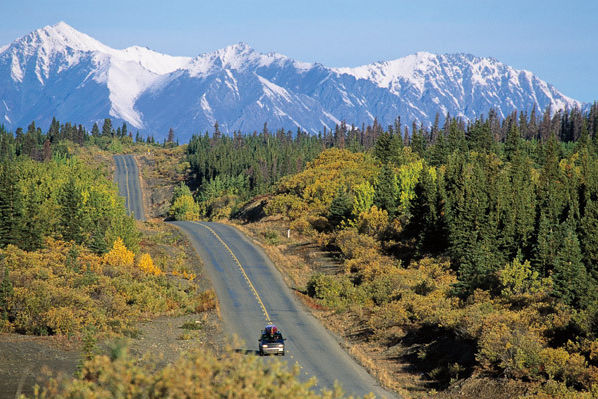
1. Alaska Highway Yukon Adventure

https://res.cloudinary.com/sagacity/image/upload/c_crop%2Ch_399%2Cw_598%2Cx_1%2Cy_0/c_limit%2Cdpr_auto%2Cf_auto%2Cfl_lossy%2Cq_80%2Cw_1200/alaskan-highway-yukon_gidmnl.jpg
https://images.openai.com/static-rsc-3/q81ADqWkmfZ-3xETspGNIfNiBGNMyqEi0GbpThblNQzqdTtVI0O_j0HV2zFzclgbMzRILgRc8KqBmgI-CYxePw09K1U7d1dUQ52W_8coVKg?purpose=fullsize&v=1
https://www.travelyukon.com/sites/default/files/styles/square_big/public/2022-11/uemura_dall_sheep_ram_at_sunset.jpg?itok=T6bx-R4p

4

Route:
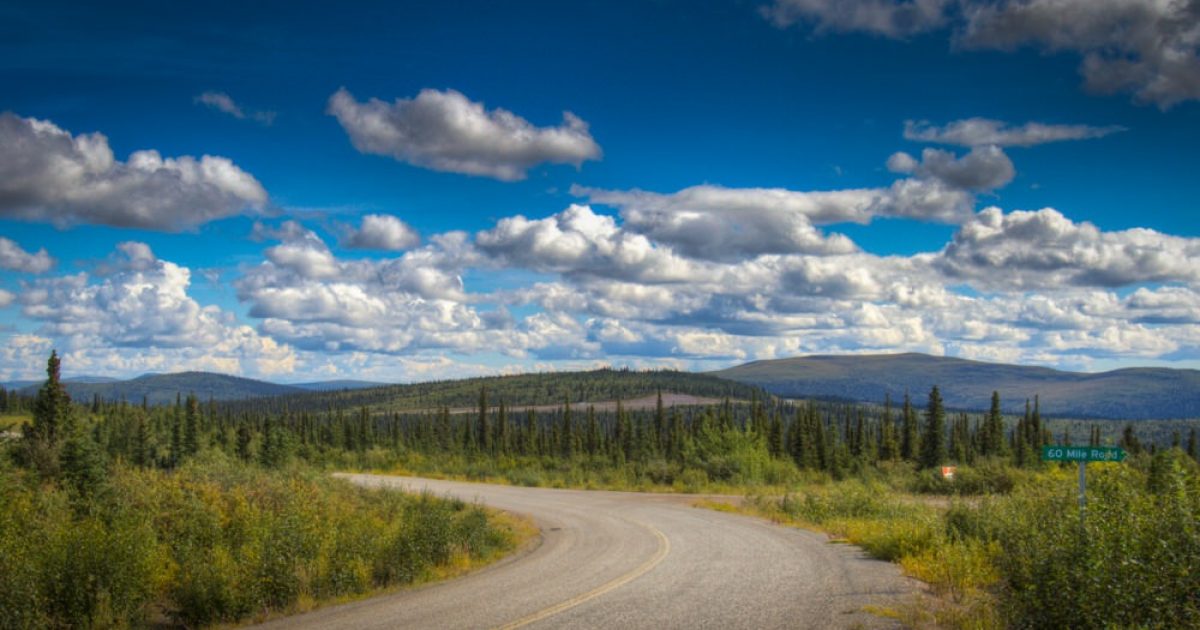
Watson Lake → Whitehorse → Kluane Lake → Beaver Creek

Distance: ~740 km
Ideal length: 4–6 days

Highlights

  • Historic driving along the Alaska Highway
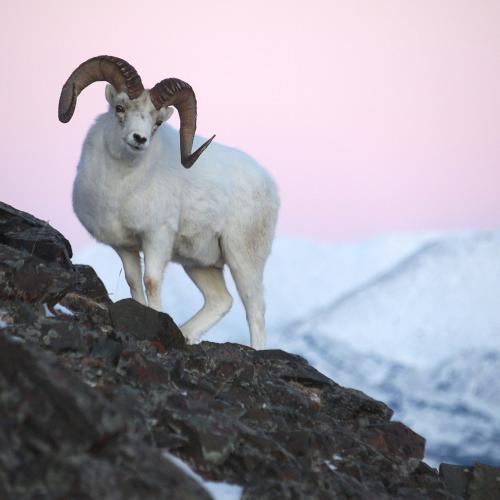
  • Wildlife sightings (bison, bears, sheep)
  • Massive mountain views
  • Turquoise waters of Kluane Lake

RV Stops

  • Teslin Lake Campground
  • Congdon Creek Campground
  • Cottonwood RV Park (Whitehorse)

2. Kluane National Park Glacier Drive

https://images.openai.com/static-rsc-3/iL9FiyPDC9RPjtQEE1ku72v_BbD8Q6ECmGewnsn4Rg9CTRQjTmStFBEh0RxOvecHfPfO-9r199fCPcb0-qHpDIjatPJssxWuUVaThNUNIrc?purpose=fullsize&v=1
https://images.openai.com/static-rsc-3/1gsuUCKXuDTIokYDs6u_O0oKrYpRty9PsY5L8nOnCeRrn5PNk_KE1xLi-9nmkxKlXrxnLh2P3D1h3BcCNhnI-tLBzV9nkde5C9qWpz5VKUw?purpose=fullsize&v=1
https://www.travelyukon.com/sites/default/files/styles/vertical_full/public/2023-02/0b44bdfd3b0f36779bdf05682dcc3f1c47556b735669e3a9311b24ea0977faeb.jpg?itok=FC3vC85D

4

Route:
Whitehorse → Haines Junction → Kluane National Park and Reserve

Distance: ~300 km round trip
Ideal length: 2–3 days

Highlights

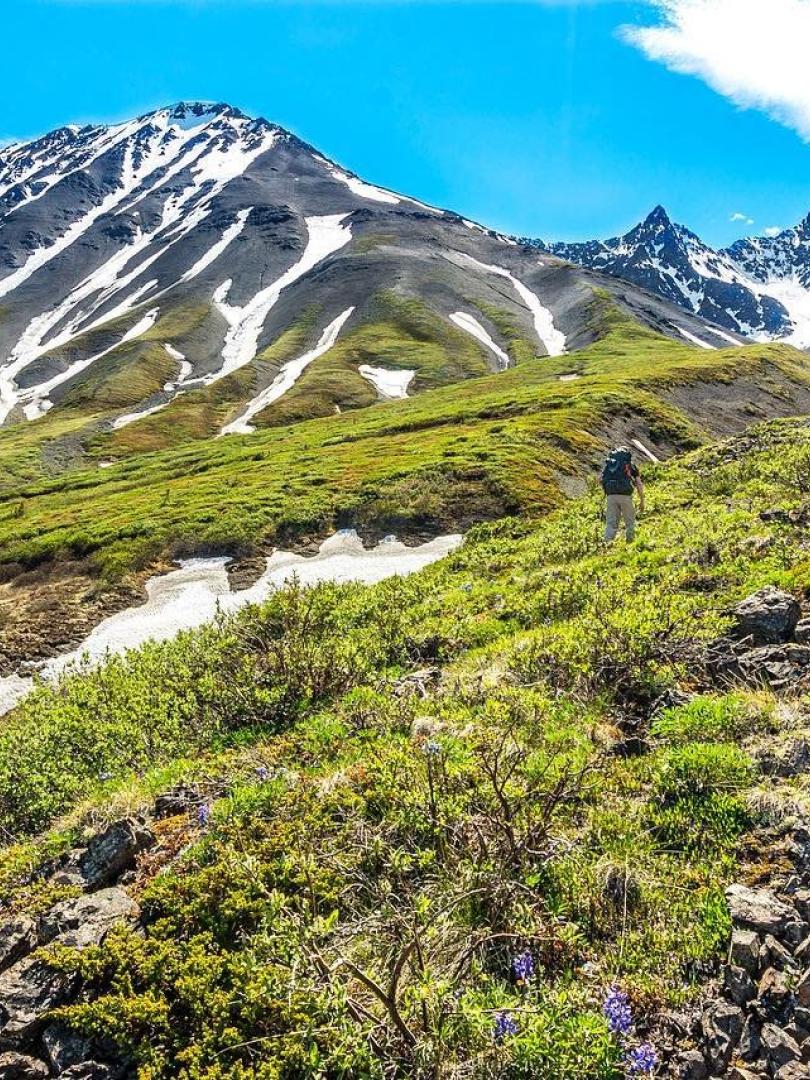
  • Canada’s highest mountain: Mount Logan
  • Vast glaciers and alpine landscapes
  • Hiking trails and wildlife viewing
  • Scenic lakes

RV Stops

  • Kathleen Lake Campground
  • Cottonwood Campground

3. Klondike Gold Rush Route

https://images.openai.com/static-rsc-3/BQLsbBSkuhR4hXyc3GHeTnNA_SoOI8s5tJVK_UIlw0ZYjRsz5XnUcFkqNGx1QxtppwfWbfGqxmslZUIZ4WK7RqbeTY9RfI1dYvo3VOICb9A?purpose=fullsize&v=1
https://images.openai.com/static-rsc-3/_8csl7_svplL3t2aM_39iJ_-9mf4pJ9LwykXm_eOOLUefM85nN3B1Rj5yWOvlMzOgMqXUPhxfKIduHrCTugo-BwXwgLB2fo5-sWL4SyVuHI?purpose=fullsize&v=1
https://images.openai.com/static-rsc-3/AxaFRJQHAdTqcJQdY8rftjjOKKIDWLexkF1Ws7L0uC-a6ayBwMj5gJI-96o0WQkfzk0OoipCplll95f_k6AdQ8kaUsNfcWeTWRt5g7uWvVY?purpose=fullsize&v=1

4

Route:
Whitehorse → Carmacks → Dawson City

Distance: ~530 km
Ideal length: 3–4 days

Highlights

  • Gold rush history in Dawson City
  • Views from Midnight Dome
  • Historic buildings and saloons
  • Scenic Yukon River valley

RV Stops

  • Dawson City RV Park
  • Tatchun Lake Campground

4. Top of the World Highway Adventure

https://uploads.alaska.org/guides/road-maps/alaska-road-and-highway-maps/_1200x630_crop_center-center_82_none/top-of-the-world-highway-road-guideIMG_2070_1_2EnhancerKerry-Williams.jpg?mtime=1581439126
https://www.explorenorth.com/library/roads/images/top1.jpg
https://images.rove.me/w_1920%2Cq_85/ca2zbagbwfe1f0cr0k4l/alaska-top-of-the-world-highway.jpg

4

Route:
Dawson City → Top of the World Highway → Chicken → Tok

Distance: ~300 km
Ideal length: 2–3 days

Highlights

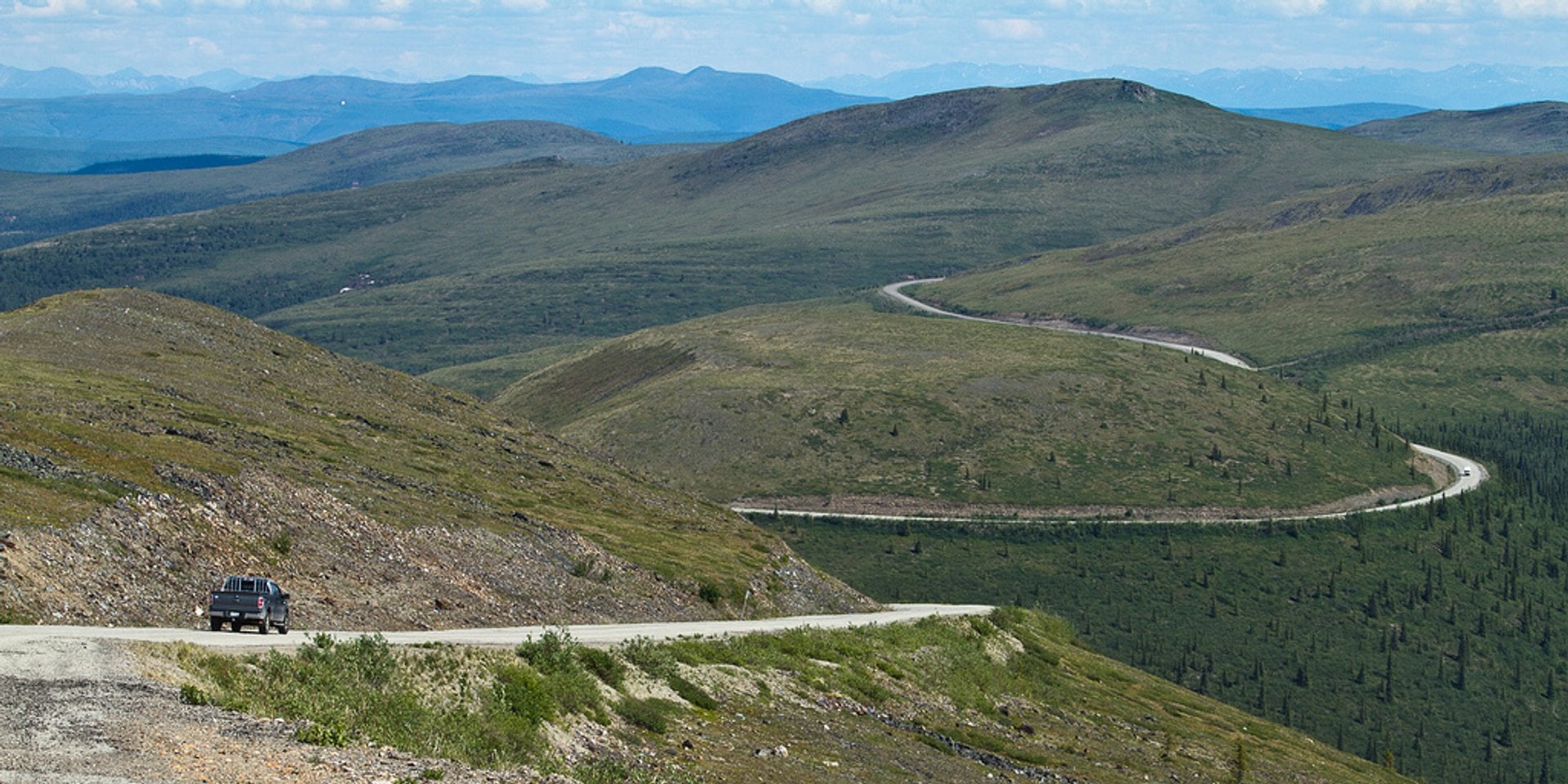
  • One of the highest highways in North America
  • Incredible mountain ridge views
  • Historic gold mining towns
  • Crossing into Alaska

RV Notes

  • Gravel sections
  • Limited services

5. Dempster Highway Arctic Expedition

https://images.openai.com/static-rsc-3/xaQgjyM8NVxa1X55K1IyaQ5A2wHE8dkm_uCbYuky-abpiX6jCIjtGS278CvWr1BdoUddU2b66mTzNdb36GXGjN3ID90vTrzhMBhjE0BrZks?purpose=fullsize&v=1
https://images.openai.com/static-rsc-3/pylOPdjozEUs7QWKrtzEkPlHOK2FQTN4ilTCuKwmEbofq1CFh2ez-jZw9ol7ggsZeG5idD8NZBtgn-LGy_hDbQNa5S09in3MLkkpSbLA97c?purpose=fullsize&v=1
https://media-cdn.tripadvisor.com/media/photo-s/13/b7/e8/7a/arctic-circle-sign-in.jpg

4

Route:
Dawson City → Tombstone Territorial Park → Arctic Circle → Inuvik

Distance: ~740 km one way
Ideal length: 5–7 days

Highlights

  • Crossing the Arctic Circle
  • Dramatic peaks in Tombstone Territorial Park
  • Vast tundra landscapes
  • Northern lights viewing

RV Notes

  • Remote gravel highway
  • Prepare for limited services

6. Ultimate Yukon RV Loop

https://images.openai.com/static-rsc-3/tjIgMXogHl23EsBH2pgY3-Z6QNjiXN7Wl01EPSplZc_xUUc52J_7PNDmRgXMTDWBKHhgxUMaWAoSIAxUVpOeghN02mOn6GMJVT_byaH1UVg?purpose=fullsize&v=1
https://images.openai.com/static-rsc-3/LbsjVBkZpf_viDFOhTkpEG_WzQdzfw1DFFKzlWZrIHwZCwVuAVUwG99fWJ2paO5c4KBWPCPghJ9VC1lzB5cpQkND7Kyp6p4Jg36wAObC_Tg?purpose=fullsize&v=1
https://images.openai.com/static-rsc-3/wy_r57RZlSm8uQxzhPhCAFSa89guwRK8qhvUmTTJC_aBNfO75cHEa_BeZ-DCreuILPBiYzglRZ23GzYJDugQOu7JMeyzku12DQSAWuJ20n4?purpose=fullsize&v=1

4

Route:
Whitehorse → Haines Junction → Kluane National Park → Dawson City → Dempster Highway → Whitehorse

Distance: ~1,800 km
Ideal length: 10–14 days

Highlights

  • Glaciers and mountains
  • Gold rush history
  • Arctic tundra
  • Wildlife and northern lights

Quick Comparison

TripBest ForLength
Alaska HighwayClassic Yukon drive4–6 days
Kluane National ParkGlaciers & mountains2–3 days
Klondike RouteGold rush history3–4 days
Top of the World HwyEpic ridge-top scenery2–3 days
Dempster HighwayArctic adventure5–7 days
Ultimate Yukon LoopFull Yukon highlights10–14 days

Travel the Trans-African Highway

Did you know that the Trans-African Highway network is a planned set of roads and highways that will span across the African continent, connecting various regions and countries together? The project aims to promote trade, tourism, and economic development by improving transportation infrastructure in Africa.

The idea for the Trans-African Highway network was first proposed in the 1970s by the United Nations Economic Commission for Africa. Since then, several routes have been identified and designated to link countries from North to South and East to West. One of the main goals of the project is to facilitate easier movement of goods and people within the continent, ultimately boosting regional integration and cooperation.

Despite its ambitious goals, the Trans-African Highway network still faces challenges such as funding, coordination among participating countries, and security concerns along certain routes. However, with increased investment in infrastructure and stronger partnerships between nations, the project has the potential to significantly improve connectivity and transportation efficiency throughout Africa.

One notable statistic is that currently, only about one-third of the planned Trans-African Highway network is operational. This highlights the need for continued support and investment in the project to ensure that all routes are completed and fully functional. As more sections of the network are completed, the economic benefits for countries along the routes are expected to increase, making travel and trade more efficient and profitable.

Are You Ready to Explore the Trans-African Highway?

Travel the Trans-African Highway is an incredible opportunity to embark on a journey through the diverse landscapes and cultures of Africa. This highway connects various countries across the continent, providing a unique way to experience the beauty and richness of Africa. Whether you are seeking adventure, cultural immersion, or simply a new experience, traveling the Trans-African Highway offers something for every type of traveler. Read on to discover the wonders that await you on this epic road trip.

Visiting the Trans-African Highway

Traveling along the Trans-African Highway is a dream for many adventure-seekers and road trip enthusiasts. This vast network of roads spans across the African continent, connecting regions from Cairo in Egypt to Cape Town in South Africa. The highway offers a unique opportunity to experience the diverse landscapes, cultures, and people of Africa.

Route Options

There are several route options to consider when traveling the Trans-African Highway. One popular route starts in Cairo, Egypt, and travels through Sudan, Ethiopia, Kenya, Tanzania, Zambia, Zimbabwe, and finally ends in Cape Town, South Africa. This route offers a mix of desert landscapes, lush forests, and bustling cities.

Another common route starts in Lagos, Nigeria, and travels through Benin, Togo, Ghana, Ivory Coast, Burkina Faso, Mali, Senegal, and ends in Dakar. This route showcases the vibrant cultures and rich history of West Africa.

Recommended Stops

Along the Trans-African Highway, there are numerous must-see stops that shouldn’t be missed. In Egypt, take some time to explore the ancient pyramids of Giza and the bustling markets of Cairo. In Kenya, embark on a safari in the Maasai Mara National Reserve to witness the incredible wildlife of Africa up close.

Don’t forget to visit Victoria Falls, one of the largest waterfalls in the world, located on the border of Zambia and Zimbabwe. And in South Africa, enjoy the stunning views along the Garden Route as you make your way to Cape Town.

Challenges and Tips

  • One of the main challenges travelers may face on the Trans-African Highway is poor road conditions in some areas. It’s important to research road conditions before embarking on your journey and be prepared for long stretches of isolated roads.
  • Border crossings can also be time-consuming and bureaucratic, so make sure to have all necessary documents and be patient during the process.
  • It’s essential to pack plenty of water, snacks, and emergency supplies, as services may be limited in remote areas.

Despite the challenges, traveling the Trans-African Highway is a once-in-a-lifetime experience that will leave you with unforgettable memories and a deeper appreciation for the beauty and diversity of the African continent.

According to recent statistics, over 500,000 travelers embark on a journey along the Trans-African Highway each year.

What is the Trans-African Highway?

The Trans-African Highway is a network of highways that crisscross the African continent, connecting countries and regions from north to south and east to west.

How long is the Trans-African Highway?

The Trans-African Highway network spans over 60,000 kilometers, making it one of the longest highway systems in the world.

Are the roads on the Trans-African Highway safe?

While some sections of the Trans-African Highway are well-maintained, others may be in poor condition and lacking modern infrastructure. It is important for travelers to exercise caution and be prepared for varying road conditions.

Do I need a special permit to travel on the Trans-African Highway?

Permit requirements vary by country, so it is advisable to check with the relevant authorities in each country you plan to visit along the Trans-African Highway.

What are some popular destinations along the Trans-African Highway?

  • Cairo, Egypt
  • Cape Town, South Africa
  • Lagos, Nigeria
  • Nairobi, Kenya
  • Casablanca, Morocco

Is it safe to travel on the Trans-African Highway alone?

Traveling alone on the Trans-African Highway can pose certain risks, especially in remote areas. It is recommended to travel with a companion or in a group for added safety.

What are the best modes of transportation for traveling on the Trans-African Highway?

Popular modes of transportation on the Trans-African Highway include buses, shared taxis, and rental cars. Some sections may also be accessible by train or ferry.

Are there accommodations along the Trans-African Highway?

Accommodations vary along the Trans-African Highway, with options ranging from luxury hotels in major cities to guesthouses and camping sites in more remote areas.

What is the best time of year to travel on the Trans-African Highway?

The best time to travel on the Trans-African Highway depends on the region you plan to visit. Generally, the dry season (typically from May to October) is considered more favorable for travel due to improved road conditions.

Can I use public transportation to travel on the Trans-African Highway?

Public transportation options such as buses and minibusses are available along certain sections of the Trans-African Highway. However, services may be limited in more remote areas, so it is advisable to plan your journey accordingly.

Conclusion

Traveling the Trans-African Highway is a journey full of adventure, cultural experiences, and challenges. From the iconic landmarks along the way to the diverse people you meet, this road trip offers a unique perspective on the vast continent of Africa. The article highlights the significance of this highway as a crucial transportation route linking different African countries, fostering economic development, and promoting regional integration.

Moreover, the article emphasizes the need for proper planning, cautious driving, and awareness of potential dangers while traveling on the Trans-African Highway. It is important to take necessary precautions, have backup plans, and be prepared for unexpected situations. Despite the challenges, the rewards of embarking on this journey are immeasurable – from breathtaking landscapes to unforgettable encounters with local communities. Overall, traveling the Trans-African Highway is a once-in-a-lifetime experience that offers a deep understanding of Africa’s beauty, diversity, and resilience. So, pack your bags, hit the road, and get ready for an unforgettable adventure along this iconic route.

Motorhome/RV Routes United Kingdom (UK)

1. Classic UK Highlights Route (10–14 days)

Route:
London → Oxford → Stratford-upon-Avon → Liverpool → Lake District → Edinburgh → York → London

Highlights

  • Historic landmarks and museums in London
  • University city of Oxford
  • Shakespeare’s birthplace in Stratford-upon-Avon
  • Cultural heritage and music history in Liverpool
  • Mountain scenery in the Lake District
  • Medieval streets in York

Good for: First-time visitors and cultural landmarks.


2. Scotland Highlands Route (6–9 days)

Route:
Edinburgh → Inverness → Loch Ness → Isle of Skye → Fort William → Glencoe → Glasgow

Highlights

  • Historic Edinburgh Castle and old town
  • Loch Ness and surrounding landscapes
  • Dramatic mountains and cliffs on the Isle of Skye
  • Scenic valleys of Glencoe
  • Ben Nevis near Fort William

Good for: Mountain scenery and dramatic landscapes.


3. North Coast 500 Route (5–7 days)

Route:
Inverness → Applecross → Torridon → Durness → Thurso → John o’ Groats → Inverness

Highlights

  • One of the UK’s most scenic coastal drives
  • Remote beaches and cliffs in northern Scotland
  • Mountain landscapes and coastal villages
  • Historic castles and lighthouses

Good for: Adventure travel and coastal scenery.


4. South West England Route (5–7 days)

Route:
Bristol → Bath → Stonehenge → Cornwall → Land’s End → Devon

Highlights

  • Roman baths and Georgian architecture in Bath
  • Prehistoric monument Stonehenge
  • Coastal cliffs and beaches in Cornwall
  • Traditional fishing villages
  • Scenic countryside in Devon

Good for: History and coastal landscapes.


5. Wales Scenic Route (4–6 days)

Route:
Cardiff → Brecon Beacons → Snowdonia National Park → Conwy → Anglesey

Highlights

  • Castles and historic sites in Wales
  • Mountain scenery in Snowdonia National Park
  • Coastal views and cliffs
  • Medieval town of Conwy

Good for: Mountains, castles, and nature.


6. Northern Ireland Coastal Route (3–5 days)

Route:
Belfast → Giant’s Causeway → Carrick-a-Rede Bridge → Derry → Donegal (optional extension)

Highlights

  • Giant’s Causeway basalt columns (UNESCO site)
  • Dramatic coastal cliffs and viewpoints
  • Titanic heritage in Belfast
  • Historic city walls in Derry

Good for: Coastal scenery and unique geology.


7. Grand United Kingdom Motorhome Tour (14–21 days)

Route:
London → South West England → Wales → Lake District → Scotland Highlands → North Coast 500 → Edinburgh → York → London

Highlights

  • Historic cities and castles
  • Coastal cliffs and beaches
  • National parks and mountain landscapes
  • Cultural heritage across England, Scotland, and Wales

Good for: A comprehensive exploration of the UK.


RV Travel Tips for the United Kingdom

  • The UK drives on the left side of the road.
  • Many rural roads can be narrow with passing places.
  • Campsites and motorhome parks are widely available.
  • Wild camping is restricted in England and Wales but more tolerated in parts of Scotland.

Motorhome/RV Routes Ukraine

NON E of the Routes is possible because of the war

1. Classic Ukraine Highlights Route (7–10 days)

Route:
Kyiv → Chernihiv → Poltava → Kharkiv → Dnipro → Kyiv

Highlights

  • Historic churches and monasteries in Kyiv
  • Ancient architecture in Chernihiv
  • Cultural heritage and museums in Poltava
  • Modern city life in Kharkiv
  • Riverfront views in Dnipro

Good for: First-time visitors and historic cities.


2. Western Ukraine Cultural Route (5–7 days)

Route:
Lviv → Ternopil → Kamianets-Podilskyi → Chernivtsi → Lviv

Highlights

  • UNESCO-listed historic center of Lviv
  • Medieval castle and fortress in Kamianets-Podilskyi
  • Scenic canyon landscapes around the Smotrych River
  • Austro-Hungarian architecture in Chernivtsi

Good for: History, architecture, and culture.


3. Carpathian Mountains Route (5–7 days)

Route:
Lviv → Ivano-Frankivsk → Yaremche → Bukovel → Verkhovyna → Lviv

Highlights

  • Carpathian mountain scenery and forests
  • Traditional Hutsul villages
  • Waterfalls and hiking trails near Yaremche
  • Ski resort and mountain viewpoints in Bukovel

Good for: Nature and mountain landscapes.


4. Black Sea Coastal Route (5–7 days)

Route:
Odesa → Bilhorod-Dnistrovskyi → Zatoka → Mykolaiv → Kherson → Odesa

Highlights

  • Historic port city of Odesa
  • Akkerman Fortress in Bilhorod-Dnistrovskyi
  • Beaches and lagoons along the Black Sea coast
  • Coastal landscapes and seaside towns

Good for: Coastal scenery and historic sites.


5. Ukrainian Castles Route (4–6 days)

Route:
Lviv → Olesko Castle → Pidhirtsi Castle → Zolochiv Castle → Ternopil → Lviv

Highlights

  • Historic castles of western Ukraine
  • Baroque and Renaissance architecture
  • Rolling countryside landscapes
  • Cultural heritage sites

Good for: Castles and historic architecture.


6. Grand Ukraine Motorhome Tour (10–14 days)

Route:
Kyiv → Chernihiv → Poltava → Kharkiv → Dnipro → Odesa → Kamianets-Podilskyi → Carpathian Mountains → Lviv → Kyiv

Highlights

  • Historic cities and cultural landmarks
  • Mountain landscapes in the Carpathians
  • Black Sea coastline
  • Medieval castles and historic towns

Good for: A comprehensive exploration of Ukraine.


RV Travel Tips for Ukraine

  • Road conditions can vary significantly between regions.
  • Campsites are limited, but wild camping is often possible in rural areas.
  • Fuel stations are common along major roads.
  • Always check the current safety and travel situation before planning a trip.

Motorhome/RV Routes Switzerland

1. Classic Switzerland Highlights Route (6–9 days)

Route:
Zurich → Lucerne → Interlaken → Zermatt → Montreux → Geneva

Highlights

  • Historic old town and lake in Zurich
  • Chapel Bridge and lake views in Lucerne
  • Alpine scenery around Interlaken
  • Matterhorn views near Zermatt
  • Vineyards and lakeside castles in Montreux
  • Cultural city of Geneva

Good for: First-time visitors and iconic Swiss landscapes.


2. Swiss Alpine Passes Route (5–7 days)

Route:
Andermatt → Furka Pass → Grimsel Pass → Susten Pass → St. Gotthard Pass → Andermatt

Highlights

  • Famous high alpine passes
  • Dramatic mountain roads and viewpoints
  • Glaciers and alpine lakes
  • Historic mountain villages

Good for: Scenic mountain driving.


3. Swiss Lakes Route (4–6 days)

Route:
Zurich → Lake Lucerne → Lake Brienz → Lake Thun → Lake Geneva → Zurich

Highlights

  • Crystal-clear alpine lakes
  • Scenic lakeside villages
  • Boat trips and mountain viewpoints
  • Vineyards along Lake Geneva

Good for: Relaxed travel and beautiful landscapes.


4. Bernese Oberland Route (4–6 days)

Route:
Bern → Interlaken → Lauterbrunnen → Grindelwald → Meiringen → Bern

Highlights

  • Waterfalls and alpine valleys in Lauterbrunnen
  • Jungfrau region mountain views
  • Scenic hiking trails
  • Historic capital city of Bern (UNESCO site)

Good for: Nature, hiking, and mountain scenery.


5. Eastern Switzerland Route (4–6 days)

Route:
Zurich → St. Gallen → Appenzell → Säntis → Liechtenstein → Graubünden

Highlights

  • Abbey district of St. Gallen (UNESCO site)
  • Traditional houses and culture in Appenzell
  • Panoramic mountain views from Säntis
  • Alpine valleys and villages in Graubünden

Good for: Culture and alpine landscapes.


6. Swiss National Parks Route (4–6 days)

Route:
Chur → Swiss National Park → Zernez → Davos → St. Moritz → Chur

Highlights

  • Alpine wildlife and forests in Swiss National Park
  • Mountain passes and scenic drives
  • Luxury resort town of St. Moritz
  • Hiking trails and alpine lakes

Good for: Nature and outdoor activities.


7. Grand Switzerland Motorhome Tour (10–14 days)

Route:
Zurich → Lucerne → Bernese Oberland → Zermatt → Montreux → Geneva → Swiss National Park → St. Moritz → Zurich

Highlights

  • Iconic alpine landscapes and glaciers
  • Scenic lakes and mountain villages
  • Historic cities and UNESCO heritage sites
  • High mountain passes and national parks

Good for: A comprehensive exploration of Switzerland.


RV Travel Tips for Switzerland

  • Highways require a Swiss motorway vignette.
  • Some alpine passes may be closed in winter due to snow.
  • Campsites and motorhome parking areas are widely available.
  • Mountain roads can be steep and narrow, so careful driving is recommended.

Motorhome/RV Routes Sweden

1. Classic Sweden Highlights Route (7–10 days)

Route:
Stockholm → Uppsala → Falun → Östersund → Åre → Stockholm

Highlights

  • Historic old town and islands in Stockholm
  • Cathedral and Viking history in Uppsala
  • UNESCO-listed Falun copper mine
  • Lake landscapes and forests in central Sweden
  • Mountain scenery around Åre

Good for: First-time visitors and cultural highlights.


2. Swedish West Coast Route (5–7 days)

Route:
Gothenburg → Marstrand → Smögen → Fjällbacka → Strömstad

Highlights

  • Rocky coastline and fishing villages
  • Archipelago landscapes near Gothenburg
  • Colorful harbor towns such as Smögen
  • Seafood restaurants and coastal views

Good for: Coastal scenery and relaxed travel.


3. Swedish Lapland Arctic Route (7–10 days)

Route:
Luleå → Jokkmokk → Kiruna → Abisko National Park → Narvik (Norway optional)

Highlights

  • Arctic landscapes and wilderness
  • Sami culture and heritage in Jokkmokk
  • Northern lights in winter or midnight sun in summer
  • Hiking trails in Abisko National Park

Good for: Arctic adventure and remote landscapes.


4. Swedish Lakes Route (5–7 days)

Route:
Stockholm → Västerås → Karlstad → Lake Vänern → Lake Vättern → Linköping → Stockholm

Highlights

  • Sweden’s largest lakes Vänern and Vättern
  • Scenic countryside and forests
  • Historic towns and castles
  • Lakeside beaches and cycling routes

Good for: Nature and relaxing road trips.


5. Southern Sweden Route (4–6 days)

Route:
Malmö → Lund → Ystad → Österlen → Kalmar → Öland Island

Highlights

  • Historic university town of Lund
  • Coastal villages and beaches in Österlen
  • Medieval town of Ystad
  • Kalmar Castle and island landscapes on Öland

Good for: Culture, coastlines, and countryside.


6. Swedish National Parks Route (5–8 days)

Route:
Stockholm → Tiveden National Park → Fulufjället National Park → Idre → Sarek National Park region

Highlights

  • Forest landscapes and hiking trails
  • Sweden’s highest waterfall at Fulufjället
  • Remote wilderness areas and wildlife
  • Dramatic mountain scenery

Good for: Nature and outdoor exploration.


7. Grand Sweden Motorhome Tour (12–16 days)

Route:
Stockholm → Uppsala → Swedish Lakes → Gothenburg → West Coast → Malmö → Öland → Swedish Lapland → Stockholm

Highlights

  • Historic cities and cultural landmarks
  • Coastal landscapes and archipelagos
  • Lakes, forests, and national parks
  • Arctic wilderness in northern Sweden

Good for: A comprehensive exploration of Sweden.


RV Travel Tips for Sweden

  • Sweden is very RV-friendly with many campsites and parking areas.
  • Wild camping is allowed under “Allemansrätten” (Right of Public Access) if you respect nature and private property.
  • Roads are generally excellent and quiet outside major cities.
  • In northern regions, watch for reindeer crossing roads.

Motorhome/RV Routes Spain

Planning a motorhome adventure through Spain?

Explore our practical self-guided motorhome travel guides featuring scenic coastal drives, inland adventures, and unforgettable routes across Spain.

🚐 Motorhome Tours: Andalusia Tour (Winter Route)
🚐 Motorhome Tours: Northern Spain – Atlantic Route
🚐 Motorhome Tours: Spain – Inland Route through Extremadura and Castile-La Mancha
🚐 Motorhome Tours: Over the Pyrenees – From France to Spain

Start planning your Spain road trip →

1. Classic Spain Highlights Route (10–14 days)

Route:
Madrid → Toledo → Córdoba → Seville → Granada → Valencia → Barcelona → Madrid

Highlights

  • Royal Palace and museums in Madrid
  • Medieval streets in Toledo
  • Mosque-Cathedral of Córdoba
  • Historic center and flamenco culture in Seville
  • Alhambra Palace in Granada
  • Beaches and architecture in Barcelona

Good for: First-time visitors and iconic landmarks.


2. Northern Spain Green Coast Route (7–10 days)

Route:
Bilbao → Santander → Oviedo → Picos de Europa → Santiago de Compostela → A Coruña

Highlights

  • Guggenheim Museum in Bilbao
  • Atlantic coastline and beaches
  • Mountains and hiking in Picos de Europa
  • Pilgrimage city of Santiago de Compostela
  • Traditional villages and seafood cuisine

Good for: Nature, mountains, and coastal scenery.


3. Andalusia Route (6–9 days)

Route:
Seville → Cádiz → Ronda → Málaga → Granada → Córdoba → Seville

Highlights

  • Historic Moorish architecture in Andalusia
  • White villages (Pueblos Blancos)
  • Dramatic cliffs in Ronda
  • Mediterranean beaches near Málaga
  • Alhambra Palace in Granada

Good for: Culture, architecture, and scenic landscapes.


4. Mediterranean Coast Route (5–7 days)

Route:
Barcelona → Tarragona → Valencia → Alicante → Murcia

Highlights

  • Roman ruins in Tarragona
  • Beaches and coastal towns along the Mediterranean
  • City of Arts and Sciences in Valencia
  • Warm climate and seaside resorts

Good for: Coastal driving and beach stops.


5. Pyrenees Mountains Route (5–7 days)

Route:
Pamplona → Ordesa National Park → Aínsa → Vielha → Andorra → Girona

Highlights

  • Dramatic mountain landscapes in the Pyrenees
  • Hiking trails and waterfalls in Ordesa National Park
  • Medieval mountain villages
  • Scenic mountain passes

Good for: Nature, mountains, and outdoor activities.


6. Central Spain Cultural Route (4–6 days)

Route:
Madrid → Segovia → Ávila → Salamanca → Cáceres → Madrid

Highlights

  • Roman aqueduct in Segovia
  • Medieval city walls in Ávila
  • Historic university city of Salamanca
  • Old town of Cáceres (UNESCO site)

Good for: History and architecture.


7. Grand Spain Motorhome Tour (14–21 days)

Route:
Barcelona → Pyrenees → Bilbao → Santiago de Compostela → Madrid → Toledo → Andalusia → Valencia → Barcelona

Highlights

  • Diverse landscapes from mountains to beaches
  • Historic cities and UNESCO heritage sites
  • Wine regions and countryside villages
  • Mediterranean and Atlantic coastlines

Good for: A comprehensive exploration of Spain.


RV Travel Tips for Spain

  • Spain has many motorhome parking areas called “Áreas de Autocaravanas.”
  • Wild camping is generally restricted, but overnight parking in designated areas is common.
  • Motorways may have tolls depending on the route.

Motorhome/RV Routes Slovenia

1. Classic Slovenia Highlights Route (5–7 days)

Route:
Ljubljana → Lake Bled → Lake Bohinj → Triglav National Park → Kranjska Gora → Ljubljana

Highlights

  • Historic old town and castle in Ljubljana
  • Iconic island church on Lake Bled
  • Alpine scenery around Lake Bohinj
  • Hiking and nature in Triglav National Park
  • Mountain landscapes near Kranjska Gora

Good for: First-time visitors and alpine scenery.


2. Julian Alps Scenic Route (4–6 days)

Route:
Kranjska Gora → Vršič Pass → Bovec → Soča Valley → Tolmin → Kobarid

Highlights

  • Dramatic mountain views along Vršič Pass
  • Emerald-green Soča River
  • Outdoor activities such as rafting and hiking
  • Historic World War I sites near Kobarid

Good for: Nature and mountain driving.


3. Slovenian Coast Route (3–4 days)

Route:
Koper → Izola → Piran → Portorož → Sečovlje Salt Pans

Highlights

  • Adriatic coastal towns and harbors
  • Venetian architecture in Piran
  • Mediterranean atmosphere and seafood cuisine
  • Historic salt pans and nature reserves

Good for: Coastal scenery and relaxing travel.


4. Karst and Caves Route (3–5 days)

Route:
Ljubljana → Postojna Cave → Predjama Castle → Škocjan Caves → Lipica → Ljubljana

Highlights

  • Underground caves and karst landscapes
  • Predjama Castle built into a cliff
  • UNESCO-listed Škocjan Caves
  • Lipica stud farm, home of Lipizzaner horses

Good for: Unique natural wonders and geology.


5. Eastern Slovenia Wine and Culture Route (4–6 days)

Route:
Ljubljana → Celje → Maribor → Ptuj → Jeruzalem Wine Region → Ljubljana

Highlights

  • Historic castles and towns
  • Vineyards and wine cellars in the Jeruzalem region
  • Slovenia’s oldest town, Ptuj
  • Cultural heritage and traditional villages

Good for: Wine tourism and historic towns.


6. Grand Slovenia Motorhome Tour (8–10 days)

Route:
Ljubljana → Lake Bled → Triglav National Park → Soča Valley → Karst Region → Slovenian Coast → Maribor → Ptuj → Ljubljana

Highlights

  • Alpine landscapes and national parks
  • Caves and karst formations
  • Adriatic coastline and seaside towns
  • Wine regions and historic cities

Good for: A complete overview of Slovenia.


RV Travel Tips for Slovenia

  • Motorways require a vignette (digital toll sticker).
  • Slovenia has many motorhome service areas and campsites, especially near tourist attractions.
  • Wild camping is generally not allowed, so use designated camping areas.
  • Mountain roads in the Alps can be narrow and winding, especially at high passes.