All posts by admin

Coleman two flame fuel stove

The Coleman Two-Flame Fuel Stove is a reliable and versatile cooking companion for outdoor enthusiasts and campers. Designed to provide efficient heat and cooking capabilities, this stove offers several features that make it a popular choice for outdoor cooking adventures.

One of the key features of the Coleman Two-Flame Fuel Stove is its dual burner design. With two separate burners, you have the flexibility to cook multiple dishes simultaneously or adjust the heat intensity for different cooking requirements. Each burner is independently adjustable, allowing you to control the flame and heat distribution for precise cooking.

The stove is fueled by liquid fuel, typically white gas or Coleman fuel, which provides a consistent and reliable source of heat. This type of fuel is known for its high energy efficiency, making it suitable for extended cooking sessions or situations where a stable heat source is required. The stove’s fuel capacity allows for extended cooking times without the need for frequent refills.

Constructed with durability in mind, the Coleman Two-Flame Fuel Stove features a sturdy frame and robust materials that can withstand outdoor conditions. The stove is designed for stability, with adjustable legs that ensure a level cooking surface, even on uneven terrain. This stability is particularly important when using larger pots and pans or when cooking in windy conditions.

For ease of use, the stove is equipped with a built-in ignition system, eliminating the need for matches or lighters. Simply turn the stove on, engage the ignition, and you’ll have a consistent flame ready for cooking. The burners are also equipped with wind baffles, which help to protect the flame from gusts of wind, ensuring more efficient cooking and reducing fuel consumption.

The Coleman Two-Flame Fuel Stove is designed with portability in mind. It can be easily disassembled and packed into a compact size, making it convenient to transport and store. This makes it an ideal choice for camping trips, picnics, or any outdoor activity where cooking facilities may be limited.

Cleaning and maintenance are relatively straightforward with this stove. The burners can be easily removed for cleaning, and the stove’s durable construction ensures longevity with proper care.

Overall, the Coleman Two-Flame Fuel Stove offers a reliable and efficient cooking solution for outdoor enthusiasts. With its dual burner design, sturdy construction, and portability, this stove allows you to prepare delicious meals and enjoy the convenience of a reliable heat source in various outdoor settings.

Regenerate response

Ferry Palermo – Tunis


The ferry journey from Palermo, Italy to Tunis, Tunisia is an enchanting experience that allows travelers to explore the stunning Mediterranean Sea and embrace the cultural diversity of two fascinating destinations. Join us as we embark on this virtual voyage across the Mediterranean.

As you board the ferry in Palermo, the capital city of Sicily, you are greeted by the warm Mediterranean breeze and the anticipation of an unforgettable journey. The ferry, with its comfortable cabins and amenities, offers a relaxing atmosphere as you settle in for the crossing.

As the ferry departs from the port, you bid farewell to the beautiful Sicilian coastline, with its picturesque beaches and charming villages. Take a moment to soak in the panoramic views of Palermo, with its colorful buildings and historical landmarks, such as the Norman Palace and the Palermo Cathedral.

As you sail further into the Mediterranean, the deep blue waters captivate your senses, evoking a sense of tranquility and adventure. The Mediterranean Sea, known for its rich history and cultural significance, has been a gateway for trade, exploration, and cultural exchange for centuries.

During the journey, take the opportunity to indulge in the onboard amenities. Relax on the spacious deck, feeling the warmth of the sun on your skin and enjoying the refreshing sea breeze. Treat yourself to a delicious meal at one of the ship’s restaurants, savoring the flavors of Mediterranean cuisine, with its fresh seafood, aromatic herbs, and delightful Mediterranean spices.

As the ferry approaches the Tunisian coast, you catch glimpses of the vibrant city of Tunis, with its blend of modern and traditional architecture. The sight of the white buildings against the azure sea creates a stunning contrast, signaling your arrival in a land of rich history and cultural heritage.

Disembarking in Tunis, you are welcomed by the warmth of Tunisian hospitality. The city’s bustling streets, filled with the sounds of merchants and the aroma of fragrant spices, invite you to explore its vibrant medina. Lose yourself in the labyrinthine alleys, lined with shops offering traditional crafts, textiles, and intricate carpets.

Venture further into Tunis, and you’ll discover the historic landmarks that tell the story of this ancient city. Visit the Medina of Tunis, a UNESCO World Heritage site, where you can admire the stunning architecture of the Great Mosque of Zitouna and explore the bustling markets of the souks. Immerse yourself in the rich cultural heritage of Tunisia by visiting the Bardo Museum, home to a remarkable collection of Roman mosaics and artifacts.

Beyond Tunis, Tunisia beckons you to explore its diverse landscapes. From the beautiful coastal towns of Hammamet and Sidi Bou Said, known for their charming whitewashed buildings and stunning sea views, to the Sahara Desert in the south, where you can experience the magic of an unforgettable desert adventure, Tunisia offers a tapestry of experiences.

Whether you choose to wander through the ancient ruins of Carthage, embark on a camel trek in the Sahara, or simply relax on the golden beaches along the Mediterranean coast, Tunisia invites you to embrace its rich history, warm hospitality, and breathtaking natural beauty.

As you reflect on your ferry journey from Palermo to Tunis, you realize that it has not only been a voyage across the Mediterranean but also a bridge connecting two cultures, two histories, and two worlds. It is a reminder that the beauty of travel lies not only in the destinations we visit but also in the experiences and connections we create along the way.
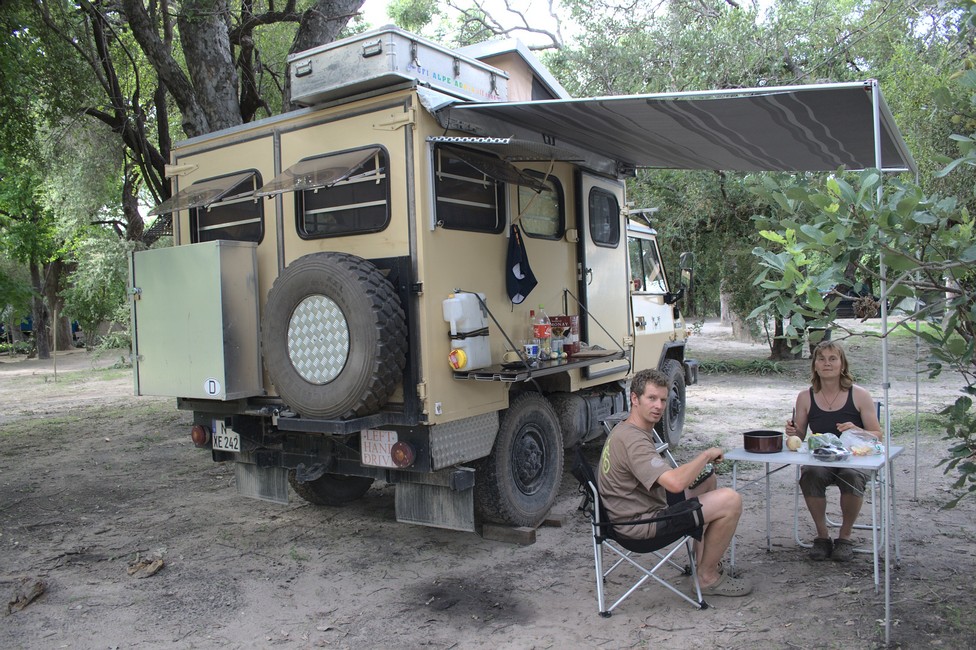
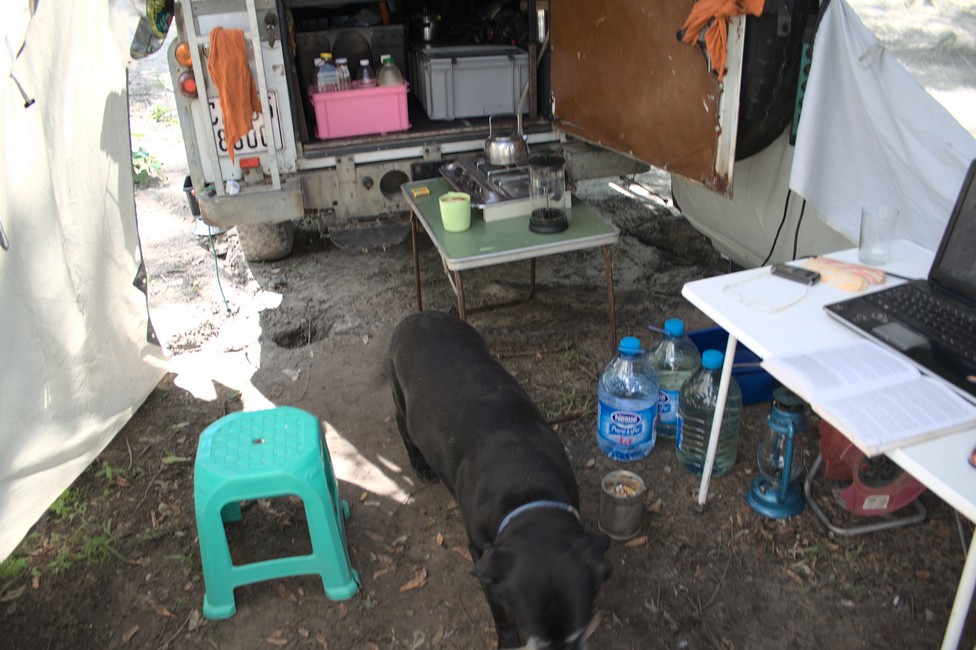
Island Safari Lodge – Botswana A004 6.12.2011

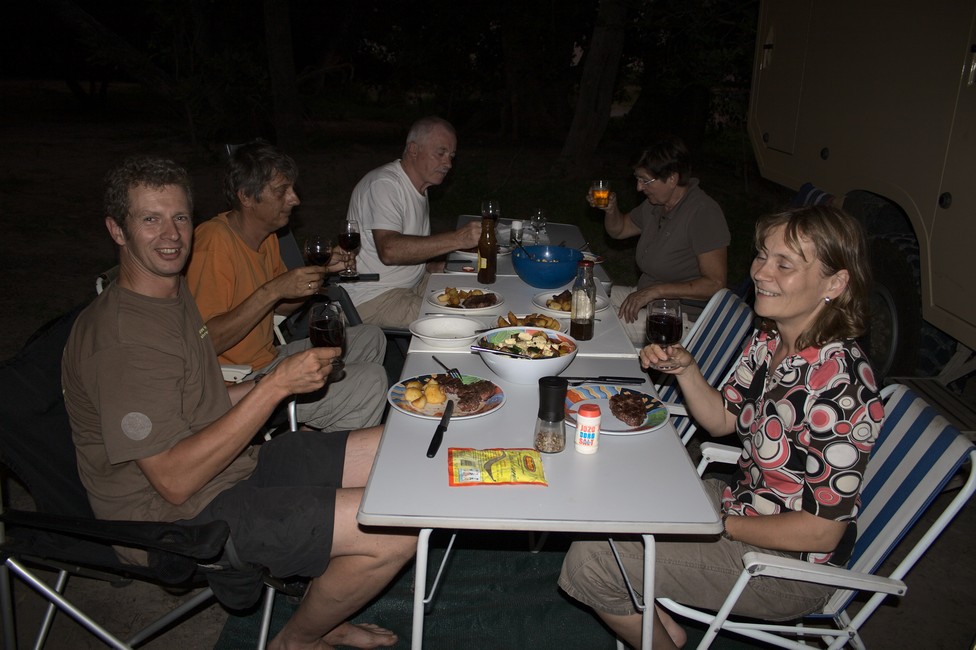
In Island Safari Lodge we get acquainted with Ute and Oli, a German couple that took half a ear holiday to travel through Southern Africa. We had lots of fun with them and spent the evenings together.

Island Safari Lodge
Ute and Oli
Island SAfari Lodge
Island Safari Lodge, Maun

Another couple arrived, Heidi and Guido, who we started our Africa adventure with. They had shipped there now car to South Africa and now we had arranged a meeting in Maun at Island Safari Lodge. We spent Xmas together, our 4th Xmas already on tour.

xmas Maun
Xmas Eve in Island Safari Lodge Maun

New Year we spent at the Lodge, there was kind a party which was very nice. Got aqcainted with Astrid, the daughter of a German couple called Därr, who were running an expedition shop in Munich. After New Year we did some shopping in Maun, to stock up our supplies, as we wanted to go back to Namibia soon.


Maun is a town located in northern Botswana. It is the fifth-largest town in the country and serves as the administrative center of the Ngamiland District. Maun is situated on the southern fringes of the Okavango Delta, a unique ecosystem known for its rich wildlife and picturesque landscapes.

As the gateway to the Okavango Delta, Maun is a popular destination for tourists and serves as a starting point for safaris and exploration of the delta. Many visitors fly into Maun’s international airport before embarking on their wildlife adventures. The town offers a range of accommodations, from luxury lodges to budget-friendly options, to cater to the diverse needs of travelers.

In Maun, you can find various tour operators and safari companies that organize trips into the Okavango Delta and nearby game reserves. These excursions provide opportunities to experience wildlife sightings, including elephants, lions, hippos, crocodiles, and a variety of bird species.

Aside from its natural attractions, Maun has a vibrant local market where you can find crafts, souvenirs, and local produce. The town also has a few restaurants, bars, and shops to cater to the needs of both residents and visitors.

If you visit Maun, it’s worth considering exploring the nearby Moremi Game Reserve, which is renowned for its diverse ecosystems and abundant wildlife. You can also take a scenic flight over the delta to witness its breathtaking beauty from the air.

Overall, Maun is a charming town that serves as a gateway to the natural wonders of the Okavango Delta. Whether you’re a nature enthusiast or a wildlife lover, Maun offers an excellent starting point for unforgettable adventures in the heart of Botswana’s wilderness.

Taking a scenic flight over the Okavango Delta is a popular activity for visitors to Maun. This unique experience allows you to witness the vastness and beauty of the delta from above, providing a different perspective on its intricate waterways, lush vegetation, and diverse wildlife.

Several tour operators in Maun offer scenic flights over the Okavango Delta. These flights are typically conducted in small aircraft, such as light planes or helicopters, which can accommodate a small number of passengers. The duration of the flights can vary depending on the operator and the specific package you choose.

During the flight, you’ll have the opportunity to see the meandering channels, lagoons, and islands of the delta, which form a stunning mosaic of colors and textures. From the air, you can observe the movements of wildlife, including herds of elephants, hippos bathing in the water, giraffes grazing, and various bird species flying above the treetops.

The pilots who conduct these flights are usually experienced and knowledgeable about the delta and its wildlife. They often provide commentary during the flight, pointing out points of interest and offering insights into the ecosystem and its inhabitants.

Scenic flights over the Okavango Delta offer a unique and unforgettable way to appreciate the sheer scale and natural beauty of this UNESCO World Heritage Site. It’s important to book your flight in advance, either through a tour operator or with the assistance of your accommodation in Maun, to ensure availability and make necessary arrangements.

Overlanding Botswana overview

Previous: Leaving South Africa

Next: Himba People near Kamanjab

Leaving South Africa A003

End of August we were leaving South Africa with 2 vehicles, the Land Rover and the Camper Van. It was impossible to sell the van, although we tried hard but the laws were against us. Alexandra was driving the Land Rover and me the van. As we had to extend our Visa in South Africa, we had been a home affairs in Cape Town to extend. Unfortunately the officer at the border to Namibia did not accept the stamp and informed us that we had to pay a fine of 1000 Rand when we wanted to re-enter South Africa. Not far from Otjiwarongo Alex had a flat tire at the Land Rover and we had to change at the Road.

Safely we arrived again at Oppi Koppi in Kamanjab, Namibia. Next day Robi told us he would like to Camper Van for the farm and he would try to get the papers to be able to import it. Our Visa was about to expire, so we had to exit Namibia for a while, so we left to Dobe via Tsumkwe. We went to Maun and stayed at Sedia Hotel. So we arranged a price for a month. For 3 days it was quite nice and a dog was visiting us regularly. He got along with Tara quite well and we thought it was the dog of the owner. So we let him sleep in the tent and he felt quite comfortable.

One day the owner discovered the stray dog and also discovered that we had a dog as well and turned completely crazy and kicked us out, and called somebody to shoot the dog next day, but allowed us to stay overnight and that he will give the money back.

So there was an urgent need to rescue the dog. Early in the morning I got the dog into the car and drove off with him in a 20 kilometer distant village, where I discovered an old man who I asked if he wanted the dog and I gave it to him. Unfortunately the dog escaped the man and ran after my car until it was so exhausted that the dog gave up. One of my worst experiences with animals. I felt miserable.

Then we packed our things and moved to Safari Island Lodge.

Leaving South Africa
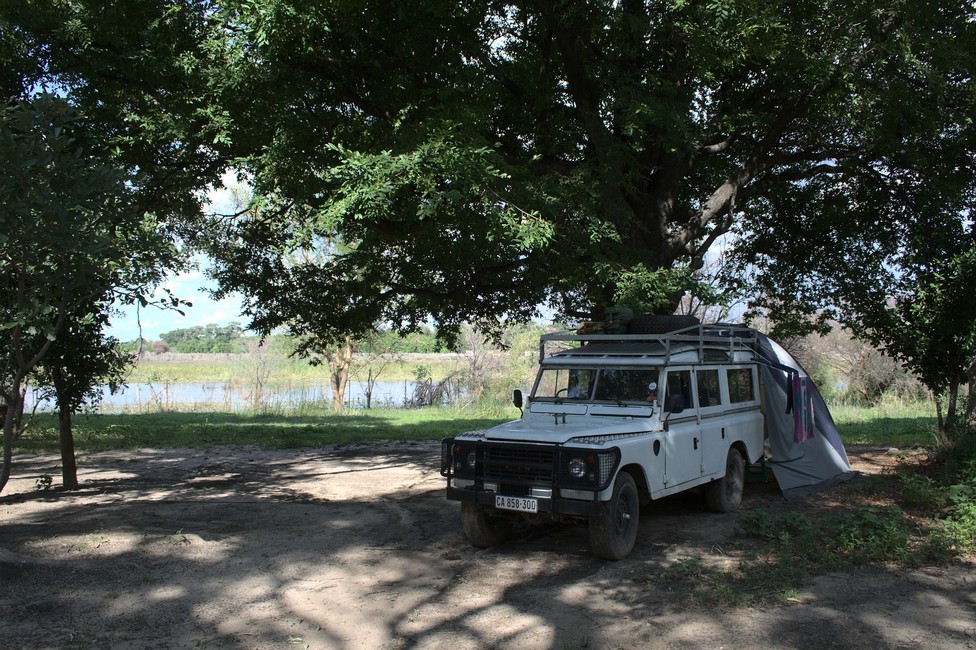
Island Safari Lodge Camp in Maum, Botswana

A comprehensive overview for planning an overland journey can be found in Overlanding South Africa.

Previous: Our Land Rover 109

Next: Island Safari Lodge

Our Land Rover 109 A002

13.05

Handed money for Land Rover over to Warren, we get the papers. The purchase contract in Africa has to be witnessed and with this document we went to the traffic office to get an South African ID for me, with our South African address and got the rgistration for the car with the number we had to use for the car. In South Africa you must print your number plate yourself, so with the papers from the office we went to the number plate shop to get the plates. Joachim was not only driving us but also assisted with all the paper work. We can wait and 2 minutes later we got the plates.

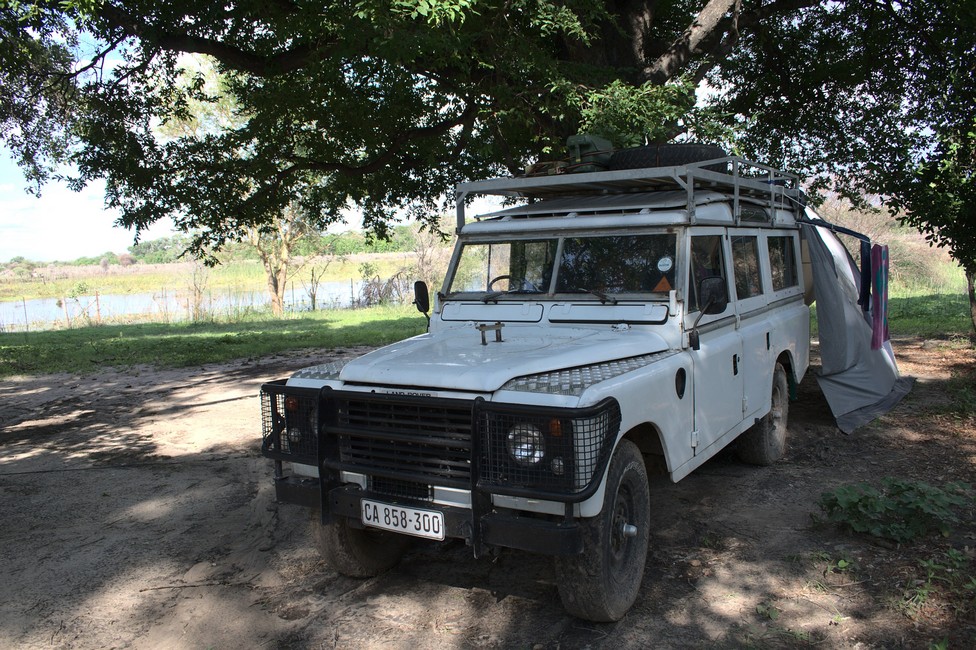
Land Rover 109
Our Land Rover 109

Next day we attached the plates to our new Land Rover 109 and we did some maintanance, like lubing the steering relay. I had to adjust the sterring wheel and now it was operating more smoothly. Water Hose to radiator was dripping, just screwed it better, problem solved. Cigar lighter was taken out of the camper van and mounted in the Land Rover. Now also the navigation device could be used.

Now a joke cable had to be attached which Stan did from a suburban of Cape Town, but unfortunately even with the joke cable it did not start without starter spray.

I did change all the gear oils and lots of other maintanence as the Land Rover was not used very often and we had to ckeck everything for the big trip which we intended to do.

At the weekend we visited a second hand market in Milnerton the place where we stayed and bought some tools for the trip. Later we made a trip to Houtbay with Guide and Heidi who were still around.

Next morning we got the message that the guy who was buying our staff was stopping his business, so we ended up having no income at all. So I had to find something else to be able to continue our trip.

The days pass with maintenance work and nice restaurant visits with Guido and Heidi. I had the idea to load up all the video clips I had to Pond5, an agency that sells video rights, but the data was too much so I copied on DVD and sent to the United States to Pond5 and they promised to upload it to my account to be ready to sell. At least some light at the tunnel.

A comprehensive overview for planning an overland journey can be found in Overlanding South Africa.

Previous: Our friends arrived

Next: Leaving South Africa

Our Friends arrive in Cape Town A001

When started our journey we were in a group of other travellers with the same goal to cross Africa. One of these couples were Guido and Heidi from Germany. They were travelling in a VW T4 camper van and shipped back from South Africa to Germany in 2010. In Germany they changed car to an IVECO truck and shipped back to South Africa. Now we met them and had lots of things to tell as we did not go together as they had left us behind alread in Tunisia. We were exchanging experiences on our trip and had much fun.

We had to make a decision what we would do. We went to Citroen to ask what it would cost to repair the camper van. As Citroen is not very common in South Africa all the parts needed had to be imported so we would end up with 2500 Euros repair and a car that is not really suited for Africa. Also we had to think of our living and what we can do to earn money while on our trip. So we decided to work over the internet and had to stock up our techniques like hard drives and much more.

For the car the decision was made. We tried to get an old Land Rover as these are much more suited for Africa and the old modells are easy to maintain and to repair and parts are still available in Africa.

After having seen several Land Rovers we decided for the one sold by a guy called Warren, and for 23000 Rand the vehicles owner ship was changed on 11th of May 2011.

At Roverland Inc the owner Martin was a close friend of Joachim and Tina and had a look at the vehicle and gave advice of what we should change at the vehicle.

In the evening we made a trip with Guido and Heidi to the seaside in Cape Town on a parking lot, had some Pizza and stayed there overnight. Wild camping in Cape Town.

A comprehensive overview for planning an overland journey can be found in Overlanding South Africa.

Previous

Next: Our Land Rover 109

Cape Town – What is next 117

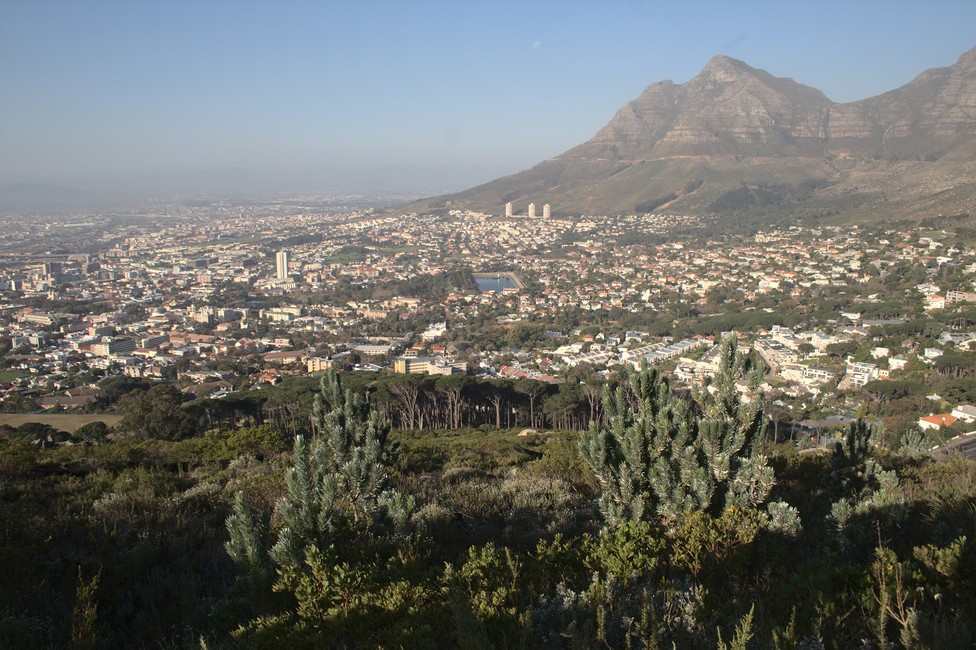
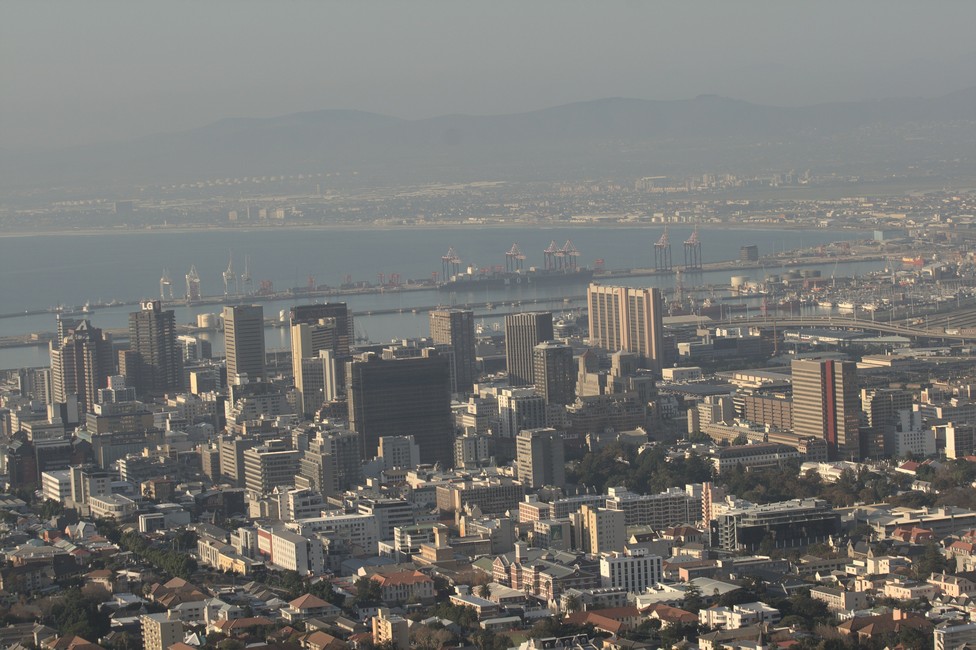
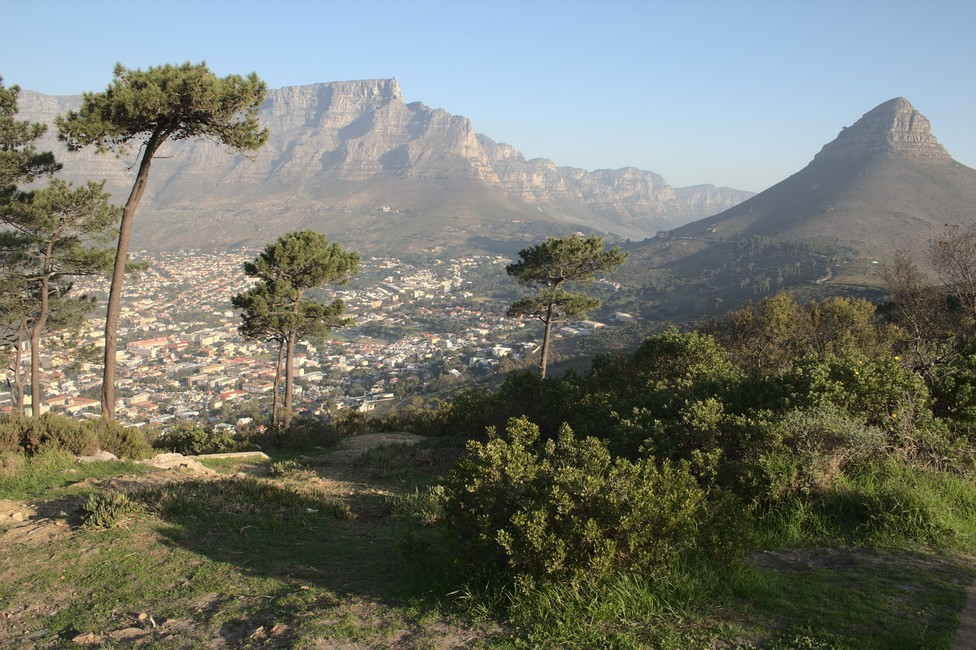
From signal hill we can look at the Cape Town city center. The city is a large city, but completely atypical, because only the center has high-buildings. The center is surrounded by little towns like Milnerton, Table View, Bloubergstrand, Bellevile, Muizenberg and others.

Cape Town
Cape Town from Signal Hill

Cape Town we like, we could imagine living here, but this is impossible because the immigration rules are strict and white-immigrants are not really welcomed. Even though Nick is married to a South African, and he had a good career in England, he received only a temporary resident permit.

Cape Town
Cape Town Centre

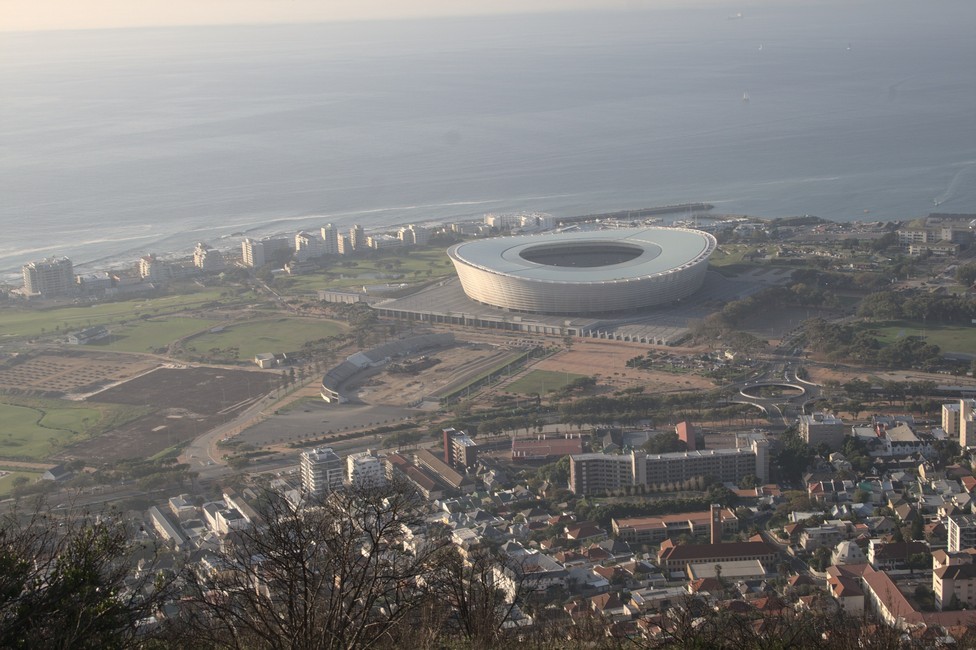
From above we see the football stadium, a remnant of the World Cup, which gave the city a decent investment boost.

Cape Town
Cape Town Table Mountain
Cape Town
Cape Town Table Mountain

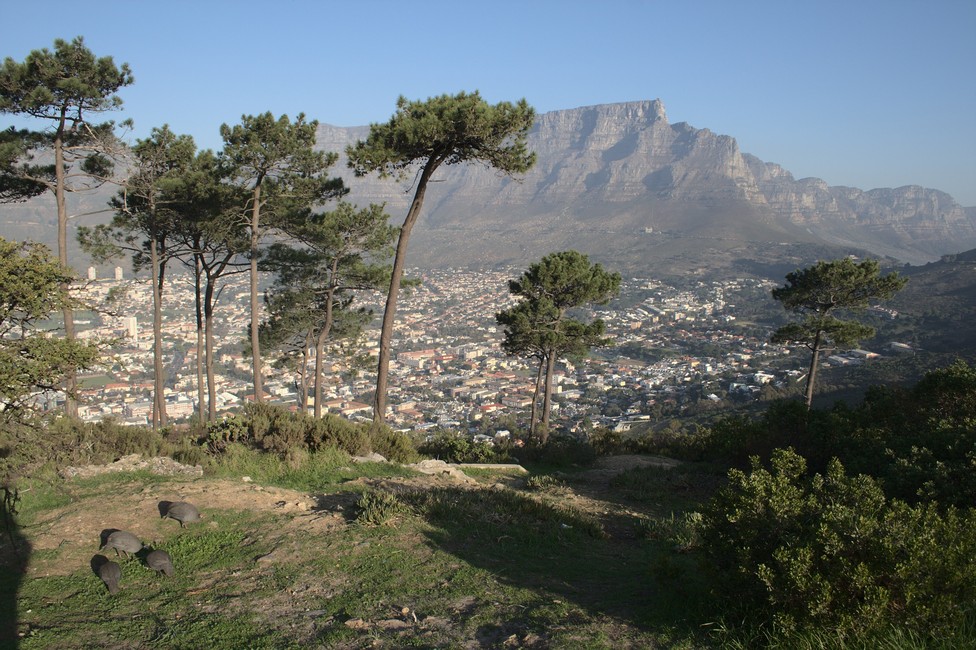
We admire Table Mountain, the landmark of the city to its feet spreads Cape Town.

We start to wonder. What now? We have achieved the goal and there is a certain emptiness. The trip was exciting and wonderful it was also hard, difficult and grueling.

We have traveled through 12 African countries, started with a lot of prejudices, of which none has been confirmed. We came through different cultures, have come to appreciate this, have found friends, had meetings from which we learned a lot.

We were warned that Africa was dangerous, we have consistently only had good experiences. Much is worse in Africa than in the so-called Western world, but there is also much that is much better and is better organized. We need to rethink our concept of poverty, have got a different understanding of what poverty is.

If we would make the trip again? Of course we would. We would include the experiences that we made in a new trip and would make much different, much more organized. Yes, we would do it again.

Approximately 500 days to Cape Town. It was a dream. That’s it. The End.

No, not yet the end. We have decided to go on. With Joachim’s help, we have found it then, our motorhome. A 30-year-old Land Rover, we registered on our name in Cape Town.

In the workshop of Roverland it is tested and we renewed key parts as a precaution.

It still needs to be converted into a motorhome, which we will make ourselves. Our plan is to drive from Cape Town to Namibia, Botswana, Zimbabwe, Mozambique, along the coast up through Tanzania and Kenya, then on Uganda, Rwanda, Burundi and Zambia, Namibia and South Africa again and from there to ship to South America, if this plan will work, time will show.

A comprehensive overview for planning an overland journey can be found in Overlanding South Africa.

Previous

Next

Namibia to Cape Town, South Africa Finally 116

We are on our way from Namibia to Cape Town, South Africa again. This time with better infos from our friends in Oppi Koppi. At the local Vet there we got a so called “movement paper” for Tara, where you can cross border easily. So we leave Oppi Koppi and go direction South Africa.

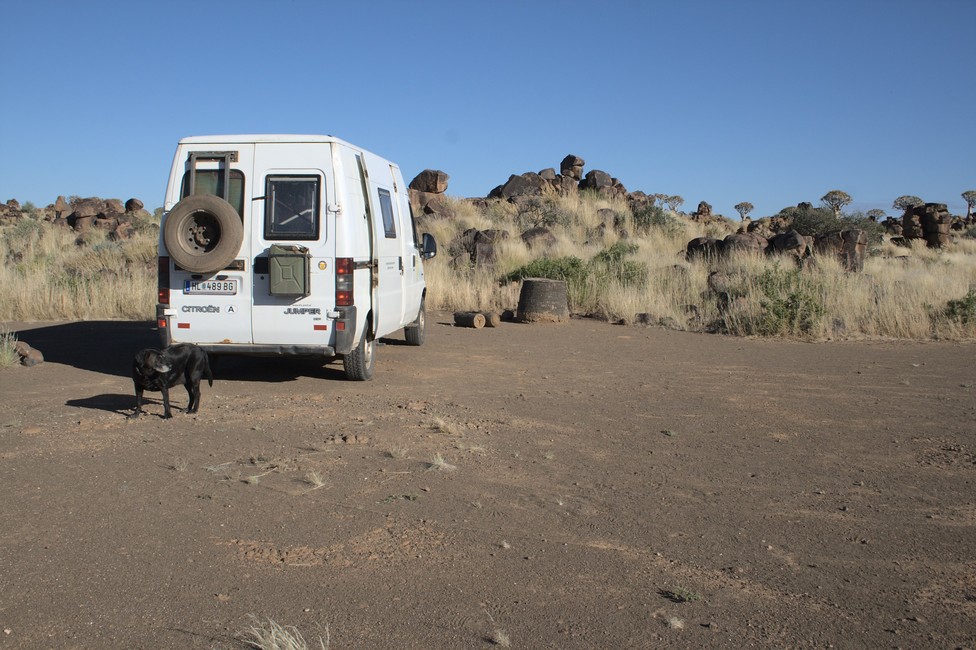
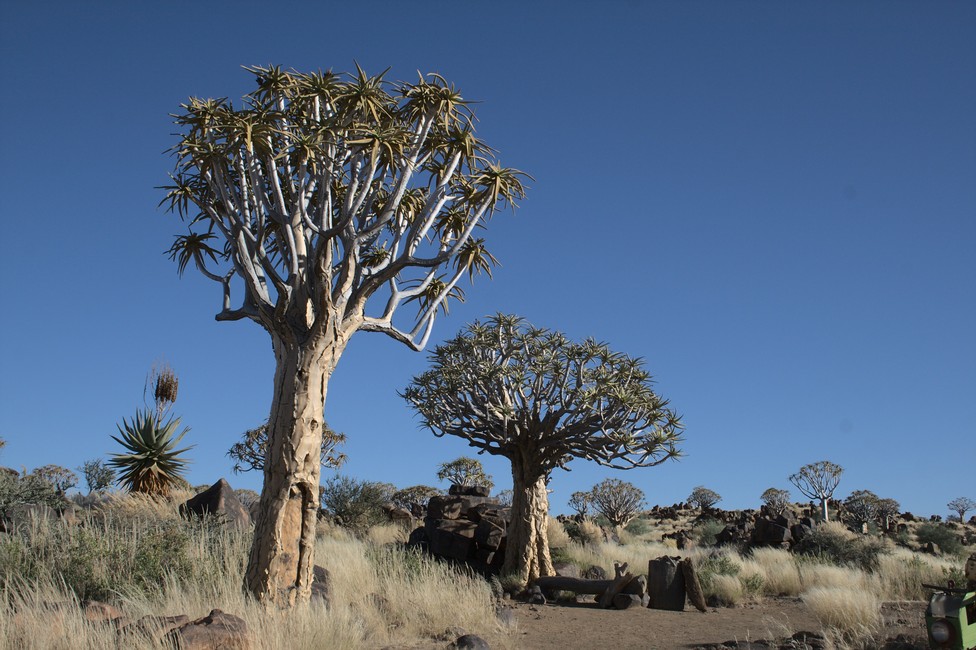
In the South of Namibia we stay at the Keetmanshoop Geras Park Camp Site, a simple but idyllic campsite in the middle of quiver trees.

Namibia to Cape Town
Quiver Tree Campsite, Namibia

The quiver tree loves rocky hilly regions. Its straight trunk opens to a surprisingly symmetrical circular crown of branches that are pointed at the ends of tough leaves. Trunk and branches are spongy in which the aloe water is stored.

Namibia to Cape Town
quiver tree

The next day we have crossed the border into South Africa at Onsekamp. Namibia to Cape Town, we are coming! This time we were smarter and have used a secondary border crossing. No one was interested in Tara, no one wanted to see the Movement paper.

After the gravel road we stopped in Poffadder a little town at the campsite. We were really tired .

Namibia to Cape Town
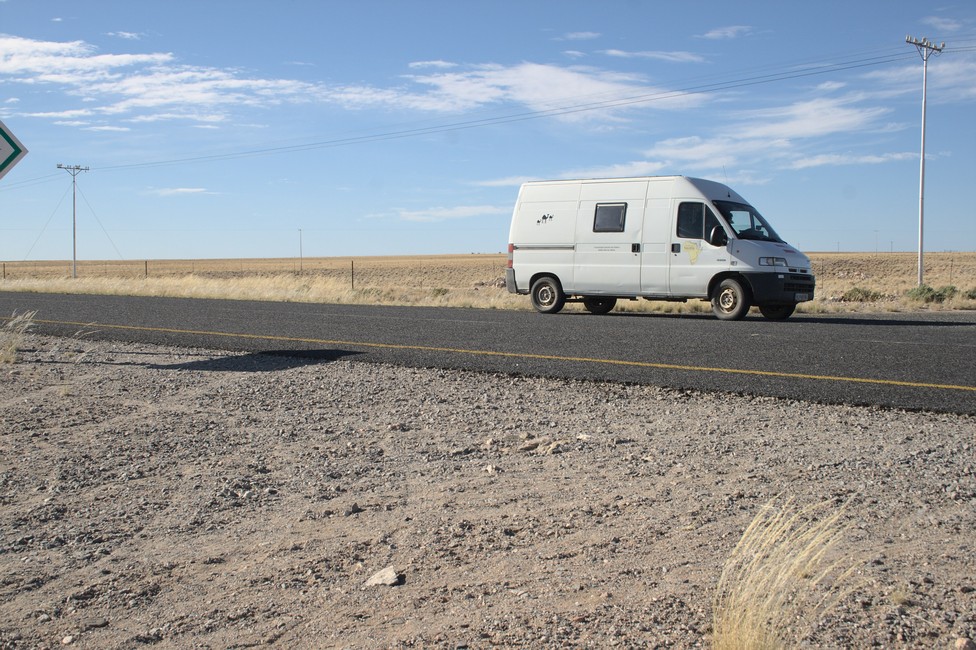
Road to Springbok, South Africa

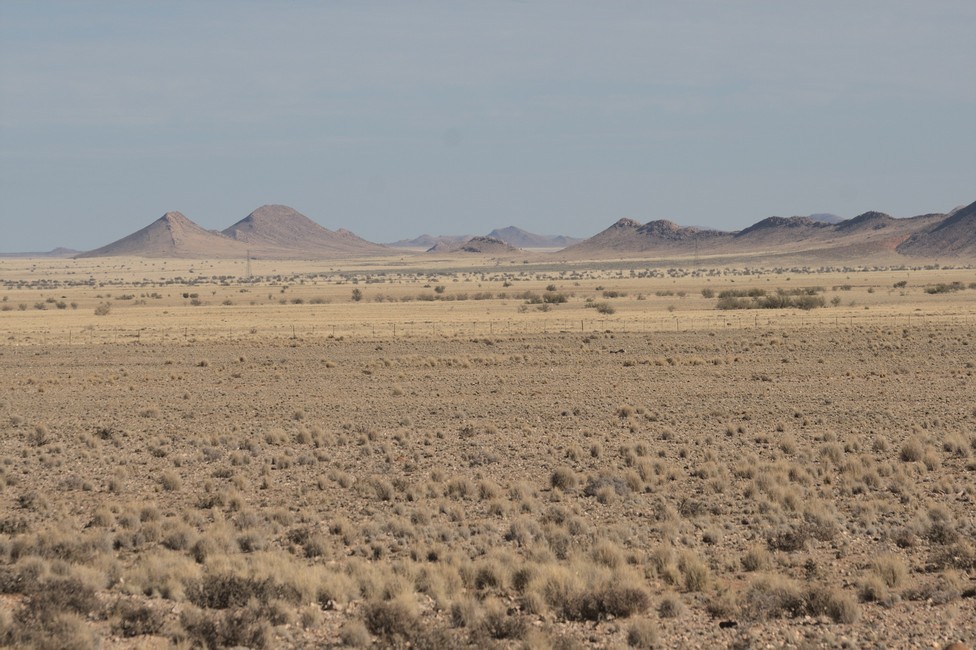
Everything fine and we head on to Springbok. We pass Springbok. From now on, it’s just direction to the south. We drive through the Namaqua country, unfortunately at the wrong time, so we do not see the sea of ​​flowers.

Namibia to Cape Town
Namaqua Land

We are tired and stay at Citrusdal at the campsite. We were already close to our final destination so we thought about our near future and what we will do for the next years. Going back by plane? Tara was already very old to fly. Getting another car and travel on in Africa? Shipping to South America. Lots of ideas. The owner of Citrusdal campsite was interested in our camper van but it turned quickly out that we could not sell the car in South Africa, because of import regulations.

Namibia to Cape Town
Finally Cape Town – the End? – NO

Next day we drive on. At around noon we arrive in Cape Town at Joachim and Tina’s place.

We drive into the suburbs of Cape Town and see the first time the famous Table Mountain. We have made ​​it. We had driven from Austria with a two-wheel drive camper van through Africa to Cape Town. We have traveled about 40,000 kilometres and it has taken us a year and six months. Granted we were not the fastest.

In the district of Milnerton we stay with Joachim and Tina, and they show us Cape Town.

We had made it. It is 02.05.2011 and we had started on 29.10.2009. In the beginning of our trip it did not look like we will ever reach Cape Town. But in the end we believed in our dream and made it.

complete Namibia overlanding guide

A comprehensive overview for planning an overland journey can be found in Overlanding South Africa.

Previous

Next

South Africa and back to Namibia – why? 115

But it comes different. We were denied entry to South Africa because our dog is supposed not to have the correct papers, The Import permit has expired and we have traveled through countries that would be extremely dangerous. We must return.

South Africa and back
Back to Oppi Koppi

We are already on the way back to the north and no longer understand the world. We think about what we could do. We decide to drive back to Kamanjab, because we know there folks, who may have an idea of how we get other papers for Tara.

South Africa and back
Back in Oppi Koppi

That means 1,300 kilometers back to Kamanjab. After three days we are again in Kamanjab on Oppi Koppi with Marianne and Vital.

Our old campsite spot is even available. We meet a couple, he a German, she a Mexican, they travelled from Mexico’s to South America to Africa and want to continue to Asia. They are already some years on the road.

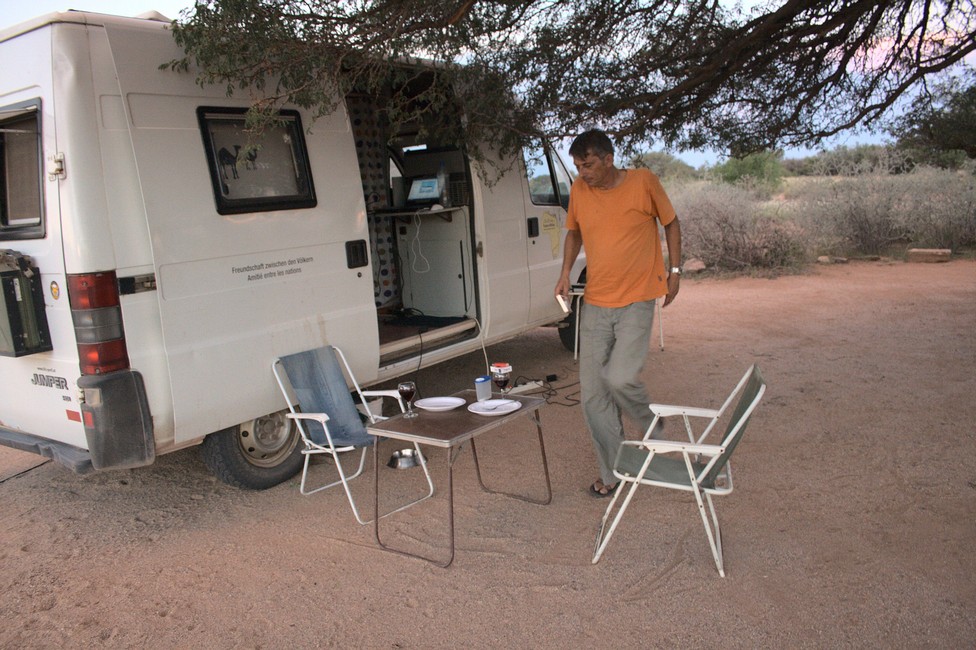
Elli wants to cook Mexican chili for us today. Hectic is on our picnic table. Ingredients are cut, vegetables cleaned and meat prepared.

To our pleasure, Traudl and Udo arrived with their ​​dog and their vintage truck. We met them during our last stay in Kamanjab.

Iwa, their dog goes straight under our camping table. Traudl and Udo are already retired and so-called winter birds, they spend the European winter in Africa, the rest of the year in Europe.

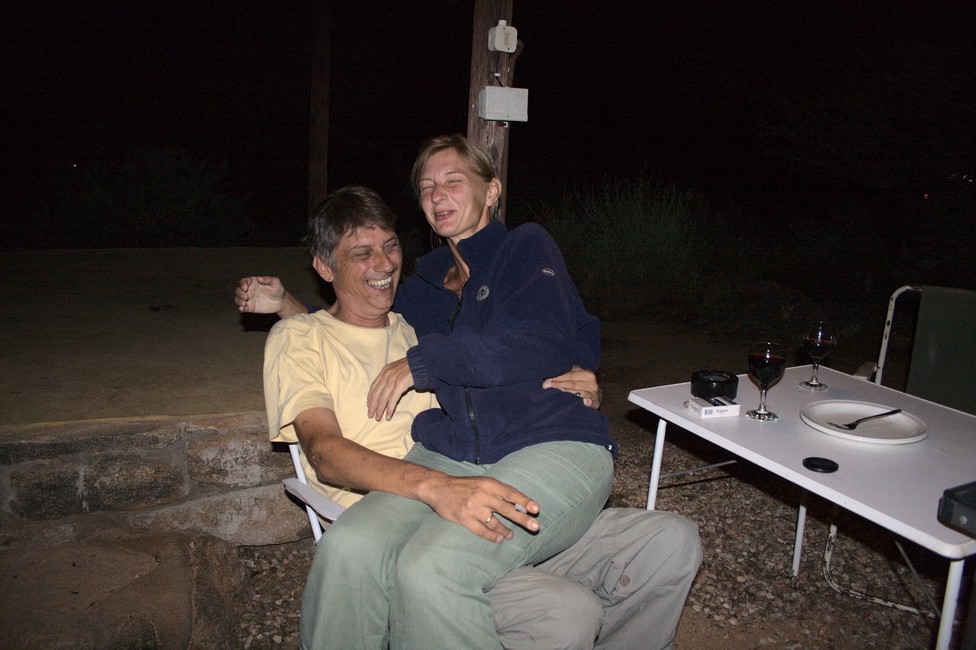
We all spend a wonderful evening together with red wine and chilli.

The next day is a school class performed a dance.

South Africa and back
Children singing at Oppi Koppi

On Oppi – Koppi Sundowner Donkey tour is offered by the owners Marianne and Vital. We want to see this. In the early evening the tour starts with a typical donkey cart, which is also used by the population, the Damara. The guides, Elias and Reynold, are employed at the Restcamp Oppi – Koppi. The income from the donkey ride will also directly benefit the employees, because it is a social project. Half of the money is withheld by Vital and saved. From that building material is purchased to build stone houses for the employees. Manpower and expertise is provided for free by Vital. Thus the employees are offered a better life, because they can give up their shanties and move in their own stone house.

South Africa and back
Vital and me

With the guests on the cart they drive through the residential area of ​​the Damara. They stop on a hill. The last few meters guests have to walk, because the path is too steep for the donkeys. Arriving at the hill cool drinks are served and guests can admire the magnificent view and picturesque sunset. Namibia receives little rain in this area, so the Donkey Tour is available all year round. After sunset, the tour continues. It goes to a local disco, where guests can immerse into the real Africa.

South Africa and back
We at Oppi Koppi

Here lives the black population of Kamanjab, mainly Damara and Herero. The living conditions are poor, but there is entertainment for people. With a cold beer, guests can mingle with the locals. It’s wonderful to watch the rhythmic dance of the black people. Later we return to the lodge where you can spend the evening at the bar. Vital and Marianne have created a great project and we hope for them that many guests book this interesting tour, which not only offers deep insight into the lifestyle of the population, but it still helps to improve the lives of local people.

complete Namibia overlanding guide

Previous

Next

Fish River Canyon 114

We leave Kolmanskop, because we go into the Fish River Canyon.

The wind whips the desert sand on the tarmac. Soon we reach fertile areas and the landscape becomes greener and greener. On good tgravel, it’s the last 70 kilometers to the canyon. We stop outside the park on a camp site so we can leave early tomorrow.

Fish River Canyon
Fish River Canyon Campsite

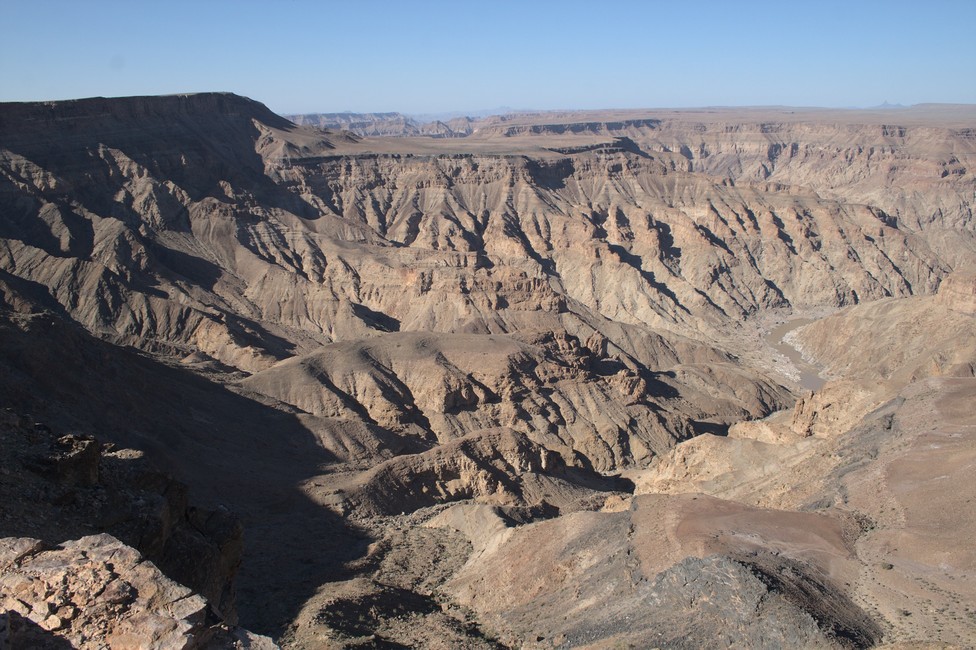
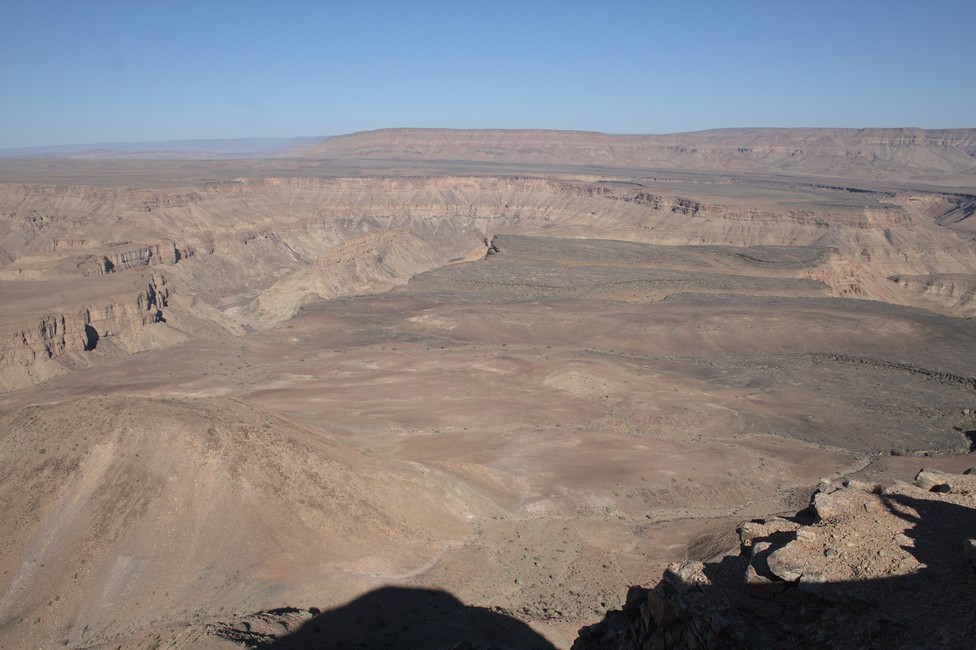
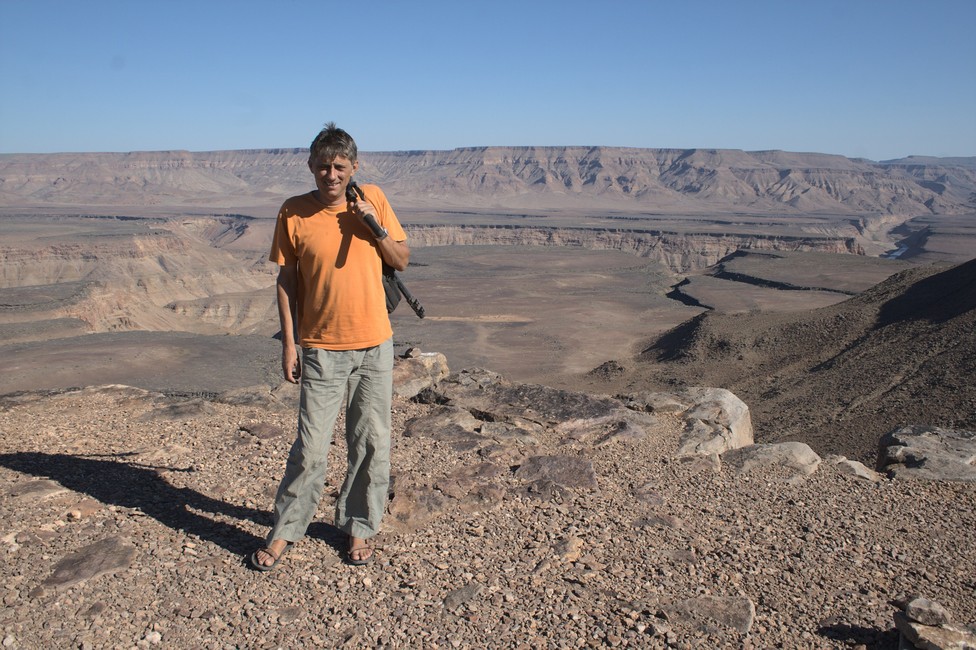
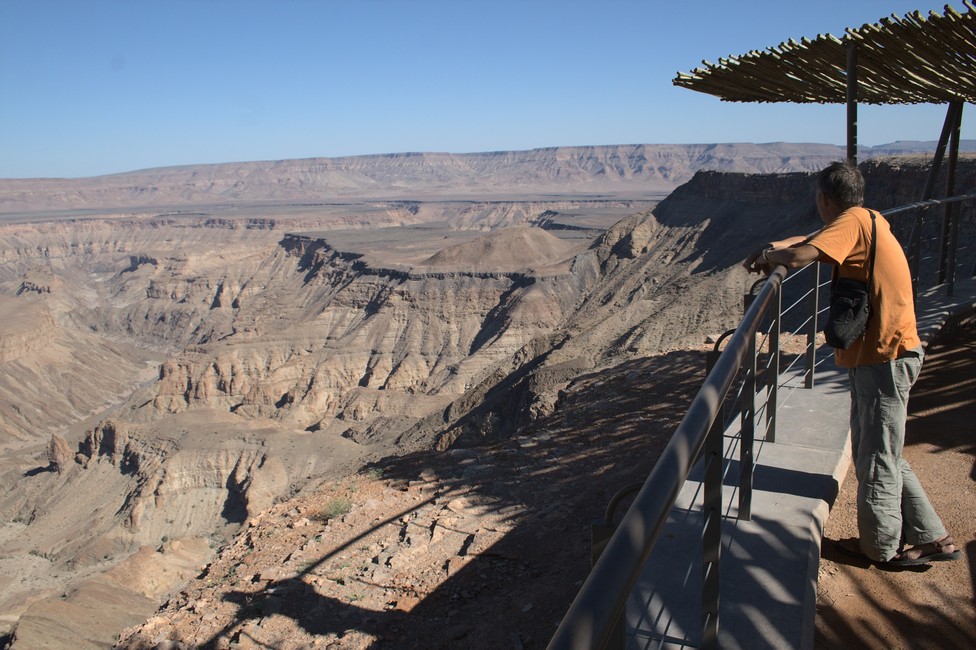
Even from the distance you can see the sharp-edged table mountains from which the canyon was formed.

Not by erosion, but by intrusion the broad valley came into existance through which the Fish River draws its tracks, but only the smaller portion of the canyon was formed by the river. After the Grand Canyon in the USA, the Fish River Canyon is the second largest in the world, but no less impressive.

Fish River Canyon
Canyon

It is 161 kilometers long and its depth varies between 450 to 550 meters. Until the origin of Earth’s evolution, one can watch. The steep embankments of dark rock emerged in the Precambrian. Two billion years ago, these layers were sandstone, shale and lava. By folding, pressure and heat they turned into meta morphous rock.This took place about a billion years before our era. The dark lines that run through the rock is cold magma originated 100 million years later. After a further 250 million years ago came the phase of erosion. A lake covered the whole of southern Namibia. At its base sediments were deposited. 500 million years ago there was a reduction in the Earth’s crust and the north-south valley was created by the collapse of the crust.

Fish River Canyon
Fish River Canyon

The incision through the Fish River was only in the Cenozoic about 50 million years ago.

Fish River Canyon
Fish River Canyon

Day trips in the canyon, even a partial descent are prohibited, as it always led to death casualities. Who wants to undertake the four-day walk, 85 kilometers, needs a very good condition. The hike can be made only in winter, the temperatures vary from 35 degrees to an impressive down to the freezing point. There are no cabins or camp sites and the hike will be notified in advance, per day maximum of 40 people are allowed in the canyon.

Fish River Canyon
Fish River Canyon

We are deeply impressed and continue, today we want to cross the border to South Africa. We inform Joachim and Tina in Cape Town that we will arrive in the coming days.

complete Namibia overlanding guide

Previous

Next